


1970 442 No start


Thread Starter
Registered User
Joined: Oct 2019
Posts: 7
1970 442 No start
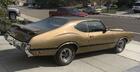
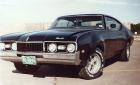
Ok, a little back story here. I just picked up this car a few days ago. It's a 71 442, but the 445 is gone, its been replaced with a '71 Olds 350 with a holley carb on top. I bought it off a guy who was trying to get it running after sitting for about 10 years. He did plugs, wires, cap, rotor and points, and then realized the distributor hold down bolt was seized and then gave up. That's where I took over.
I brought it home and got the distributor loosened up. After that though I could never get it to actually run. It would cough and sputter, and maybe run for a few seconds if i kept my foot right down. I started from scratch, pulled the valve cover off to get #1 at TDC on the compression stroke, pulled the distributor out and made sure it was lined up, then double checked that the firing order was right (making note that it is counter-clockwise on an Olds) and still nothing. I was going to replace the points next, but decided to try out the Pertronix Ignitor 2 and the matching coil because I'm not very knowledgeable with points. I've installed all that now, double and triple checked everything, but still can't get it to fire up. Same as before it will barely run if I keep it at WOT, but that all it will do. Any ideas guys??
I brought it home and got the distributor loosened up. After that though I could never get it to actually run. It would cough and sputter, and maybe run for a few seconds if i kept my foot right down. I started from scratch, pulled the valve cover off to get #1 at TDC on the compression stroke, pulled the distributor out and made sure it was lined up, then double checked that the firing order was right (making note that it is counter-clockwise on an Olds) and still nothing. I was going to replace the points next, but decided to try out the Pertronix Ignitor 2 and the matching coil because I'm not very knowledgeable with points. I've installed all that now, double and triple checked everything, but still can't get it to fire up. Same as before it will barely run if I keep it at WOT, but that all it will do. Any ideas guys??
72 Olds CS
Joined: Jun 2011
Posts: 6,657
if its an old not rebuilt 350 the original t chain gears had a plastic coat on them as that wore off the chain becomes ridiculously loose and skips some teeth. you can stick a finger in thru the fuel pump hole and maybe see the chain is loose but from what your saying it sounds like it.
Good news a chain and gears is not exspensive (stock style replacement) and its not a difficult job to replace just a little time consuming. MAW replace the water pump while your there ...be sure to measure the old pump as olds had 3 different sizers.
Good news a chain and gears is not exspensive (stock style replacement) and its not a difficult job to replace just a little time consuming. MAW replace the water pump while your there ...be sure to measure the old pump as olds had 3 different sizers.

Registered User
Joined: May 2019
Posts: 205
Check to make sure you’re getting fuel , sounds like you got spark. Move the distributor in each direction to see if it helps
disconnect fuel line from carburetor to check fuel pump. Let it squirt into a can so you don’t get gas all over.
disconnect fuel line from carburetor to check fuel pump. Let it squirt into a can so you don’t get gas all over.
Thread Starter
Registered User
Joined: Oct 2019
Posts: 7
Very good streams of fuel spray into the carb when i step on the pedal. I've tried rotating the distributor both ways a bit at a time but it never really got any better.
Thread Starter
Registered User
Joined: Oct 2019
Posts: 7
if its an old not rebuilt 350 the original t chain gears had a plastic coat on them as that wore off the chain becomes ridiculously loose and skips some teeth. you can stick a finger in thru the fuel pump hole and maybe see the chain is loose but from what your saying it sounds like it.
Good news a chain and gears is not exspensive (stock style replacement) and its not a difficult job to replace just a little time consuming. MAW replace the water pump while your there ...be sure to measure the old pump as olds had 3 different sizers.
Good news a chain and gears is not exspensive (stock style replacement) and its not a difficult job to replace just a little time consuming. MAW replace the water pump while your there ...be sure to measure the old pump as olds had 3 different sizers.
I'll have to try to check the timing chain tomorrow morning when the sun comes up


Old(s) Fart
Joined: Mar 2007
Posts: 50,803
From: Northern VA
Look, before taking anything apart, check the timing. A timing light works when you are cranking the motor. It doesn't need to be running. Also, inspect the balancer to see if it looks like the outer ring has slipped, which would move the scribe mark for the timing. If there's any question, use a piston stop to verify the location of the scribe mark. If all that checks out, check fuel. Try starting fluid. Verify that there is fuel in the carb. Verify that the choke is working properly and that there are no vacuum leaks.
Why does everyone want to go straight to the most difficult and expensive option before exhausting all the easy, cheap options?
Why does everyone want to go straight to the most difficult and expensive option before exhausting all the easy, cheap options?
Registered User
Joined: May 2019
Posts: 205
Old(s) Fart
Joined: Mar 2007
Posts: 50,803
From: Northern VA
I've never seen an Olds timing chain "slip". When the plastic teeth wear, the chain jumps completely off. When that happens it won't run at all. And if it COULD "slip" one tooth, that would be a 15 degree change to the initial timing. Retard the timing 15 degrees at idle and again, it wouldn't run at all.
Frankly, this sounds like a massive vacuum leak. When you pulled the distributor, did you verify that the scribe mark on the balancer did, in fact, indicate zero when No. 1 was at TDC. If so, I'd disconnect every single vacuum line from the engine and plug the ports in the intake and carb. I'd also pitch the Holley and get a known good Qjet to eliminate potential problems with any adapter plates or other clap-trap. Finally, making changes like Pertronix before you get the engine to run is just asking for trouble. You've now added another variable. I assume you have verified spark at the plugs.
Frankly, this sounds like a massive vacuum leak. When you pulled the distributor, did you verify that the scribe mark on the balancer did, in fact, indicate zero when No. 1 was at TDC. If so, I'd disconnect every single vacuum line from the engine and plug the ports in the intake and carb. I'd also pitch the Holley and get a known good Qjet to eliminate potential problems with any adapter plates or other clap-trap. Finally, making changes like Pertronix before you get the engine to run is just asking for trouble. You've now added another variable. I assume you have verified spark at the plugs.
Thread Starter
Registered User
Joined: Oct 2019
Posts: 7
Gas is brand new, tank was drained before I bought it and I put a half tank of premium in it. I'll have to double check in the morning that I'm not a tooth off. Just to confirm, the rotor points at cylinder #1 when it is lined up properly right?
Thread Starter
Registered User
Joined: Oct 2019
Posts: 7
I've never seen an Olds timing chain "slip". When the plastic teeth wear, the chain jumps completely off. When that happens it won't run at all. And if it COULD "slip" one tooth, that would be a 15 degree change to the initial timing. Retard the timing 15 degrees at idle and again, it wouldn't run at all.
Frankly, this sounds like a massive vacuum leak. When you pulled the distributor, did you verify that the scribe mark on the balancer did, in fact, indicate zero when No. 1 was at TDC. If so, I'd disconnect every single vacuum line from the engine and plug the ports in the intake and carb. I'd also pitch the Holley and get a known good Qjet to eliminate potential problems with any adapter plates or other clap-trap. Finally, making changes like Pertronix before you get the engine to run is just asking for trouble. You've now added another variable. I assume you have verified spark at the plugs.
Frankly, this sounds like a massive vacuum leak. When you pulled the distributor, did you verify that the scribe mark on the balancer did, in fact, indicate zero when No. 1 was at TDC. If so, I'd disconnect every single vacuum line from the engine and plug the ports in the intake and carb. I'd also pitch the Holley and get a known good Qjet to eliminate potential problems with any adapter plates or other clap-trap. Finally, making changes like Pertronix before you get the engine to run is just asking for trouble. You've now added another variable. I assume you have verified spark at the plugs.
Thanks for the tips. I'm currently looking for a Qjet so that I can eliminate the carb as an issue. I'll check for vacuum leaks tomorrow. I didn't double check the scribe mark on the balancer, I'll check that tomorrow too

Administrator
Joined: Oct 2009
Posts: 42,496
From: Poteau, Ok
An engine needs air (generally a given), fuel, and well timed spark to run. I like to run a jumper from the battery+ terminal to the coil+ terminal and eliminate all the car wiring from the equation. Pull your plugs and make sure they aren't all fouled up. If there is a condenser on the coil disconnect it, its not needed with the pertronix. If there is a tach hooked up, disconnect it also. Note, once the engine is running the jumper must be pulled to turn it off and also keep the jumper disconnected when your not running the engine.

Registered User
Joined: Jun 2009
Posts: 4,293
From: Palm Bay, FL
If you keep pulling it out all you're going to do is make more work for yourself.


Registered User
Joined: Mar 2007
Posts: 3,446
From: eastern MA
Like svnt442 said, the rotor has to point or be real close to the #1 cylinder contact post on the underside of the distributer cap not point to the left front area of the engine where #1 is. The distributer can then be turned a little either way to get the timing right.
Registered User
Joined: Aug 2013
Posts: 12,804
From: Evansville, IN
Look, before taking anything apart, check the timing. A timing light works when you are cranking the motor. It doesn't need to be running. Also, inspect the balancer to see if it looks like the outer ring has slipped, which would move the scribe mark for the timing. If there's any question, use a piston stop to verify the location of the scribe mark. If all that checks out, check fuel. Try starting fluid. Verify that there is fuel in the carb. Verify that the choke is working properly and that there are no vacuum leaks.
Why does everyone want to go straight to the most difficult and expensive option before exhausting all the easy, cheap options?
Why does everyone want to go straight to the most difficult and expensive option before exhausting all the easy, cheap options?
Registered User
Joined: Jul 2009
Posts: 2,471
From: Colorado - Front Range
Something I experienced years ago: I bought an older motorcycle with a dry tank and a spare GI-style gas can. Being young and dumb, I filled up the tank and the can, and went riding. A doofus prior to me had put water in the can. I was about 10 miles from the truck on a mountain trail when the engine started sputtering and died. Checking for gas, out on the trail, I see RUST coming out of the petcock. That was NOT a fun day. But I do have some funny pics from pushing the bike through the Platte River to get to the parking lot on the side 
Old(s) Fart
Joined: Mar 2007
Posts: 50,803
From: Northern VA
Which has nothing to do with the fact that everyone wants to replace parts unnecessarily rather than figure out what is wrong first. That 40 years of experience came one year at a time. As I repeatedly get criticized for when I suggest it, get a CSM, READ the thing, and try to understand what the failure modes are. Sadly, while this skill shouldn't be rocket science, it apparently is in these days of "turn-by-turn" spoon-fed instructions. This is the same mentality that gave us the crappy newer service manuals. Unlike the manuals from the 60s, newer manuals don't bother to explain how the system works, they just have flow charts that assume you have a full set of dealership service tools.

Thread
Thread Starter
Forum
Replies
Last Post


