Plural for Cutlass


Thread Starter
Registered User
Joined: Sep 2012
Posts: 533
From: Indianapolis,In
Plural for Cutlass
Just wondering everyone's thoughts I know everyone has a different opinion and uses a different word. Is anyone an English teacher that can give an opinion?What is the plural word for Cutlass? Is it Cutlasses, Cutlass's or just Cutlass (like deer is plural or singular)? I know several members own more than one. So what word do you use? Me myself I use Cutlass plural or singular.
Last edited by oldsmobilty; Jan 10, 2014 at 04:01 AM. Reason: grammar

2-stroke 1-cylinder guy
Joined: Nov 2013
Posts: 333
From: Bavaria, Germany




Registered User
Joined: Nov 2006
Posts: 1,790
From: McMurray, PA
"Cutlass'" would not be the plural, although it's pronounced in the same manner as the correct "Cutlasses". Anything with an apostrophe is possessive.
Possessive: "My three Cutlass' bucket seats are so uncomfortable."
Plural: "I have three Cutlasses."
I always enjoy seeing "Cutlii" and get a chuckle, but it's not correct.
Terry
Possessive: "My three Cutlass' bucket seats are so uncomfortable."
Plural: "I have three Cutlasses."
I always enjoy seeing "Cutlii" and get a chuckle, but it's not correct.
Terry

Registered User
Joined: Jun 2009
Posts: 15,194
From: southeastern Michigan
Yes.
Well, we're throwing it back.
The "i" ending for plurals like alumnus/alumni and radius/radii is when the word ends in "us." It's a Latin plural. The word "Cutlass" does not end in "us."
You three need to get your money back from your English teacher. An apostrophe indicates a possessive, not a plural.
As an example, the windshield on that Cutlass could be described as "that Cutlass's windshield" or "that Cutlass' windshield." I've seen both in other contexts, but the way I learned it is that, when a word ends in "s" and you want to make it possess something, you put an apostrophe after the "s" and that's all. So the correct version is "that Cutlass' windshield."
Apostrophes indicate one of two things, a possessive or missing letters. An example of the latter is the abbreviation "haven't" for "have not" where the apostrophe stands in for the missing "o" in the word "not" (the "n" got moved to the end of "have"). Another example is "you're" for "you are" where the apostrophe replaces the "a" in "are."
But an apostrophe never indicates a plural.
Well, we're throwing it back.
The "i" ending for plurals like alumnus/alumni and radius/radii is when the word ends in "us." It's a Latin plural. The word "Cutlass" does not end in "us."
As an example, the windshield on that Cutlass could be described as "that Cutlass's windshield" or "that Cutlass' windshield." I've seen both in other contexts, but the way I learned it is that, when a word ends in "s" and you want to make it possess something, you put an apostrophe after the "s" and that's all. So the correct version is "that Cutlass' windshield."
Apostrophes indicate one of two things, a possessive or missing letters. An example of the latter is the abbreviation "haven't" for "have not" where the apostrophe stands in for the missing "o" in the word "not" (the "n" got moved to the end of "have"). Another example is "you're" for "you are" where the apostrophe replaces the "a" in "are."
But an apostrophe never indicates a plural.
Last edited by jaunty75; Jan 10, 2014 at 06:59 AM.

Seasoned beater pilot.
Joined: Jan 2007
Posts: 5,468
From: Chicago
It's Cutlasses. Period.
It is funny seeing Cutlii though. I believe that is intentional for comedic effect. (not affect)
Octopus pluralized would be Octopuses.
A lot of these depend on the history of the Latin declension.
http://en.wikipedia.org/wiki/Latin_d...ension_.28o.29
It is funny seeing Cutlii though. I believe that is intentional for comedic effect. (not affect)
Octopus pluralized would be Octopuses.
A lot of these depend on the history of the Latin declension.
http://en.wikipedia.org/wiki/Latin_d...ension_.28o.29
Registered User
Joined: Aug 2013
Posts: 12,810
From: Evansville, IN
The problem with things like Cutlii is someone does it to be cute, and then ignorant people trying to appear educated use it and think it's correct, then the stupidity propagates. People have always spoken badly, but at least they used to know that they were using poor English.


Registered User
Joined: Feb 2010
Posts: 1,587
From: West Michigan

Registered User
Joined: Sep 2009
Posts: 337
From: Austin, TX

Yes.
Well, we're throwing it back.
The "i" ending for plurals like alumnus/alumni and radius/radii is when the word ends in "us." It's a Latin plural. The word "Cutlass" does not end in "us."
You three need to get your money back from your English teacher. An apostrophe indicates a possessive, not a plural.
As an example, the windshield on that Cutlass could be described as "that Cutlass's windshield" or "that Cutlass' windshield." I've seen both in other contexts, but the way I learned it is that, when a word ends in "s" and you want to make it possess something, you put an apostrophe after the "s" and that's all. So the correct version is "that Cutlass' windshield."
Apostrophes indicate one of two things, a possessive or missing letters. An example of the latter is the abbreviation "haven't" for "have not" where the apostrophe stands in for the missing "o" in the word "not" (the "n" got moved to the end of "have"). Another example is "you're" for "you are" where the apostrophe replaces the "a" in "are."
But an apostrophe never indicates a plural.
Well, we're throwing it back.
The "i" ending for plurals like alumnus/alumni and radius/radii is when the word ends in "us." It's a Latin plural. The word "Cutlass" does not end in "us."
You three need to get your money back from your English teacher. An apostrophe indicates a possessive, not a plural.
As an example, the windshield on that Cutlass could be described as "that Cutlass's windshield" or "that Cutlass' windshield." I've seen both in other contexts, but the way I learned it is that, when a word ends in "s" and you want to make it possess something, you put an apostrophe after the "s" and that's all. So the correct version is "that Cutlass' windshield."
Apostrophes indicate one of two things, a possessive or missing letters. An example of the latter is the abbreviation "haven't" for "have not" where the apostrophe stands in for the missing "o" in the word "not" (the "n" got moved to the end of "have"). Another example is "you're" for "you are" where the apostrophe replaces the "a" in "are."
But an apostrophe never indicates a plural.
Single letters:. "Mind your p' and q's." "Dot your i's and cross your t's."
Also used with certain words that require an apostrophe for clarity:
"His speech had too many if's, and's and but's." or "Bill has had enough of her 'maybe's'."
A singular or plural noun ending in "s" takes just the apostrophe: Dickens' novels, the hostess' invitation.
The Chicago Manual of Style may be wrong, but this is how I was taught. Got to love a good grammar discussion.
Tim

Registered User
Joined: Dec 2011
Posts: 7,286
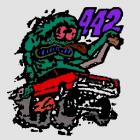
In the back of the dictionary I read when I was learning, the use of the apostrophe extends to the plural of items of speech such as "442". The example cited was to "mind your p's and q's", or "we well a lot of TV's".
So, in an exception the "apostrophes indicate possession" rule we have the proper plural of 442 as "442's" & more than one F85 must be a gaggle [?] of F85's. Also, the its vs. it's situation complicates the accepted correct use of the apostrophe- the contraction gets to use one, but the possessive doesn't.
And yes I put the closing quite mark inside the period for a reason. 'Cause I likes it that way, it makes more sense. I don't care if it's incorrect.
From math classes- the prof was about 90 and shook like crazy but he was good, and funny at times: "Why is the class called Matrices 201? Because the item under study is a matrix, and the plural of matrix is matrices. So, note, therefore, that the plural of Kleenex is Kleenices." I still love that one.
My educated supervisor today said something along the lines of "...have a get together with you, I and Bruce..."
*sigh*
"with I" ? Really?
How about "WITH ME" ?!?!
It's not that difficult.
Thank you for baring with me, I hope it ha's a positive affect. [ha ha ha]
So, in an exception the "apostrophes indicate possession" rule we have the proper plural of 442 as "442's" & more than one F85 must be a gaggle [?] of F85's. Also, the its vs. it's situation complicates the accepted correct use of the apostrophe- the contraction gets to use one, but the possessive doesn't.
And yes I put the closing quite mark inside the period for a reason. 'Cause I likes it that way, it makes more sense. I don't care if it's incorrect.
From math classes- the prof was about 90 and shook like crazy but he was good, and funny at times: "Why is the class called Matrices 201? Because the item under study is a matrix, and the plural of matrix is matrices. So, note, therefore, that the plural of Kleenex is Kleenices." I still love that one.
My educated supervisor today said something along the lines of "...have a get together with you, I and Bruce..."
*sigh*
"with I" ? Really?
How about "WITH ME" ?!?!
It's not that difficult.
Thank you for baring with me, I hope it ha's a positive affect. [ha ha ha]

Old(s) Fart
Joined: Mar 2007
Posts: 50,803
From: Northern VA
On the other hand, the plurals of focus (Ford or otherwise) and radius are foci and radii.
Just sayin'...

By the way, the word for an apostrophe use where letters are missing is a contraction, isn't it.


Registered User
Joined: Feb 2008
Posts: 697
The term Cutlii as a plural form of Cutlass probably came into being because of the tendency to pronounce Cutlass as Cutluss . I know that's the way I pronounce it, as I can't bring myself to say Cut....lass. (Canadian dialect...can't help it.)
Connoisseur d'Junque
Joined: Sep 2010
Posts: 21,183
From: The Hudson Valley
The official English plural for the word "Cutlass" is "Cutlasses."
There can be no debate about this. Do not check a style manual or grammar guide; check any dictionary.
Style manuals and grammar guides discuss generalities. The specific plural of this specific word is "Cutlasses."
Further, the plurals and genitives are as follows:
Singular: Cutlass
Plural: Cutlasses
Singular possessive: Cutlass's
Plural possessive: Cutlasses'
The etymology of Cutlass indicates that it stems from the Latin "cultelus," the diminutive of "culter," meaning "knife," "ploughshare," or "spear point," which is found in Middle French as "coutelas" (modern French "couteau," modern Italian "coltello"), and then in Elizabethan English as "coutelace."
"Culter" and "cultelus" are masculine nouns of the Second Declension, and so both take the —i plural, thus: "cultri" and "culteli."
Therefore, my preferred plural, "Cutlii" (with the final vowels pronounced, of course, as a diphthong) has some basis in the etymology of the word, even if it is not technically the most correct way of expressing it in English.
- Eric
There can be no debate about this. Do not check a style manual or grammar guide; check any dictionary.
Style manuals and grammar guides discuss generalities. The specific plural of this specific word is "Cutlasses."
Further, the plurals and genitives are as follows:
Singular: Cutlass
Plural: Cutlasses
Singular possessive: Cutlass's
Plural possessive: Cutlasses'
The etymology of Cutlass indicates that it stems from the Latin "cultelus," the diminutive of "culter," meaning "knife," "ploughshare," or "spear point," which is found in Middle French as "coutelas" (modern French "couteau," modern Italian "coltello"), and then in Elizabethan English as "coutelace."
"Culter" and "cultelus" are masculine nouns of the Second Declension, and so both take the —i plural, thus: "cultri" and "culteli."
Therefore, my preferred plural, "Cutlii" (with the final vowels pronounced, of course, as a diphthong) has some basis in the etymology of the word, even if it is not technically the most correct way of expressing it in English.
- Eric

Just an Olds Guy
Joined: Jul 2008
Posts: 24,528
From: Edmonton, AB. And "I am Can 'eh' jun - eh"
language and spelling can be so complicated at times.LOL Don't be so 'possessive' of those 3 Cutlass bucket seats that are so uncomfortable. Unbolt them and ship them up to me. I have a nice comfy power bench A52 I'll trade so you can plant your tush quite comfortably...
I have a better way to avoid confusion when speaking with peeps. Goes like this. "I own this Cutlass". Then I say "I also have another 2 of them at home"


stellar
Joined: Feb 2009
Posts: 1,362
From: Pittsburgh Pa.
Ask a sportscaster what it should be. If they don't know what a word should be they just make up one that seems to fit. Just tell people you have a few Olds, or is it Oldses or Oldsies. Or, darn it, now you guys have me all confused.