


Last time I drove a car designed for regular gas...


Thread Starter
Dan P.
Joined: Jan 2011
Posts: 11
From: San Diego
Last time I drove a car designed for regular gas...
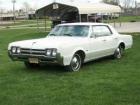
... was when you could still buy regular gas. I just picked up a 67 Delmont convertible (425 high compression). I had one just like it back in the early 80s.
Anyway, back to my question... Will I do any damage running unleaded without lead additive? I seem to remember hearing "you can burn unleaded in a regular car but you can't burn regular in an unleaded car."
After your done saying "DUHHH you -censored- newbie" which I'm sure I deserve, I'd appreciate some feedback
Anyway, back to my question... Will I do any damage running unleaded without lead additive? I seem to remember hearing "you can burn unleaded in a regular car but you can't burn regular in an unleaded car."
After your done saying "DUHHH you -censored- newbie" which I'm sure I deserve, I'd appreciate some feedback

Registered User
Joined: Jun 2009
Posts: 15,187
From: southeastern Michigan

Registered User
Joined: Dec 2009
Posts: 395
From: KY
This seems to be one of those subjects that has a few guys adamant one way or the other.
The lead in the old leaded gas acted as a cushion for the valve seats. While you'll get some that vigorously disagree, I think most people agree that running a pre-unleaded engine on unleaded gas won't immediately kill it if driven normally. There will be more wear on the valve seats over time but driven normally, that could be thousands of miles.
If you drive it hard, that will increase the wear to the valve seats to the point that you may have problems within a couple thousand miles.
I had hardened valve seats installed in the heads on my 455 when I had it rebuilt. I don't think it would cost more than a couple hundred dollars to have it done to your engine now if you're concerned about protecting it for years of use. By the way, a couple hundred is the cost for having the machine shop install the seats. Add some $ if a shop removes and installs the heads for you.
If it's a non numbers matching engine that you don't care to replace sometime in the future, drive it and forget about it. If it's a number matching engine you want to take care of in order to protect your investment, have hardened valve seats installed.
The lead in the old leaded gas acted as a cushion for the valve seats. While you'll get some that vigorously disagree, I think most people agree that running a pre-unleaded engine on unleaded gas won't immediately kill it if driven normally. There will be more wear on the valve seats over time but driven normally, that could be thousands of miles.
If you drive it hard, that will increase the wear to the valve seats to the point that you may have problems within a couple thousand miles.
I had hardened valve seats installed in the heads on my 455 when I had it rebuilt. I don't think it would cost more than a couple hundred dollars to have it done to your engine now if you're concerned about protecting it for years of use. By the way, a couple hundred is the cost for having the machine shop install the seats. Add some $ if a shop removes and installs the heads for you.
If it's a non numbers matching engine that you don't care to replace sometime in the future, drive it and forget about it. If it's a number matching engine you want to take care of in order to protect your investment, have hardened valve seats installed.
Last edited by W70442; Jan 25, 2011 at 09:22 PM.

Old(s) Fart
Joined: Mar 2007
Posts: 50,791
From: Northern VA
This seems to be one of those subjects that has a few guys adamant one way or the other.
The lead in the old leaded gas acted as a cushion for the valve seats. While you'll get some that vigorously disagree, I think most people agree that running a pre-unleaded engine on unleaded gas won't immediately kill it if driven normally. There will be more wear on the valve seats over time but driven normally, that could be thousands of miles.
If you drive it hard, that will increase the wear to the valve seats to the point that you may have problems within a couple thousand miles.
The lead in the old leaded gas acted as a cushion for the valve seats. While you'll get some that vigorously disagree, I think most people agree that running a pre-unleaded engine on unleaded gas won't immediately kill it if driven normally. There will be more wear on the valve seats over time but driven normally, that could be thousands of miles.
If you drive it hard, that will increase the wear to the valve seats to the point that you may have problems within a couple thousand miles.
Registered User
Joined: Jun 2009
Posts: 15,187
From: southeastern Michigan
Another thing I read once, and I don't know how true it is, but it sounded reasonable, is that the gasolines of today are different from 40 years ago. Even though there is no lead in gasoline anymore, that doesn't mean that there aren't other ingredients that do much the same thing but with less accompanying harm to the environment.
I owned a '64 Jetstar 88 from 1991 to 1996. Over those five years, I put about 14,000 miles on it (it had about 111,000 when I bought it and about 125,000 when I sold it). For all those miles, I put nothing in but regular unleaded, and I never had any problems.
Joe Padavano mentions maybe needing a valve job after 60,000 or 70,000 miles instead of 100,000. Good God, I'm expecting to put maybe 500-1000 miles per year on my '67 Delta 88. Even at the high end of that range, it would take me 60 years to reach 60,000 miles of driving. I would be 114 years old. The likelihood that I'm ever going to put enough miles on this car that any negative effects of running unleaded fuel would manifest themselves is near zero.
Yes, I don't know how many of the miles the car had on it before I bought were miles where it ran on unleaded fuel, but even if that means I've got only 20,000 or 30,000 miles before a valve job is needed, it's certainly not something I'm going to worry about any time soon.

Just an Olds Guy
Joined: Jul 2008
Posts: 24,528
From: Edmonton, AB. And "I am Can 'eh' jun - eh"
My 72 runs on unleaded now because it has to. I don't add any supplements; but I make sure it's tuned for 87 Octane. It gets amazing mileage on the highway doing 70 mph, and has plenty of pedal to go. The engine runs smooth, cool and with plenty of power.
Jaunty is right about the octane levels - 87 nowadays would be about the equivalent of 89-90 in the old days. So when you're running unleaded premium (91-93 depending on where you buy), it's probably the equivalent of the old hi-test gas standard of 94+ premium. You'll know if your car needs higher octane by the way it runs.
Registered User
Joined: Jun 2009
Posts: 15,187
From: southeastern Michigan
I kind of wondered this myself. I don't recall unleaded fuel becoming generally available until the mid-1970s. Seems kind of surprising that it would even be mentioned in a mid-60s owner's manual. Now I have to go check the owner's manual on my '67...
Registered User
Joined: Apr 2010
Posts: 97
From: Flint, MI
I'll take a pic of it tonight. I have never read through the owners manuals, but my wife likes to and she is the one that pointed it out to me when I went on a man hunt for some lead substitute and asked me why I needed it when the book said unleaded was ok.
Registered User
Joined: Apr 2010
Posts: 97
From: Flint, MI
Yeah, she likes to read them, so that way she can be a little more familiar with the car. Every car we have ever gotten, the first thing she will do is sit down read the manual and then go look for everything on the car. She has always said the last thing she wants is to be broke down and "Have some guy find my oil dipstick for me or fix my flat, because I am a girl and thus an idiot". That is part of what drew me to her, she is not afraid to get dirty, she'll do her own brakes, oil changes, tire changes and body work.
Just an Olds Guy
Joined: Jul 2008
Posts: 24,528
From: Edmonton, AB. And "I am Can 'eh' jun - eh"
 Women folks on the other hand just seem to have this fascination with reading instructions first....
Anyway, good on her for having this info.
One thing that I'm still confused by. Even if the Olds manual says you can use unleaded or low lead back in 66, where the heck would you buy it?? I'm guessing- Europe? Australia? - I really have no clue. According to web information unleaded gas was phased in during the early 70's and 86 was the last year you could buy leaded fuel.
Registered User
Joined: Jun 2009
Posts: 15,187
From: southeastern Michigan
I just did, and there is no mention of unleaded fuel (or leaded, for that matter) anywhere in the owner's manual of my '67 Delta 88. The section on fuel does talk about the need for regular or premium, depending on which engine you have and whether or not it's high or low compression, but that's it.
Because I have one, I went and looked in the manual for my '73, and it does mention unleaded, saying "General Motors recommends the use of unleaded or low-lead (0 to 0.5 grams per gallon) gasolines to minimize emissions of hydrocarbons and particulates. If unleaded or low-lead gasolines are not available, gasolines containing more than 0.5 grams per gallon may be used."
I don't think I've ever seen a gas pump where the lead content was expressed in grams per gallon. Now that I've seen the words, though, I do seem to recall seeing back then pumps advertising "low-lead" gasoline.
Because I have one, I went and looked in the manual for my '73, and it does mention unleaded, saying "General Motors recommends the use of unleaded or low-lead (0 to 0.5 grams per gallon) gasolines to minimize emissions of hydrocarbons and particulates. If unleaded or low-lead gasolines are not available, gasolines containing more than 0.5 grams per gallon may be used."
I don't think I've ever seen a gas pump where the lead content was expressed in grams per gallon. Now that I've seen the words, though, I do seem to recall seeing back then pumps advertising "low-lead" gasoline.

Registered User
Joined: Oct 2010
Posts: 259
From: Vancouver, BC
http://www.ozebook.com/compendium/suzi/octane.pdf
All this octane talk got me curious about it all. I was thinking, how could octane ratings change? Kinda figured the rating would be something constant, if modern fuel has a different rating than the old leaded stuff, so be it. But apparently the testing method changed.
Take a look at this article if you're interested. I saw that using leaded instead of regular increased octane ratings up by one point... and something I didn't know, if the relative humidity increases, your octane requirement decreases. I've heard of adding water to the combustion chamber though, same cooling effect to get less knock I guess.
So, save your money, live by the water and you can buy mid grade instead of premium?
All this octane talk got me curious about it all. I was thinking, how could octane ratings change? Kinda figured the rating would be something constant, if modern fuel has a different rating than the old leaded stuff, so be it. But apparently the testing method changed.
Take a look at this article if you're interested. I saw that using leaded instead of regular increased octane ratings up by one point... and something I didn't know, if the relative humidity increases, your octane requirement decreases. I've heard of adding water to the combustion chamber though, same cooling effect to get less knock I guess.
So, save your money, live by the water and you can buy mid grade instead of premium?
Registered User
Joined: Apr 2010
Posts: 97
From: Flint, MI
My wife must of read it wrong when she looked through it. She thought that when they said use of regular or premium she didn't think they meant leaded. I had to school her on the fact that it said "anti-knock" . Anyways here is the scan from my manual:

Registered User
Joined: Apr 2010
Posts: 97
From: Flint, MI
and now for the rest of the story......
"EPA Administrator Carol M. Browner today took the last steps concluding a 25-year Agency effort to phase out lead from gasoline.
Browner signed a final rulemaking to eliminate requirements which became obsolete or unnecessary as a result of the ban, including certain recordkeeping and reporting requirements for gasoline refiners and importers. Also, motor vehicle manufacturers will no longer be required to place "unleaded fuel only" labels on the dashboard and on or around the fuel filler inlet area of each new motor vehicle. Deleting these provisions will decrease compliance costs for industry.
"The elimination of lead from gas is one of the great environmental achievements of all time," Browner said. "Thousands of tons of lead have been removed from the air, and blood levels of lead in our children are down 70 percent. This means that millions of children will be spared the painful consequences of lead poisoning, such as permanent nerve damage, anemia or mental retardation." The actions taken today, although procedural, mark the end of a quarter-of-a-century of work to keep Americans safe from exposure to lead from gas.
Adverse health effects from elevated levels of lead in blood range from behavior disorders and anemia to mental retardation and permanent nerve damage. Fetuses and children are especially susceptible to low doses of lead, often suffering central nervous system damage or slowed growth.
Lead has been blended with gasoline, primarily to boost octane levels, since the early 1920s. EPA began working to reduce lead emissions soon after its inception, issuing the first reduction standards in 1973, which called for a gradual phasedown of lead to one tenth of a gram per gallon by 1986. The average lead content in gasoline in 1973 was 2-3 grams per gallon or about 200,000 tons of lead a year. In 1975, passenger cars and light trucks were manufactured with a more elaborate emission control system which included a catalytic converter that required lead-free fuel. In 1995 leaded fuel accounted for only 0.6 percent of total gasoline sales and less than 2,000 tons of lead per year. Effective January 1, 1996, the Clean Air Act banned the sale of the small amount of leaded fuel that was still available in some parts of the country for use in on-road vehicles. EPA said fuel containing lead may continue to be sold for off-road uses, including aircraft, racing cars, farm equipment, and marine engines.
In addition to increasing the octane of gasoline, leaded gasoline also protected exhaust valve seats (in vehicles designed to operate on leaded gasoline) from excessive wear. Both of these objectives are now accomplished without the use of leaded gasoline. Owners of older vehicles with engines designed for leaded fuel may use an unleaded gasoline of comparable octane. For vehicles operating under higher loads, a lead substitute additive may be used, but owners should check with vehicle manufacturers as to which lead substitute additives are appropriate.
The direct final rule announced today will be published in the Federal Register soon."
epa.gov
"EPA Administrator Carol M. Browner today took the last steps concluding a 25-year Agency effort to phase out lead from gasoline.
Browner signed a final rulemaking to eliminate requirements which became obsolete or unnecessary as a result of the ban, including certain recordkeeping and reporting requirements for gasoline refiners and importers. Also, motor vehicle manufacturers will no longer be required to place "unleaded fuel only" labels on the dashboard and on or around the fuel filler inlet area of each new motor vehicle. Deleting these provisions will decrease compliance costs for industry.
"The elimination of lead from gas is one of the great environmental achievements of all time," Browner said. "Thousands of tons of lead have been removed from the air, and blood levels of lead in our children are down 70 percent. This means that millions of children will be spared the painful consequences of lead poisoning, such as permanent nerve damage, anemia or mental retardation." The actions taken today, although procedural, mark the end of a quarter-of-a-century of work to keep Americans safe from exposure to lead from gas.
Adverse health effects from elevated levels of lead in blood range from behavior disorders and anemia to mental retardation and permanent nerve damage. Fetuses and children are especially susceptible to low doses of lead, often suffering central nervous system damage or slowed growth.
Lead has been blended with gasoline, primarily to boost octane levels, since the early 1920s. EPA began working to reduce lead emissions soon after its inception, issuing the first reduction standards in 1973, which called for a gradual phasedown of lead to one tenth of a gram per gallon by 1986. The average lead content in gasoline in 1973 was 2-3 grams per gallon or about 200,000 tons of lead a year. In 1975, passenger cars and light trucks were manufactured with a more elaborate emission control system which included a catalytic converter that required lead-free fuel. In 1995 leaded fuel accounted for only 0.6 percent of total gasoline sales and less than 2,000 tons of lead per year. Effective January 1, 1996, the Clean Air Act banned the sale of the small amount of leaded fuel that was still available in some parts of the country for use in on-road vehicles. EPA said fuel containing lead may continue to be sold for off-road uses, including aircraft, racing cars, farm equipment, and marine engines.
In addition to increasing the octane of gasoline, leaded gasoline also protected exhaust valve seats (in vehicles designed to operate on leaded gasoline) from excessive wear. Both of these objectives are now accomplished without the use of leaded gasoline. Owners of older vehicles with engines designed for leaded fuel may use an unleaded gasoline of comparable octane. For vehicles operating under higher loads, a lead substitute additive may be used, but owners should check with vehicle manufacturers as to which lead substitute additives are appropriate.
The direct final rule announced today will be published in the Federal Register soon."
epa.gov

Thread
Thread Starter
Forum
Replies
Last Post
jaunty75
General Discussion
4
Dec 16, 2010 05:32 PM


