


electronic igintion related to overheating?

Thread Starter
Registered User
Joined: Apr 2010
Posts: 192
From: Winnipeg, Canada
electronic igintion related to overheating?
Hi gang. Has anybody had experience with conversion to electronic ignition causing the motor to run lean and way too hot?
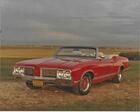
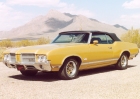
Had a complete engine rebuild done on my 1970 Olds Cutlass last fall, and they put in a Pertronix ignition. The hot days came this summer and the temperature soared past 210, 215 degrees, even up to 220. My mechanic tried another new thermostat. Then we had the rad re-cored, adding a third row. Still running hot. This thing hadn't run hot in the previous 36 years I've owned it. Plugs indicate it's running very lean. He's got it mostly under control now with a better fan blade and adjusted timing. But it's still hotter than it used to be. So he's going to try taking out the Pertronix and putting the points back in. Seems he's seen that solve a similar problem with another Olds. This guy is a vintage Olds specialist, so knows what he's doing. But this one is perplexing.
Paul in Canada
Had a complete engine rebuild done on my 1970 Olds Cutlass last fall, and they put in a Pertronix ignition. The hot days came this summer and the temperature soared past 210, 215 degrees, even up to 220. My mechanic tried another new thermostat. Then we had the rad re-cored, adding a third row. Still running hot. This thing hadn't run hot in the previous 36 years I've owned it. Plugs indicate it's running very lean. He's got it mostly under control now with a better fan blade and adjusted timing. But it's still hotter than it used to be. So he's going to try taking out the Pertronix and putting the points back in. Seems he's seen that solve a similar problem with another Olds. This guy is a vintage Olds specialist, so knows what he's doing. But this one is perplexing.
Paul in Canada
Thread Starter
Registered User
Joined: Apr 2010
Posts: 192
From: Winnipeg, Canada
Thanks for the quick response. No, he's definitely a trouble-shooter. Been at this a long time. He handles nothing but vintage Oldsmobiles. Owns six or seven himself. But this one has him puzzled. He put a Pertronix into his '69 years ago, and it's been trouble-free. But he believes that was an earlier generation of the unit.
I don't know what the timing is set at, sorry. He did say it's not where he'd think it should be. But it's running better where he's got it.
I can tell you this: as soon as the car is moving, the temperature is fine. It's the idling that sends it up. So seemed to be an air flow issue. Which is why he upgraded the fan.
Again, he ran into this with a previous rebuild recently, and returning to points solved it.
Paul
I don't know what the timing is set at, sorry. He did say it's not where he'd think it should be. But it's running better where he's got it.
I can tell you this: as soon as the car is moving, the temperature is fine. It's the idling that sends it up. So seemed to be an air flow issue. Which is why he upgraded the fan.
Again, he ran into this with a previous rebuild recently, and returning to points solved it.
Paul
Thread Starter
Registered User
Joined: Apr 2010
Posts: 192
From: Winnipeg, Canada
I wish I could be more helpful. The shop is out of town and I only get updates. I'm not mechanically inclined.
He's just put gauges in. Idling, it was going up to 220. With the new rad and fan, he's got it "down" to 200 or so. At idle. Not sure how far it drops when moving. Believe he said 190.
My goal wasn't to get a diagnosis here. I realize that's not realistic. Only to find out if others have had similar experiences with the Pertronix ignition.
Appreciate any feedback.
Paul
He's just put gauges in. Idling, it was going up to 220. With the new rad and fan, he's got it "down" to 200 or so. At idle. Not sure how far it drops when moving. Believe he said 190.
My goal wasn't to get a diagnosis here. I realize that's not realistic. Only to find out if others have had similar experiences with the Pertronix ignition.
Appreciate any feedback.
Paul

Registered User
Joined: Oct 2004
Posts: 7,743
From: Forest Ranch Ca.
I'm no fan of a Pertronix system but I can't think of a reason that would cause a heating problem any different than a points set up, spark is spark. Ask hem what the timing is set at......Tedd
Administrator
Joined: Oct 2009
Posts: 42,498
From: Poteau, Ok
A pertronix is just an electronic points replacement part. It should not create any performance issues in the engine while using the same timing settings as with points. If your engine is only reaching 200* at extended idle, your good.
Registered User
Joined: Dec 2014
Posts: 16,712
There are too many variables here. We have people at CO who can really help you, but I think they'll need more information. What else changed during the rebuild besides the ignition? What was the timing before and after the rebuild? What about compression? If he's only just put in the gauges, how do you know what the operating temperature was in the 36 years before the rebuild? You know, the temperatures you describe aren't really all that hot -- with the weather you guys have been having, 190 at cruise and 200 at idle is perfectly acceptable.
If the timing values are the same before and after the rebuild, I can't see the Pertronix conversion alone causing overheating, if in fact that's even a problem. See if he can give you those numbers.
If the timing values are the same before and after the rebuild, I can't see the Pertronix conversion alone causing overheating, if in fact that's even a problem. See if he can give you those numbers.

Registered User
Joined: Nov 2009
Posts: 3,009
From: Red Oak, Texas
Possibly the ring on the balancer has slipped a few degrees since he mentioned the timing is not where he thinks it should be. Never heard of any type of electronic ignition causing a heat problem. As was said, spark is spark as long as it happens in the correct sequence, there should be no difference. Was there no indication of elevated temps since the rebuild, only since the summer temps have arrived?
Thread Starter
Registered User
Joined: Apr 2010
Posts: 192
From: Winnipeg, Canada
Some more background: I got the car back last November. It ran great, no issues. But it was cold, and soon time to park it for the winter.
Put just a couple hundred miles on last fall and again this spring. He wanted to check it out, make sure everything was ok. Cut open the oil filter, checked the filings. Wanted to do that a few more times and make sure all was well.
First hot day this year, drove it back to the city from his shop and it wanted to stall at red lights. Had to put it in neutral to keep it running. Got home, it was so hot that after shutoff it wouldn't start until it cooled off. I didn't know it was a temperature issue at the time. Each time I drove it (we're having a very hot summer), it would tremble at idle. Got one of those heat-measuring pointer guns and it registered 220-225. At idle. Ran fine at speed.
Agree, 190 at cruise and 200 at idle is fine. But 225 at idle, not so fine, I'm told.
So now he's put the gauges in so we can better monitor it. Hid them nicely behind the ashtray lid. I don't smoke
I'll try to get those other figures and get back on here with an update. Should know more in a day or two.
Thanks again.
Paul
Put just a couple hundred miles on last fall and again this spring. He wanted to check it out, make sure everything was ok. Cut open the oil filter, checked the filings. Wanted to do that a few more times and make sure all was well.
First hot day this year, drove it back to the city from his shop and it wanted to stall at red lights. Had to put it in neutral to keep it running. Got home, it was so hot that after shutoff it wouldn't start until it cooled off. I didn't know it was a temperature issue at the time. Each time I drove it (we're having a very hot summer), it would tremble at idle. Got one of those heat-measuring pointer guns and it registered 220-225. At idle. Ran fine at speed.
Agree, 190 at cruise and 200 at idle is fine. But 225 at idle, not so fine, I'm told.
So now he's put the gauges in so we can better monitor it. Hid them nicely behind the ashtray lid. I don't smoke
I'll try to get those other figures and get back on here with an update. Should know more in a day or two.
Thanks again.
Paul
Thread Starter
Registered User
Joined: Apr 2010
Posts: 192
From: Winnipeg, Canada
Just for fun, if you're interested, here's a story I wrote about the history and the rebuild. Posted this somewhere else on this forum a while back. An expanded version will appear in the magazine Journey With Olds, the August issue, I'm told.
https://winnipegsun.com/driving/time...rough-its-past
https://winnipegsun.com/driving/time...rough-its-past
Registered User
Joined: Feb 2013
Posts: 15,411
From: Phoenix, AZ
I have seen this with my car when I had to put it through emissions testing. I would disconnect the vacuum advance and decrease the initial advance (for better emission numbers), and the engine would run hotter. As soon as I set everything back to normal after the emissions test, the engine would immediately run cooler.

Registered User
Joined: Mar 2010
Posts: 3,869
From: Mt.Ary, MD
It could be as simple as the wrong sending unit. Factory gauge or sender supplied with aftermarket gauge? Hit various spot on the engine and coolant (if it's not boiling over).
Are they TRW/Speedpro pistons? How much bore clearance is there. It'll run hot if it's tight, and usually burn the oil.
How's the fan clutch?
Are they TRW/Speedpro pistons? How much bore clearance is there. It'll run hot if it's tight, and usually burn the oil.
How's the fan clutch?

Registered User
Joined: Jan 2010
Posts: 6,105
From: central Indiana
All things being equal, the ignition should have zero influence on the operating temp. Assuming the timing curve is the same (as it should be just removing the points and installing electronic conversion) then the type of ignition shouldn’t matter.
As someone mentioned, maybe the outer ring on the balancer has moved? Are the advance weights free to move?
As someone mentioned, maybe the outer ring on the balancer has moved? Are the advance weights free to move?
Registered User
Joined: Jun 2020
Posts: 1,090
From: Peoria Arizona
I can not speak to your specific situation however when I restored and installed a Pertronix ignition in my 64 Belair I had absolutely no issues at all it performed perfectly until the day I sold it , no knocks, no timing issues, no overheating, I agree that if installed correctly it should not cause any issues.

Oldsdruid
Joined: Dec 2007
Posts: 10,629
From: Southside Vajenya
Are you running ported or manifold vacuum advance, or any vacuum advance at all?
If ported are you still on the DTVS (distributor thermal vacuum switch)? Its sole purpose in life is to switch distributor vacuum advance to manifold vacuum in an overheating condition and advance base timing to cool the engine.
One more thought. What is ethanol concentration of your best available fuel there? Ethanol runs inherently lean. You might try rejetting your carb to offset that, or trying a different brand or octane fuel.
If ported are you still on the DTVS (distributor thermal vacuum switch)? Its sole purpose in life is to switch distributor vacuum advance to manifold vacuum in an overheating condition and advance base timing to cool the engine.
One more thought. What is ethanol concentration of your best available fuel there? Ethanol runs inherently lean. You might try rejetting your carb to offset that, or trying a different brand or octane fuel.
Last edited by rocketraider; Jul 23, 2021 at 08:17 PM.
Registered User
Joined: Nov 2009
Posts: 3,009
From: Red Oak, Texas
I haven't seen anywhere that tells what carburetor you are running. It is possible with the idle stumble it is running lean thus the heat problem too. If it isn't a well tuned Q-Jet all bets are off on the A/F ratio being right. Get him to set the carb with an A/F analyser.
Last edited by edzolz; Jul 24, 2021 at 11:36 AM.

Registered User
Joined: Aug 2011
Posts: 4,110
Are the spark plugs gapped to the correct/original/same spec? Wondering if someone thought electronic ignition, let's widen the gap.
A wider gap leads to a larger flame kernel, to more heat, to detonation, to increased cylinder temperature.
A wider gap leads to a larger flame kernel, to more heat, to detonation, to increased cylinder temperature.
Thread Starter
Registered User
Joined: Apr 2010
Posts: 192
From: Winnipeg, Canada
I sure appreciate all the suggestions. I can't answer many of those questions. One I can: I use only our best premium fuel up here: 93 octane. No ethanol.
I'll keep you all posted. Thank you.
I'll keep you all posted. Thank you.
Thread Starter
Registered User
Joined: Apr 2010
Posts: 192
From: Winnipeg, Canada

72Cutlass S
Joined: Jul 2011
Posts: 1,201
From: Bakersfield, CA
In the beginning of your post you said the plugs all read lean. Could be a vacuum leak, especially after you stated your mechanic was having trouble keeping it running at stops. Might be worth a look.

Thread
Thread Starter
Forum
Replies
Last Post


