When you click on links to various merchants on this site and make a purchase, this can result in this site earning a commission. Affiliate programs and affiliations include, but are not limited to, the eBay Partner Network.
Hey everyone, I’m pretty sure the alternator went out on my car. Just wondering which alternator to pick. There’s 3 different choices and I’m not sure which one to go with. The only sticker I could find I’ll post along with this thread. It’s also a standard 330 4 speed with no air.
Go to a local rebuilder and have yours rebuilt vs replacing it with one from a big box store. A bad voltage regulator which is not part of the alternator can give the same symptom and may be the problem.
Go to a local rebuilder and have yours rebuilt vs replacing it with one from a big box store. A bad voltage regulator which is not part of the alternator can give the same symptom and may be the problem.
THIS ^^^^^^^You can also unplug the volt regulator plug and jump the wires to full field the alternator to see if it is a alternator problem... Full fielding the alternator will make it fully output. I forget which letters on the plug you jump. I know its one on the top of the plug & 3rd wire down to full field. If alt starts charging like this the voltage regulator is faulty. You will need a volt meter on the battery post to ck this of course.GOOD LUCK !!
Last edited by zl1 camaro; Jul 16, 2025 at 06:16 AM.
Where do you see three choices? I see 10 choices at the Rockauto website, some rebuilt, including AC/Delco, and a couple of brand new ones.
The popular one is the one with the red heart next to it.
Autozone's website lists 22 alternators for your car. I'm guessing they're not all actually compatible with what you need, but I'll bet many of them are.
Your current alternator has already been rebuilt once. I assume you can rebuild them over and over, but a new one might be the way to go. They'll come with warrnties, some lifetime.
[QUOTE=jaunty75;1639934]Really? Your advice is to spend (way) more money than he has to to buy more power than he needs in order to satisfy a demand that might never happen?
What could he add to his car that has so much more "electric pull" that the current alternator wouldn't be able to handle it?
As I understand it, the higher-output alternators are usually used on cars with air-conditioning. He says his car
Last edited by zl1 camaro; Jul 16, 2025 at 08:28 AM.
Really? Your advice is to spend (way) more money than he has to to buy more power than he needs in order to satisfy a demand that might never happen?
What could he add to his car that has so much more "electric pull" that the current alternator wouldn't be able to handle it?
As I understand it, the higher-output alternators are usually used on cars with air-conditioning. He says his car does not have A/C.
In my world in Rochester, my rebuild SHOP is $25.00 [WAY] more WOW ! can u swing it ? After market lights, new dash lighting etc etc...TO me over kill is best. why put a 15 amp service in your house when you are wiring go 20 amp for future add ons. But thats me..
Last edited by zl1 camaro; Jul 16, 2025 at 08:25 AM.
Well whoopie fizz for your shop in Rochester. Not everyone has access to $25 rebuild services, and, even if they did, you still haven't explained WHY he should put in a more powerful alternator than he had before, assuming his isn't currently a 63.
My guess is because there is no logical answer. Rather, the answer is the old tried-and-true "if big is good, bigger is better." "If one is good, two is better," etc.
TO me over kill is best. why put a 15 amp service in your house when you are wiring go 20 amp for future add ons. But thats me..
Overkill is best, and so is, apparently, overspending. Most electrical outlets in a house are wired for 15 amp except for those in high-draw areas, like a kitchen or garage. So you put in the 20 amp service in those locations. But you don't wire the whole freaking house for 20 amp just because you can. 15 amp is more than adequate for the rest of the house.
There's being smart, and then there's being too smart for your own good. The line between the two can sometimes be quite fine.
Last edited by jaunty75; Jul 16, 2025 at 08:55 AM.
overkill is best, and so is, apparently, overspending. Most electrical outlets in a house are wired for 15 amp except for those in high-draw areas, like a kitchen or garage. So you put in the 20 amp service in those locations. But you don't wire the whole freaking house for 20 amp just because you can. 15 amp is more than adequate for the rest of the house.
There's being smart, and then there's being too smart for your own good. The line between the two can sometimes be quite fine.
yes i fully agree, i should of said i would put 20 amp service in my garage & basement & maybe kitchen....
My guess is that, in the kitchen, at least, 20-amp service is required by code. It may be in garages as well. My garage has 20-amp service, as does, of course, my kitchen.
(Isn't this an exciting conversation! )
Last edited by jaunty75; Jul 16, 2025 at 09:31 AM.
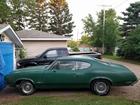
Now now gentlemen lol. I’m new to the classic car game. I inherited the car from my late uncle. The car starts right up but will only stay on for 20 seconds or so. I assumed it was the alternator. Mine has 3 wires on the back. Two are connected together. I should have phrased my original question as which amp do I need. No A/C as well.
Yes this is what I was referring too. Also the car starts right up, but dies out shortly there after. I assumed alternator. I also pulled the batter cable while it was running and the car died 2 seconds after. I was told it may be a carb issue but I know he rebuilt it last year. Thank you for your non argumentative replies.
Generally a charging system isn't hard to test. Consider purchasing a 12VDC LED test light with a built-in digital voltmeter (around $20-25) and we can help you figure this out. By just changing parts without testing it wastes time, money and often results in the old quality original parts being replaced with new sub-standard parts.
Not how this works. Also, the 63A system uses a different voltage regulator than do the other two.
HEY Joe, you sure the voltage regulators are different. I have 2 camaro's both taking a 45 amp alternators & I have upgraded to a 63 amps. charging at 14.2 volts no problems ? The stator is the only difference. THE demand is not there so I wonder if this is why I have had no ISSUE'S with the charging rate ? I am sure you are right but I would like to know. SOME of my parts guide list the same regulators some say not ? Yes I know the alternator will only output what its asked to do, but IF you were to put a high power stereo system lets say in your car this will more then likely require more current ..I know if you go crazy and put something like 120 amp you will need to increase gauge of harness etc.
Last edited by zl1 camaro; Jul 17, 2025 at 05:07 AM.
To get a little into the weeds here, wiring a house to 20 amp receptacles and wiring everywhere has no downside other than initial cost. The wire is 12 gauge over 14. The receptacles are 20 amp instead of 15. The breakers are 20 amp instead of 15. Theoretically, you might want to step the mains up 100 amps, but all of that is no different when the system is completed.
I don't possess the electrical engineering knowledge to know if the load presented by a higher amperage alternator is higher than a less amperage alternator at the same load and rpm. The higher rated alternator is probably bigger and heavier. I just don't know if the parasitic drag for the same load at the same rpm is more with the higher rated alternator. Most people would probably not only not wonder about such a thing, but not even know that that could be a topic of significance or even possibility.
I bought the Summit 10DN Chrome alternator. It said 70 amp, had 51 amps at idle and 82 at cruise on the testing card. Easily kept up with Dodge Stratus dual electric fans. Unfortunately someone stole it and the billet pullies I had. I say the 55 amp AC Delco reman is the best deal.
Welp sorry to annoy everyone again, but it’s not the alternator. Once if the carb doors is stuck open and loose. Anyone have any ideas on how to fix it?
The choke flap may be partially closed unless the engine is fully war. The heated choke coil could be defective, especially if stuck and may need replaced.
Yes this is what I was referring too. Also the car starts right up, but dies out shortly there after. I assumed alternator. I also pulled the batter cable while it was running and the car died 2 seconds after. I was told it may be a carb issue but I know he rebuilt it last year. Thank you for your non argumentative replies.
When you remove the battery cables from a car with an alternator, the alternator immediately reaches its highest output, and in short order, it will blow out at least one, if not two, of the positive diodes. If it's a generator car, you can pull the battery cable, and the engine will continue to run.
Back in 1966, most GM cars had either 37-amp or 42-amp alternators, and the 42-amp alternators were used when the car had options that required the extra power. I believe that the 62-amp alternator was a 20DN series, perforated-case alternator with a transistorized regulator. The mounting brackets differ from those of the 10DN alternators. It is also about double the weight of the 10DN alternator.




 )
)