When you click on links to various merchants on this site and make a purchase, this can result in this site earning a commission. Affiliate programs and affiliations include, but are not limited to, the eBay Partner Network.
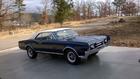
Does anyone know the real weight of a 66 442 sport coupe [Post] ? My registration says 3167, is that possible, that seems real light.. JOE will probably know this I bet.
NHRA stock class guides show 3452 lbs for a 442 based on the F85 Club Coupe and 3503 lbs for a 442 based on the Cutlass Sport Coupe. The difference is rubber floor mats vs. carpet, sound deadening, etc.
By the way, NHRA lists a 1966 F85 club coupe with V6 and manual trans at 2950 lbs.
I believe some variance might be attributed to the type of "registration" you're referring to i.e. vehicle title agency, county, state vehicle tax assessment authority, etc. I've found discrepancies in not only (curb) weight but in vehicle identification, as well. The "agency" might have simply pooled vehicles together for "registration" purposes. I've found lots of discrepancies in vehicle registration parameters over the various states I've resided.
NHRA stock class guides show 3452 lbs for a 442 based on the F85 Club Coupe and 3503 lbs for a 442 based on the Cutlass Sport Coupe. The difference is rubber floor mats vs. carpet, sound deadening, etc.
By the way, NHRA lists a 1966 F85 club coupe with V6 and manual trans at 2950 lbs.
INTERESTING ,,,Thanks again JOE. I knew you would know that !!! I like what the reg says better however
Last edited by zl1 camaro; Feb 16, 2024 at 05:52 AM.
I believe some variance might be attributed to the type of "registration" you're referring to i.e. vehicle title agency, county, state vehicle tax assessment authority, etc. I've found discrepancies in not only (curb) weight but in vehicle identification, as well. The "agency" might have simply pooled vehicles together for "registration" purposes. I've found lots of discrepancies in vehicle registration parameters over the various states I've resided.
You are probably are correct on that,,Thanks Norm to you as well.!!!
I believe some variance might be attributed to the type of "registration" you're referring to i.e. vehicle title agency, county, state vehicle tax assessment authority, etc. I've found discrepancies in not only (curb) weight but in vehicle identification, as well. The "agency" might have simply pooled vehicles together for "registration" purposes. I've found lots of discrepancies in vehicle registration parameters over the various states I've resided.
Curb weight, shipping weight, and NHRA race weight are three different vehicle configurations with different amounts of gasoline and other things.
Curb weight, shipping weight, and NHRA race weight are three different vehicle configurations with different amounts of gasoline and other things.
X 2
As I recall, cars always weighed 100-200 pounds more than shipping weight. I would assume that the "curb weight" was used by car magazines and was from weighing at a public scale..
It’s a fallacy that a post car is a bunch lighter than a hardtop.
the factory base weights are just base weights. the base weight of a post F85 is with a 6cyl. It would come with manual steering, manual brakes and manual trans.
if equipped with the same drive train, what is the weight difference?
Last edited by CANADIANOLDS; Feb 17, 2024 at 01:37 PM.
It’s a fallacy that a post car is a bunch lighter than a hardtop.
the factory base weights are just base weights. the base weight of a post F85 is with a 6cyl. It would come with manual steering, manual brakes and manual trans.
if equipped with the same drive train, what is the weight difference?
The NHRA weights I posted account for drivetrain. All of the numbers I posted are for 442s with the 400 motor and manual trans, except for the V6 car for info. They list lower numbers for different drivetrains in the same body.
You are correct that the differences between post cars and hardtops is negligible - typically in the 30-40 lb range. Most of that is due to differences in sound deadening and window mechanisms, not the actual body. The exterior body panels are all the same, and there is very little difference in the internal structural supports.
Question time. I’m still looking for the elusive “no sound deadening” or “insulation” on the F85’s…where did this come from ? Does it say delete that stuff in the GM manuals ?
I’ve parted out a few F85’s that were bare bones 6 cyl cars and doing another one now. this is a deluxe F85 and just like all the others..it has deadening in the roof, under the dash/firewall and floor had that brown wool type stuff.
I wish I had a definitive answer. The Product Assembly Manual doesn't include the stuff that Fisher Body installed. I think part of it was the lack of jute backing under rubber floor mats vs. under carpet. I do know that for 1966 the PIM shows that the under-hood insulation pad was only used on the 3500-3600 (F85 Deluxe) and 3800 (Cutlass) model lines, not on the 3100-3200 F85 models.
I don’t know if this car came with carpet or rubber mats. there were only some pieces of the jute still on the floor. Being a deluxe I would think carpet.
i have a bares bones 69 F85 post 6 cyl car. Bench seat radio delete std steering and brakes. It had rubber with jute under it..remember tearing it out. I can’t remember if it has roof deadening or not…I’m gonna check..and I’ll check under the hood.
what’s funny about the 69 F85 flat hood, is it’s got an under skin that has very few cut outs or holes in it like the Cutlass hood. So even if it has no under hood insulation, which don’t weigh anything, it looks like it would be heavier?
Yeah, carpet was standard equipment in the Deluxe models.
It's like on the 70 W-30 cars that claimed "reduced sound deadening" that was simply deleting the hood insulation that couldn't be used with the O.A.I. hood anyway (and ignoring the fact that the fiberglass hood weighs more than the metal one).
Yeah, carpet was standard equipment in the Deluxe models.
It's like on the 70 W-30 cars that claimed "reduced sound deadening" that was simply deleting the hood insulation that couldn't be used with the O.A.I. hood anyway (and ignoring the fact that the fiberglass hood weighs more than the metal one).
Yep....the glass hood is quite a bit heavier. The springs to hold it open are different. Guys learn that real quick after they install one with stock hood springs and it comes down on their head😂😂
didn’t Olds say the hood was lite weight fibreglass in their marketing?