


455 big block under hood temperature differences

Thread Starter
Vincit qui se vincit
Joined: Aug 2019
Posts: 939
From: SE USA
455 big block under hood temperature differences
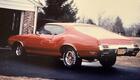
OK just for fun I took out my infrared thermometer and measured different components under the hood of my auto trans AC equipped ‘71 442.
Approximately 30 minutes drive time with speeds up to 65mph, approx 15 mile loop 75° ambient air temperature 75% relative humidity. Temperatures measured two minutes after pulling into garage
Substantial variances, would enjoy hearing feedback - always thought this thing ran hot but everything runs hot in Florida when it’s hot out.
W exhaust manifold - 345°
G head driver side near plug - 225°
Water pump hose into thermostat - 192°
Passenger valve cover - 178°
Driver side valve cover - 175°
Upper radiator hose - 142°
Lower radiator hose 140°
Top of radiator next to cap - 125°
Radiator cap - 105°
Fascinating stuff.
Approximately 30 minutes drive time with speeds up to 65mph, approx 15 mile loop 75° ambient air temperature 75% relative humidity. Temperatures measured two minutes after pulling into garage
Substantial variances, would enjoy hearing feedback - always thought this thing ran hot but everything runs hot in Florida when it’s hot out.
W exhaust manifold - 345°
G head driver side near plug - 225°
Water pump hose into thermostat - 192°
Passenger valve cover - 178°
Driver side valve cover - 175°
Upper radiator hose - 142°
Lower radiator hose 140°
Top of radiator next to cap - 125°
Radiator cap - 105°
Fascinating stuff.

Registered User
Joined: Jan 2010
Posts: 6,105
From: central Indiana
I don’t see anything that I would worry about. Is this a curiosity thing, or are concerned about something in particular? I’m guessing once the ambient temp outside is warmer, some of the under hood temps might go up as well. Unless things get much hotter, file it’s under the “nice to know”.
Thread Starter
Vincit qui se vincit
Joined: Aug 2019
Posts: 939
From: SE USA
I don’t see anything that I would worry about. Is this a curiosity thing, or are concerned about something in particular? I’m guessing once the ambient temp outside is warmer, some of the under hood temps might go up as well. Unless things get much hotter, file it’s under the “nice to know”.
Mostly curiosity, my rallye pack temperature gauge doesn’t move too much off of cold - never has been halfway to hot. So curious if the gauge was working properly, and hoping the cooling system was doing its job.

Registered User
Joined: Mar 2011
Posts: 168
From: Dana Point, CA
The temp on my rally pac in my 72 CS (factory pac and 455) doesn't move much either; the temp reads lower than it should and the oil pressure reads higher than it should (pegs on high (60psi?) when cold), and they seem to move together, tho in opposite directions, when the key is turned or when voltage/ground(?) fluctuated on me once if I remember right, if that makes sense. Makes me think its a ground issue. Thinking it was the unit or pins in back, I Tried my brother's RP after he got it back from a 'rebuilder' and it reads the same. 1/4 on the temp really should be just short of half so I go off of that but don't like it. Ground issues?

Registered User
Joined: Jun 2014
Posts: 1,658
From: Ft. Wayne, IN
What temp is your thermostat? 142 deg on the upper radiator hose seems pretty cool, although rubber isn't the best thermal conductor so the water flowing within is probably much warmer. 192 on the short hose between the water pump and the thermostat housing is probably a better indicator of the water temp and makes sense for a 180 thermostat. Is this on the rubber part of the hose or on the metal elbow (if yours has that)?
Keep in mind that the emissivity of the different materials and finishes (rubber hoses vs. painted metal valve covers, etc) can also influence the temperature readings obtained by an IR sensor. I suspect that the rubber hoses are lower emissivity than the painted valve covers, which is why they are reading way lower than would be expected based on your other readings.
Keep in mind that the emissivity of the different materials and finishes (rubber hoses vs. painted metal valve covers, etc) can also influence the temperature readings obtained by an IR sensor. I suspect that the rubber hoses are lower emissivity than the painted valve covers, which is why they are reading way lower than would be expected based on your other readings.
Registered User
Joined: Aug 2018
Posts: 1,098
From: Utah
You should get some accurate detailed gauges that will show correct oil pressure and coolant temperature. Autometer or SpeedHut makes some great gauges. SpeedHut even has warning lights.
To be blunt. The factory gauges are junk. They never worked right back in the 70's and they are not detailed and don't show correct information. The factory "idiot light" is just that, idiotic, as it didn't turn on for low oil pressure until 5 psi which means your problems have started long ago.
To be blunt. The factory gauges are junk. They never worked right back in the 70's and they are not detailed and don't show correct information. The factory "idiot light" is just that, idiotic, as it didn't turn on for low oil pressure until 5 psi which means your problems have started long ago.

Registered User
Joined: Feb 2013
Posts: 15,409
From: Phoenix, AZ
Keep in mind that the emissivity of the different materials and finishes (rubber hoses vs. painted metal valve covers, etc) can also influence the temperature readings obtained by an IR sensor. I suspect that the rubber hoses are lower emissivity than the painted valve covers, which is why they are reading way lower than would be expected based on your other readings.
The reason for the lower temp readings on the hoses is as you said before, the rubber is an insulator.

Registered User
Joined: Feb 2019
Posts: 666
From: The Seasonally-Frozen Wastelands
Keep in mind that the emissivity of the different materials and finishes (rubber hoses vs. painted metal valve covers, etc) can also influence the temperature readings obtained by an IR sensor. I suspect that the rubber hoses are lower emissivity than the painted valve covers, which is why they are reading way lower than would be expected based on your other readings.
Thread Starter
Vincit qui se vincit
Joined: Aug 2019
Posts: 939
From: SE USA
The relative power of a surface to emit heat by radiation : the ratio of the radiant energy emitted by a surface to that emitted by a blackbody at the same temperature.
Thanks for the comments guys.
As previously stated, fascinating stuff!
Thanks for the comments guys.
As previously stated, fascinating stuff!

Thread
Thread Starter
Forum
Replies
Last Post


