When you click on links to various merchants on this site and make a purchase, this can result in this site earning a commission. Affiliate programs and affiliations include, but are not limited to, the eBay Partner Network.
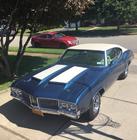
I had a couple build questions that I'm hoping someone that was there can answer.
Carb - My car came with a quickfuel on it but I got a QJet on the car that was supposed to be original. Its stamped 7040258 which decodes to an W30 automatic. My car is a non-W30 auto. My car was built on 10/7/69, fairly but never very early build. The Julian date on the carb is 2659 which decodes to 9/22/69, right in line with the build date of the car. I have the carb at a restorer (Allstate Carb - highly recommended) who said it's not a restamp. What are the chances that it got a W30 carb at the factory? Also, 10/7 was a Tuesday, so it's not a Mon/Fri car.
My car doesn't have the fender to cowl braces. There is no signs that they were ever there & no signs that the car was ever wrecked or taken apart. Were they missed or possibly not on early build cars?
My car is an AC car. Does that alone mean it should have an open face alternator?
I'm thinking about going with belted tires for that original look. Would the car have gotten either Firestone or Goodyears? If it matters it's an original SS1 car.
Any insight that can be shared is much appreciated. Thanks.
Anything could and was missed due to somebody not reading the build sheet correctly. Also could have been a substitute or new hire not knowing he or she was doing! Also could be they ran out of the proper part number and just to get production slapped on what would they had (usually management)
From my research here on CO, I think the consensus is that cars built through Feb '70 should have Goodyears, then Firestones for the balance of the year.
Anything could and was missed due to somebody not reading the build sheet correctly. Also could have been a substitute or new hire not knowing he or she was doing! Also could be they ran out of the proper part number and just to get production slapped on what would they had (usually management)
Notice clipboard with build sheet.
Pat
The 442 I finished last year came with a correct, date coded voltage reg. on the firewall that had never been hooked up. Pat, do you have any other pictures like these? This one clearly shows the overspray on the bypass hose, and the cad plated - not painted - P/S pulley nut. Need more pics!!!
Last edited by costpenn; Jan 21, 2016 at 05:47 PM.
I will do post for the prior to Lansing Fisher body purchase of Durant/Star plant in the next couple of days. They were around for 10 years and there seems to be more pictures of production compared to Oldsmobile being for ten times longer!
From my research here on CO, I think the consensus is that cars built through Feb '70 should have Goodyears, then Firestones for the balance of the year.
I will do post for the prior to Lansing Fisher body purchase of Durant/Star plant in the next couple of days. They were around for 10 years and there seems to be more pictures of production compared to Oldsmobile being for ten times longer!
Anything could and was missed due to somebody not reading the build sheet correctly. Also could have been a substitute or new hire not knowing he or she was doing! Also could be they ran out of the proper part number and just to get production slapped on what would they had (usually management)
Notice clipboard with build sheet.
Pat
Very helpful. Thanks. It's all pretty interesting, and kind of laughable how cars get judged at shows.
Originally Posted by 1970csI will throw you a link to Corbis. Oldsmobile was not to willing to give out too much on their production practices. B and C car line from 1973. http://www.corbisimages.com/Search#q...e+assembly&p=1
I will do post for the prior to Lansing Fisher body purchase of Durant/Star plant in the next couple of days. They were around for 10 years and there seems to be more pictures of production compared to Oldsmobile being for ten times longer!
Pat
I clicked on the link and it has about 13 pics. Take the word assembly out and see some other great pictures of Oldsmobile's. Mike
What else would it be? Back before computers that is how they kept track of each build. Workers at each station had to know what they were working on. Its not like they needed it, usually engines and transmissions were run in batches, so the worker never had to look at that sheet. After a day or so one knew where every part went without ever looking at that sheet. But there had to be an identifier on the engine at all times.
I had a couple build questions that I'm hoping someone that was there can answer.
Carb - My car came with a quickfuel on it but I got a QJet on the car that was supposed to be original. Its stamped 7040258 which decodes to an W30 automatic. My car is a non-W30 auto. My car was built on 10/7/69, fairly but never very early build. The Julian date on the carb is 2659 which decodes to 9/22/69, right in line with the build date of the car. I have the carb at a restorer (Allstate Carb - highly recommended) who said it's not a restamp. What are the chances that it got a W30 carb at the factory? Also, 10/7 was a Tuesday, so it's not a Mon/Fri car.
My car doesn't have the fender to cowl braces. There is no signs that they were ever there & no signs that the car was ever wrecked or taken apart. Were they missed or possibly not on early build cars?
My car is an AC car. Does that alone mean it should have an open face alternator?
I'm thinking about going with belted tires for that original look. Would the car have gotten either Firestone or Goodyears? If it matters it's an original SS1 car.
Any insight that can be shared is much appreciated. Thanks.
my W30 has a build date of 01C. I think that 2669 Would work for me if you let it go for a profit.
mine came with a -51 and also in the right line with the build date. Some say auto /ac W cars may have left the factory with this carb...
Wow, a lot of guys in line for this carb. It's getting restored right now. I guess it's a pretty highly sought after piece when it's done. I wouldn't let it go unless I found a 0257 with a good Julian date for my car.
Look at this photo, a sheet hanging off the Buick frame and a sheet attached to the engine hoist on the Buick and the Olds in the background. I dont need to see exactly what they say to know what they were for.
Those are still used today. We call them manifests. They get printed out at the lines by the control room, and they go with the vehicle, then get recycled. The neat thing is that the electronic data goes along with the system, and essential parts have light curtains and other sort of detection to make sure you pick the right part. Guy still needs to know, however, so the paper tells him.
Yet Koda thinks he has a different idea - whom do I believe?
This all started when one member said notice the build sheet on the clipboard and you asked how he knows what it is. There is only one thing it can be.
If it helps everybody. I can make phone calls Dick Baker experimental engineer
Ralph Ziegler W27 design engineer and Roland Anderson, Doug Hanson and Jay Tolsma engineers at plant one or plant 2.
Yet Koda thinks he has a different idea - whom do I believe?
I agree with TK, it's a build sheet or a manifest. It tells the worker what to put on that car.
For instance, on a line I recently worked on, the manifest says, among other things, what engine and transaxle to pick, whether or not it was AWD or Hybrid or whatever, and things like different hoses, alternators, and AC compressors to pick.
I tell you, what impresses me about that Buick engine drop picture is that it doesn't have a transmission hook. Could be the darn iron block is so damn heavy that the CG of the assembly is close enough to the engine to not really matter. One of the things I am on currently is end effectors on a couple engine lines, and we have to pick that assembly up like they have it, but have another hook to balance the transaxle.
This all started when one member said notice the build sheet on the clipboard and you asked how he knows what it is. There is only one thing it can be.
I was coming from the POV that we are familiar with several documents that pertain to our cars, but that doesn't mean these documents are what's pictured. I wasn't on an assembly line in 196x so the sheet pictured could be something we're not familiar with.
Anyway, didn't see the images you posted - that's what I get for posting from my phone.
I'm thinking about going with belted tires for that original look. Would the car have gotten either Firestone or Goodyears? If it matters it's an original SS1 car.
Look at your assy. manual, it is a big help in determining what tires your car may have come with.
Ok fellers I made some calls. Dick Baker had some detailed information.
That is a build form for what he called "engine dress" A,B,C,D,&E was he called it in engineering E for everything.
Even bare engine build had know what water pump, longer stud bolts or not for A/C compressor bracket and the same for power steering, style of manifold and etc.
Everything that was not painted gold, bronze or blue was considered as "dress up.
That is a build form for what he called "engine dress" A,B,C,D,&E was he called it in engineering E for everything.
Even bare engine build had know what water pump, longer stud bolts or not for A/C compressor bracket and the same for power steering, style of manifold and etc.
I was going to post the exact same thing. Not that I was there, but the whole-car build sheet contains way too many details for each station along the line. So smaller broadcast cards, or build forms, were used with just the details needed in that area.
Somewhere I have a picture of such a sheet, not for Engine Dress at the Final Assembly Plant, but for Engine Build at the Engine Plant. It has in large letters the application code for each engine component going into the build. I can't find the picture right now.
It's all about making the worker's job as easy as possible. He'll be more productive, and the end product will be built right.
Last edited by BlackGold; Jan 26, 2016 at 03:23 PM.


 442 Lansing build questions


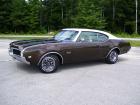
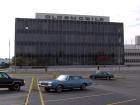


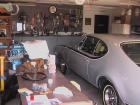

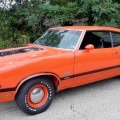

 I will throw you a link to Corbis. Oldsmobile was not to willing to give out too much on their production practices. B and C car line from 1973.