


10% ethanol & problems

Thread Starter
Registered User
Joined: Dec 2008
Posts: 1,179
From: West Palm Beach, FL
10% ethanol & problems
I searched and was surprised to not see what I was looking for.
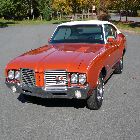
Took the 76 Toronado on a 5 hour trip this weekend, and it started to ping (more than usual) and actually ran like crap once or twice while under moderate to heavy acceleration (getting on Interstate).
It bucked and coughed and felt dead, until I let up on the gas, then it was fine. At highway speeds, perfect, even to pass. But 40ish and punching it kills it.
I imagine the worst like ethanol eating away the fuel lines and they are collapsing under heavy acceleration.
I normally use regular (premium does nothing, still pings) but all gas here has 10% ethanol.
Any comments would be appreciated.
Took the 76 Toronado on a 5 hour trip this weekend, and it started to ping (more than usual) and actually ran like crap once or twice while under moderate to heavy acceleration (getting on Interstate).
It bucked and coughed and felt dead, until I let up on the gas, then it was fine. At highway speeds, perfect, even to pass. But 40ish and punching it kills it.
I imagine the worst like ethanol eating away the fuel lines and they are collapsing under heavy acceleration.
I normally use regular (premium does nothing, still pings) but all gas here has 10% ethanol.
Any comments would be appreciated.

Registered User
Joined: Aug 2009
Posts: 333
I've never had a problem that I could trace to using ethanol, in various vehicles ranging back to a 69 Buick, ranging over several states and the past -- I don't know, couple decades?
Generally, I've gained a trifling amount of gas mileage, and performance appears to be at least as good as with regular fuel, possibly better. I've never actually tried to measure performance, though, although I keep pretty close track of my mileage. If I'm at a station that carries it, I always buy it.
YMMV.
************************************************** ********
Generally, I've gained a trifling amount of gas mileage, and performance appears to be at least as good as with regular fuel, possibly better. I've never actually tried to measure performance, though, although I keep pretty close track of my mileage. If I'm at a station that carries it, I always buy it.
YMMV.
************************************************** ********

Land Yacht Captain
Joined: Aug 2009
Posts: 1,727
From: Shelburne, Ontario
I deal pretty heavily with the major fuel companies on a regular basis. What information are you looking for??
Ethanol blended fuel will NOT increase fuel mileage as Ethanol has fewer BTU's than straight gasoline and therefore creates less power causing more fuel to be burned.
Ethanol blended fuel will NOT increase fuel mileage as Ethanol has fewer BTU's than straight gasoline and therefore creates less power causing more fuel to be burned.
Registered User
Joined: Aug 2009
Posts: 333
Ethanol blended fuel will NOT increase fuel mileage as Ethanol has fewer BTU's than straight gasoline and therefore creates less power causing more fuel to be burned.
I've always attributed it to the fact that the ethanol blends I buy generally have higher octane than the regular unleaded I normally buy, and assumed that the computer controls on my daily drivers are thus able to push the timing slightly higher, and so on. I also considered it possible that the alcohol might be acting in a minor way as a cleanser for the carb in older vehicles.
It's also possible I simply drive somewhat differently when I use ethanol.
At any rate, I generally notice a 1-2 mpg increase when I buy ethanol. What causes it, I don't know.
************************************************** *******
Registered
Joined: Jul 2006
Posts: 4,430
From: Northeast Ohio
Our '03 GP mileage drops noticeably with the ethanol mix gas.
I was going to a show in my GTO and failed to check my gas gauge first and it was on empty.
I had to stop and get a few gallons at a little station that was the only one around that area and they had ethanol in the fuel. After getting the gas I pulled away and not 5 minutes later I could smell gasoline.
I stopped and checked and the fittings at the fuel pump and carb were dripping. That stuff caused it for sure, no big deal to tighten the fittings and stop it but it could have been a disaster if I didn't detect it right away.
I was going to a show in my GTO and failed to check my gas gauge first and it was on empty.
I had to stop and get a few gallons at a little station that was the only one around that area and they had ethanol in the fuel. After getting the gas I pulled away and not 5 minutes later I could smell gasoline.
I stopped and checked and the fittings at the fuel pump and carb were dripping. That stuff caused it for sure, no big deal to tighten the fittings and stop it but it could have been a disaster if I didn't detect it right away.
Thread Starter
Registered User
Joined: Dec 2008
Posts: 1,179
From: West Palm Beach, FL
I smelled gas a few weeks ago when I got in my car after getting gas. But I attributed it to the fact that I was in a gas station getting gas. I have not smelled it since, but all 3 of my cars smell like gas after driving.
Thread Starter
Registered User
Joined: Dec 2008
Posts: 1,179
From: West Palm Beach, FL
UPDATE Started using Ethanol Medic, seems fine, maybe it was just a bad tank.
http://shop.fuelmedics.com/product.sc?productId=2
http://shop.fuelmedics.com/product.sc?productId=2


Registered User
Joined: Jun 2009
Posts: 15,116
From: southeastern Michigan
At any rate, I generally notice a 1-2 mpg increase when I buy ethanol. What causes it, I don't know.
I had to stop and get a few gallons at a little station that was the only one around that area and they had ethanol in the fuel. After getting the gas I pulled away and not 5 minutes later I could smell gasoline.
I stopped and checked and the fittings at the fuel pump and carb were dripping. That stuff caused it for sure, no big deal to tighten the fittings and stop it but it could have been a disaster if I didn't detect it right away.
I stopped and checked and the fittings at the fuel pump and carb were dripping. That stuff caused it for sure, no big deal to tighten the fittings and stop it but it could have been a disaster if I didn't detect it right away.
Thread Starter
Registered User
Joined: Dec 2008
Posts: 1,179
From: West Palm Beach, FL
"One question that immediately popped into my mind is, is this the first time you've every put gas with ethanol into your car? You say that 10% ethanol gas is all there is in your area, which suggests that you've been using it for longer than this recent road trip, which suggests that, if this problem is recent, the cause is something other than the gas. Those who have said that 10% ethanol should have no noticeable effect on performance are correct."
I have been using it for a couple of years, and assume that the problem may have been a tank of bad gas, but from what I have read, it is only a matter of time before the ethanol does damage to hoses, etc., so I have started using the ethanol medic additive as a precaution.
I have been using it for a couple of years, and assume that the problem may have been a tank of bad gas, but from what I have read, it is only a matter of time before the ethanol does damage to hoses, etc., so I have started using the ethanol medic additive as a precaution.
Registered User
Joined: Jun 2009
Posts: 15,116
From: southeastern Michigan
I have been using it for a couple of years, and assume that the problem may have been a tank of bad gas, but from what I have read, it is only a matter of time before the ethanol does damage to hoses, etc., so I have started using the ethanol medic additive as a precaution.
Another question. Since using the ethanol medic, has the problem disappeared?
I just now looked up ethanol medic online. Wow. $24.95 for a 32-ounce bottle. How often do you put it in your tank, and how much do you put in each time? If it's the full bottle each fill-up, ouch city!
I think your idea that a bad tank of gas is the cause is most likely correct, especially if the problem hasn't recurred, ethanol additive or not.
Last edited by jaunty75; Oct 19, 2009 at 06:06 AM.
Thread Starter
Registered User
Joined: Dec 2008
Posts: 1,179
From: West Palm Beach, FL
the Toronado seemed fine after I added the additive. I was down to almost E and it almost stalled right before I got gas, new behavior. If bad gas was the case, it would make sense as it was the end of the bad tank I got last weekend on the trip where it ran poorly.
I filled it with super, and added 4 oz of the stuff. 8 oz bottle is $14
Usual dosage (after initial) is 1.5 oz per tank, 8 oz treats 125 gallons, or 5 tanks in my case, coming to $2.80 per tank of additive.
Usually my 455s run awesome. This was a 1st.
I filled it with super, and added 4 oz of the stuff. 8 oz bottle is $14
Usual dosage (after initial) is 1.5 oz per tank, 8 oz treats 125 gallons, or 5 tanks in my case, coming to $2.80 per tank of additive.
Usually my 455s run awesome. This was a 1st.

Registered User
Joined: Oct 2005
Posts: 7,272
From: NJ
I would not blame ethanol at first. Funny the same thing happened to me 2 weeks ago while on the Pa turnpike. Was cruising along at 65 and then a stumble and loss of power. I let up on the pedal and resumed speed and then the same thing happened. I exited the TP and had no problems. On my return trip I took the TP again and maintained 65-70 with no probelm at all. I suspect a little water in the gas and I will check the fuel filter before my next trip. I did get some gas before my trip. If your Toro pings a lot I would retard the timing some to eliminate the ping.
Registered User
Joined: Jun 2009
Posts: 15,116
From: southeastern Michigan

Registered User
Joined: Sep 2009
Posts: 15
It's a known fact that ethanol in gasoline will lower gas mileage by about 10% and may cause running problems. Even the EPA says you cannot store it over 2 months without separation. It will also slowly deteriorate rubber parts used in the 60's. Not to mention clean your gas tank of anything that has been safely stuck to the inside. So clogged fuel filters or carb problems are not unusual. If you have a choice buy Real gasoline. If you own a boat with a fiberglass tank, kiss it goodbye.
Moderator
Joined: Jul 2007
Posts: 18,133
From: Edmond, OK
FWIW, I've NEVER had problems running ethanol blend in ANY of my cars. I will ALWAYS testify to others that from my personal experience as an automotive enthusiast, ethanol blend gasoline is decent for your car and cheaper than normal gasoline. I always roll my eyes and laugh whenever I see someone buying gasoline across the street at a gas station that is about $.30 more than the one where I purchase gasoline with 10% ethanol blend. I guess the sign that says "100% gasloine, no ethanol!" gives them reassurance. Even IF ethanol blend gasoline slowly deteriorates gaskets in older vehicles it has never done it fast enough in my experience to justify buying 100% gasoline. I properly maintain my car and rebuild the carburetor and fuel systems when needed. I've used ethanol blend gasoline for many years and never needed to rebuild a carburetor or fuel system prematurely due to wear from ethanol.

Telecom Guru
Joined: Aug 2009
Posts: 172
From: Oklahoma City, OK
I check MPG in my Suburban on every tank. I've bought both. I see ZERO difference in MPG.
But, for the sake of argument let's say it does make a 10% difference. Have you bothered to do the math?
Let's take a hypothetical scenario:
- Your car normally gets 17 MPG highway on straight gasoline. That means it would get 15.3 MPG on 10% ethanol blend.
- You drive 12,000 miles per year.
- The cost difference between blended and non-blended is $0.30 (Like Olds64 I am in Oklahoma an can vouch for his claim that the difference locally tends to be ~$0.30.)
- 706.9 gallons of gasoline
- 784.3 gallons of ethanol blend
- 77.4 gallons a year
- 6.45 gallons a month
Blended:
- $1,796.05/yr.
- $149.67/mo.
- $1830.87/yr.
- $152.57/mo.
Last edited by jslabotsky; Nov 4, 2009 at 03:11 PM. Reason: Edited first sentence for clarity. Edited last sentence to better state my point.
Registered User
Joined: Jun 2009
Posts: 15,116
From: southeastern Michigan
The fuel value of ethanol is less than gasoline, so using it in place of gasoline will result in reduction in mileage, but, like jslabotsky has shown, how about a little math?
The heat of combustion of gasoline is 20,400 Btu/lb. For ethanol, it's 12,000 Btu/lb, or 41% less than gasoline. Because the densities of ethanol and gasoline are about the same (specific gravity of ethanol is 0.79, for gasoline it's 0.77), their heats of combustion would be the nearly the same on a per volume basis.
So if I replace 10% of my gasoline with a fuel that is 41% less efficient, the total reduction in that fuel's energy content is 41% of 10%, or about 4%. So I should expect a 4% reduction in mileage. If I drive a car that gets 25 mpg on pure gasoline, I should expect a mileage reduction of exactly 1 mpg (0.04 x 25). This explains why jslabotsky doesn't notice a mileage difference in his Suburban when using gasoline with ethanol. The Suburban mostly likely gets less than 25 mpg, and the mileage reduction would be less than 1 mpg and really too small to notice.
If I use gasohol in my fuel-inefficient '67 Delta 88 that gets about 14 mpg on pure gasoline, I would get a reduction of about 0.5 mpg (0.04 x 14). That's so low as to be in the noise of mileage calculations given how mileage varies a bit from tankful to tankful depending on how much of your most recent driving was city versus highway.
The point of mixing gasoline with ethanol, though, is to improve combustion efficiency as ethanol contains oxygen. The idea is that less carbon monoxide, which is the result of incomplete combustion of hydrocarbons, is produced, and more carbon dioxide, the result of complete combustion, is produced. Yes, CO2 is a greenhouse gas, but CO is toxic and a constituent of smog, and we're just talking the lesser of two evils here.
Last edited by jaunty75; Nov 4, 2009 at 03:33 PM.
Registered User
Joined: Dec 2008
Posts: 875
From: Sebago, Maine

I searched and was surprised to not see what I was looking for.
Took the 76 Toronado on a 5 hour trip this weekend, and it started to ping (more than usual) and actually ran like crap once or twice while under moderate to heavy acceleration (getting on Interstate).
It bucked and coughed and felt dead, until I let up on the gas, then it was fine. At highway speeds, perfect, even to pass. But 40ish and punching it kills it.
I imagine the worst like ethanol eating away the fuel lines and they are collapsing under heavy acceleration.
I normally use regular (premium does nothing, still pings) but all gas here has 10% ethanol.
Any comments would be appreciated.
Took the 76 Toronado on a 5 hour trip this weekend, and it started to ping (more than usual) and actually ran like crap once or twice while under moderate to heavy acceleration (getting on Interstate).
It bucked and coughed and felt dead, until I let up on the gas, then it was fine. At highway speeds, perfect, even to pass. But 40ish and punching it kills it.
I imagine the worst like ethanol eating away the fuel lines and they are collapsing under heavy acceleration.
I normally use regular (premium does nothing, still pings) but all gas here has 10% ethanol.
Any comments would be appreciated.

Registered User
Joined: Jul 2009
Posts: 177
From: Scranton, Pa.
I filled my 72 Cutlass with the 10% ethanol premium in late September. After attending a local show it was down to 3/4 and I planned on filling it up before going to a National Meet a week later. Because of the weather I didn't go. When I went to top it off a month later for winter storage, I noticed that the gas gauge didn't move off the 3/4 mark even after the tank had been filled. I added my usual 8 ounces of Sta Bul and when backing it out of my garage a few days later, the gauge was back to normal, registering well above the full mark. I don't know whether the 10% ethanol caused it but it would have been a first. Anyway the Sta Bul seems to have cured it.
Registered User
Joined: Jun 2009
Posts: 15,116
From: southeastern Michigan
When I went to top it off a month later for winter storage, I noticed that the gas gauge didn't move off the 3/4 mark
Land Yacht Captain
Joined: Aug 2009
Posts: 1,727
From: Shelburne, Ontario
Actually ethanol does damage fuel sending units on a regular basis. Thats why many car companies have changes to magnetic style fuel level sensors to totally remove the rheostat from making contact with the gasoline.
As jaunty said though once the damage is done its done & would be fixed by different gasoline or additives
As jaunty said though once the damage is done its done & would be fixed by different gasoline or additives
Registered User
Joined: Jun 2009
Posts: 15,116
From: southeastern Michigan
There's a station about a mile from me that's been selling 10% ethanol in gasoline for 20 years. I've been putting gasoline from that station in all of my cars, old and new (including my '64 Jetstar 88 and '75 Delta 88 when I owned them), for 20 years. I've never had a problem. They have gas stations all over this part of the country. I've never heard of anyone having any problems, fuel sending unit or otherwise. If there really were a problem, it should be common knowledge by now.
Last edited by jaunty75; Nov 5, 2009 at 05:09 AM.
Moderator
Joined: Jul 2007
Posts: 18,133
From: Edmond, OK
But, for the sake of argument let's say it does make a 10% difference. Have you bothered to do the math?


Thread
Thread Starter
Forum
Replies
Last Post


