


Dimming of dashboard lights


Thread Starter
Registered User
Joined: Jul 2012
Posts: 10
From: Netherlands
Dimming of dashboard lights
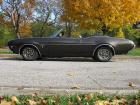
Living in the Netherlands, I have an Oldsmobile Super 88 Convertible from 1953. The light of the speedometer (and all other lights of the dashboard, like the clock, ashtrays etc.) is much to low to see in in the dark. I mounted the speedometer out of the car completely to look what's wrong, cleaned everything and tested all lamps. If I connect the lamps direct to the battery they give a lot of light..... After mounting the speedometer back in the car, all lamps are giving light for less then about 30 %....???? And I don't know why this is. Can someone tell me if there is some sort of dimmer on the dashboard light ? If yes, where can I find it ? If no, who knows what's wrong...??
Kind regards, Jur Raatjes, Netherlands.
Kind regards, Jur Raatjes, Netherlands.

Registered User
Joined: May 2009
Posts: 2,212
From: USA
Check your systems voltage to see if the alternator is not putting out enough juice.
I would take the liberty of installing LED bulbs wherever you can.
I also took all my gauges apart and repainted the interior of them.
Most were not able to reflect the light very well with the 40 year old aged and watermarked paint.

Registered User
Joined: Jan 2012
Posts: 489
From: Colorado
Try turning the headlight switch ****.
Also if you turn it all the way to one end it should turn on the courtesy lights. Many batteries have been accidentally drained because someone left the courtesy lights on.
Thread Starter
Registered User
Joined: Jul 2012
Posts: 10
From: Netherlands
Aside from a possible dimmer switch.....
Check your systems voltage to see if the alternator is not putting out enough juice.
I would take the liberty of installing LED bulbs wherever you can.
I also took all my gauges apart and repainted the interior of them.
Most were not able to reflect the light very well with the 40 year old aged and watermarked paint.
Check your systems voltage to see if the alternator is not putting out enough juice.
I would take the liberty of installing LED bulbs wherever you can.
I also took all my gauges apart and repainted the interior of them.
Most were not able to reflect the light very well with the 40 year old aged and watermarked paint.
Thread Starter
Registered User
Joined: Jul 2012
Posts: 10
From: Netherlands

Registered User
Joined: May 2009
Posts: 2,212
From: USA
What I meant was, check the battery measurement with a Voltmeter.
See if your alternator is giving it the proper juice flow.
Then check one of the gauge 12V+ terminals to see if there's a huge difference.
It could be a major drop in voltage due to corroded wires or a bad ground too.
60 year old wiring harnesses tend to have seen alot better days.
Corrosion builds up over half a century causes resistance and less juice flows through.
This is why I rewired both of my classics.
Corrosion = resistance,
Resistance = heat,
heat = failure or fire risk.
See if your alternator is giving it the proper juice flow.
Then check one of the gauge 12V+ terminals to see if there's a huge difference.
It could be a major drop in voltage due to corroded wires or a bad ground too.
60 year old wiring harnesses tend to have seen alot better days.
Corrosion builds up over half a century causes resistance and less juice flows through.
This is why I rewired both of my classics.
Corrosion = resistance,
Resistance = heat,
heat = failure or fire risk.
Thread Starter
Registered User
Joined: Jul 2012
Posts: 10
From: Netherlands

What I meant was, check the battery measurement with a Voltmeter.
See if your alternator is giving it the proper juice flow.
Then check one of the gauge 12V+ terminals to see if there's a huge difference.
It could be a major drop in voltage due to corroded wires or a bad ground too.
60 year old wiring harnesses tend to have seen alot better days.
Corrosion builds up over half a century causes resistance and less juice flows through.
This is why I rewired both of my classics.
Corrosion = resistance,
Resistance = heat,
heat = failure or fire risk.
See if your alternator is giving it the proper juice flow.
Then check one of the gauge 12V+ terminals to see if there's a huge difference.
It could be a major drop in voltage due to corroded wires or a bad ground too.
60 year old wiring harnesses tend to have seen alot better days.
Corrosion builds up over half a century causes resistance and less juice flows through.
This is why I rewired both of my classics.
Corrosion = resistance,
Resistance = heat,
heat = failure or fire risk.
Administrator
Joined: Oct 2009
Posts: 42,496
From: Poteau, Ok
I don't think that **** should keep turning, so it would lead me to believe that your dimmer switch is no good. Has your car been converted to an alternator or do you still have a generator on it? Do the lights get brighter if you raise the idle?

Registered User
Joined: Feb 2008
Posts: 11,798
From: Plano, TX
IF the lights work fine when connected right to the battery, then the issue is the circuit between the battery and the gauge lights. The dimmer switch on the headlight switch is probably bad, since it turns with no end. Check the wiring in between though for corrosion or burning at the terminals.
Are all the interior bulbs the correct size? Does the headlight switch get hot when you drive with the lights on?
Are all the interior bulbs the correct size? Does the headlight switch get hot when you drive with the lights on?
Thread Starter
Registered User
Joined: Jul 2012
Posts: 10
From: Netherlands
 Thanks for your help !
Thread Starter
Registered User
Joined: Jul 2012
Posts: 10
From: Netherlands
IF the lights work fine when connected right to the battery, then the issue is the circuit between the battery and the gauge lights. The dimmer switch on the headlight switch is probably bad, since it turns with no end. Check the wiring in between though for corrosion or burning at the terminals.
Are all the interior bulbs the correct size? Does the headlight switch get hot when you drive with the lights on?
Are all the interior bulbs the correct size? Does the headlight switch get hot when you drive with the lights on?
Hangin' out...
Joined: Dec 2008
Posts: 608
From: Scottsdale, AZ
Gorgeous 88!
Old wiring builds up resistance. The resistance causes voltage drop on a given circuit. That means dimmer or possibly flickering lights.
Change the headlight switch and/or dimmer switch. Test your generator and regulator. Check battery connections and terminals.
While you are waiting for parts, do what's cheap to free. Clean grounds you can find under the dash, hood, or anywhere else. Replace deteriorated/broken ground straps.
You'd be surprised how clean, shiny connections help.
I wholeheartedly agree with replacing whatever you can with LEDs. Very easy for you to go back to original later.
Old wiring builds up resistance. The resistance causes voltage drop on a given circuit. That means dimmer or possibly flickering lights.
Change the headlight switch and/or dimmer switch. Test your generator and regulator. Check battery connections and terminals.
While you are waiting for parts, do what's cheap to free. Clean grounds you can find under the dash, hood, or anywhere else. Replace deteriorated/broken ground straps.
You'd be surprised how clean, shiny connections help.
I wholeheartedly agree with replacing whatever you can with LEDs. Very easy for you to go back to original later.
Registered User
Joined: Feb 2008
Posts: 11,798
From: Plano, TX
I do not see the reason to replace all the wiring. Just trace the one supply wire for the dash lights back to its source with a volt meter and see where the voltage is being lost.
Find the grounds and make sure there is no voltage between them and battery ground.
Unfortunately I do not know much about the 53 year, so I cannot tell you exactly where to look. Maybe that year does not use a dimmer switch??
Hey, just fly me up there and i will find the problem for ya for free!
Find the grounds and make sure there is no voltage between them and battery ground.
Unfortunately I do not know much about the 53 year, so I cannot tell you exactly where to look. Maybe that year does not use a dimmer switch??
Hey, just fly me up there and i will find the problem for ya for free!
Connoisseur d'Junque
Joined: Sep 2010
Posts: 21,183
From: The Hudson Valley
I know nothing about 1953 Oldsmobiles, specifically, but I do know that F_rds of that era had a separate small rheostat **** on the bottom edge of the dash to dim the lights, and did NOT use the headlight switch for it.
If he has a dimmer **** that he has not found yet, it may simply be a matter of turning it up, or cleaning the coils and wiper.
- Eric
If he has a dimmer **** that he has not found yet, it may simply be a matter of turning it up, or cleaning the coils and wiper.
- Eric
Registered User
Joined: Jan 2012
Posts: 489
From: Colorado
Before you start replacing wires I suggest you take a second look at the headlight switch. Just because you can turn the **** without finding a stop does not mean there is no dimmer control there. It could mean the dimmer control is stripped. Here are some things to try.
Follow the wires from the dash lights to the source. The source should be the dimmer control.
Inspect the headlight switch. In the picture below of a typical headlight switch, on the left end inside the inclosed area is a round, white ceramic looking part. That is an example of what a dimmer control will look like.

http://www.fusick.com/new_items.htm
Follow the wires from the dash lights to the source. The source should be the dimmer control.
Inspect the headlight switch. In the picture below of a typical headlight switch, on the left end inside the inclosed area is a round, white ceramic looking part. That is an example of what a dimmer control will look like.
http://www.fusick.com/new_items.htm
Last edited by Highwayman; Jul 26, 2012 at 10:43 PM.
Thread Starter
Registered User
Joined: Jul 2012
Posts: 10
From: Netherlands

I do not see the reason to replace all the wiring. Just trace the one supply wire for the dash lights back to its source with a volt meter and see where the voltage is being lost.
Find the grounds and make sure there is no voltage between them and battery ground.
Unfortunately I do not know much about the 53 year, so I cannot tell you exactly where to look. Maybe that year does not use a dimmer switch??
Hey, just fly me up there and i will find the problem for ya for free!
Find the grounds and make sure there is no voltage between them and battery ground.
Unfortunately I do not know much about the 53 year, so I cannot tell you exactly where to look. Maybe that year does not use a dimmer switch??
Hey, just fly me up there and i will find the problem for ya for free!
, ha, ha. Thanks anyway for your tips. I think I got so many tips now that I can find the problem.
Thread Starter
Registered User
Joined: Jul 2012
Posts: 10
From: Netherlands
Before you start replacing wires I suggest you take a second look at the headlight switch. Just because you can turn the **** without finding a stop does not mean there is no dimmer control there. It could mean the dimmer control is stripped. Here are some things to try.
Follow the wires from the dash lights to the source. The source should be the dimmer control.
Inspect the headlight switch. In the picture below of a typical headlight switch, on the left end inside the inclosed area is a round, white ceramic looking part. That is an example of what a dimmer control will look like.
http://www.fusick.com/new_items.htm
Follow the wires from the dash lights to the source. The source should be the dimmer control.
Inspect the headlight switch. In the picture below of a typical headlight switch, on the left end inside the inclosed area is a round, white ceramic looking part. That is an example of what a dimmer control will look like.
http://www.fusick.com/new_items.htm
 This is what I'm looking for. I will order it right away. In fact, I order a lot at Fusick, very easy to work with (via internet from the Netherlands), great and accurate service and they have a lot of stuff for my car. Although we also have a company in NL near Rotterdam that has a lot, but mainly the real heavy things like carburators, generators, suspension parts, some body parts, etc.
Connoisseur d'Junque
Joined: Sep 2010
Posts: 21,183
From: The Hudson Valley
And, if Highwayman didn't make it clear, the photo he posted IS of a 1953 headlight switch, which clearly DOES have a dimmer rheostat in the exact same location as newer switches.
The screw that powers your instrument lights should be the one I circled in red.
You may be ab;e to clean the rheostat coils and the wiper with some contact cleaner, and / or some emery cloth on a popsicle stick, but you may not.

- Eric
The screw that powers your instrument lights should be the one I circled in red.
You may be ab;e to clean the rheostat coils and the wiper with some contact cleaner, and / or some emery cloth on a popsicle stick, but you may not.
- Eric
Thread Starter
Registered User
Joined: Jul 2012
Posts: 10
From: Netherlands
And, if Highwayman didn't make it clear, the photo he posted IS of a 1953 headlight switch, which clearly DOES have a dimmer rheostat in the exact same location as newer switches.
The screw that powers your instrument lights should be the one I circled in red.
You may be ab;e to clean the rheostat coils and the wiper with some contact cleaner, and / or some emery cloth on a popsicle stick, but you may not.
- Eric
The screw that powers your instrument lights should be the one I circled in red.
You may be ab;e to clean the rheostat coils and the wiper with some contact cleaner, and / or some emery cloth on a popsicle stick, but you may not.
- Eric
Registered User
Joined: Nov 2010
Posts: 131
From: Chicago
While you are waiting for parts you can also trace the wires before and after the dimmer , if you bypass them you should get a full 12 volts and bright dash lights all the time ....just a thought ... Good luck
PS> just make sure it is from a switched source with the headlights so they will only come on when your headlights are on ....
PS> just make sure it is from a switched source with the headlights so they will only come on when your headlights are on ....
Last edited by Lalo442; Jul 31, 2012 at 05:48 AM.

Thread
Thread Starter
Forum
Replies
Last Post


