


There is no such thing as Privacy

Thread Starter
70 Cutlass SX
Joined: Apr 2011
Posts: 1,042
From: Bermuda
There is no such thing as Privacy
Everything we do and say while using an electronic device is being monitored.
I know when I travel in the US that not only are my cell phone calls home being monitored for code words like "ji-had", "funds transfer", "blow-up", they are also being recorded for later analysis. They, the all seeing "They", are not allowed to do this with US phones, yet.
Every post I make on even this web site is being recorded by Google, indexed and made available to their search engines. At times I am surprised how quickly this happens. I will make a post asking a question and one minute later go on Goolge to search and there is a reference to my post in the results.
Even this post will be flagged by "Them" as potentially subversive.
The only secure way to communicate is either face to face, or by mail; "They" are still not allowed to open mail without a warrant.
Scary, eh?
Please see this CNN link:
http://edition.cnn.com/2013/03/16/op...html?hpt=hp_c4
I know when I travel in the US that not only are my cell phone calls home being monitored for code words like "ji-had", "funds transfer", "blow-up", they are also being recorded for later analysis. They, the all seeing "They", are not allowed to do this with US phones, yet.
Every post I make on even this web site is being recorded by Google, indexed and made available to their search engines. At times I am surprised how quickly this happens. I will make a post asking a question and one minute later go on Goolge to search and there is a reference to my post in the results.
Even this post will be flagged by "Them" as potentially subversive.
The only secure way to communicate is either face to face, or by mail; "They" are still not allowed to open mail without a warrant.
Scary, eh?
Please see this CNN link:
http://edition.cnn.com/2013/03/16/op...html?hpt=hp_c4
Connoisseur d'Junque
Joined: Sep 2010
Posts: 21,183
From: The Hudson Valley
Very true.
Fun fact: The US agency that does most of this stuff (whose three initials I won't type, and which is just finishing up a giant storage center in the West, which will, essentially, be able to hold ALL digital communications from EVERYWHERE for years to come) is prohibited by law from intercepting any communications that both begin and end within the US (as you say, it's open season on calls to Bermuda).
BUT, that agency officially defines "intercept" as having a human being look at the information, SO they stockpile and crossreference ALL of it, and keep everything more or less forever (see data strage center referenced above), so that years from now, if they so desire, they can "retrospectively" wiretap all of your communications and have them at their fingertips.
And that's some scary $h|+.
- Eric
Fun fact: The US agency that does most of this stuff (whose three initials I won't type, and which is just finishing up a giant storage center in the West, which will, essentially, be able to hold ALL digital communications from EVERYWHERE for years to come) is prohibited by law from intercepting any communications that both begin and end within the US (as you say, it's open season on calls to Bermuda).
BUT, that agency officially defines "intercept" as having a human being look at the information, SO they stockpile and crossreference ALL of it, and keep everything more or less forever (see data strage center referenced above), so that years from now, if they so desire, they can "retrospectively" wiretap all of your communications and have them at their fingertips.
And that's some scary $h|+.
- Eric

Registered User
Joined: Mar 2012
Posts: 2,163
From: Sistersville, WV
I don't like the loss of privacy either. What about satelite and street view?
Now you can virtually walk down any urban street and up to someones' door, or have a look in their backyard. Wait until commercial and government drones come on the scene. Live views into your personal lives.
It is getting too late and too far down the road to do much about it now, unless more people start protesting it.
Now you can virtually walk down any urban street and up to someones' door, or have a look in their backyard. Wait until commercial and government drones come on the scene. Live views into your personal lives.
It is getting too late and too far down the road to do much about it now, unless more people start protesting it.

Registered User
Joined: Jun 2009
Posts: 15,192
From: southeastern Michigan
Street view has never bothered me, and I've often found it quite helpful when, say, looking for a business in a part of town or a different city I've never been to. I can see what the business looks like from the street to help me know what I'm looking for.
When traveling, I often use street view to see the hotel I'm thinking about making a reservation in to see what its surroundings look like as far as nearby restaurants, gas stations, seedy-looking areas, etc. Again, it's been very helpful in seeing whether or not a hotel is in what's likely to be a generally quiet area or one that's likely to be more noisy.
Street view is no different than being there yourself, in person, looking at the buildings and houses as though you were driving by in your car. There's no invasion of privacy here that hasn't been true since the beginning of time.
Satellite view is a different story, I agree. I've found, generally, though, that the satellite view of even the largest cities, which might be expected to have the best-quality images, isn't good enough to see much detail in people's back yards. Large items, like swimming pools, can be seen, but smaller than that and it's not likely.
When traveling, I often use street view to see the hotel I'm thinking about making a reservation in to see what its surroundings look like as far as nearby restaurants, gas stations, seedy-looking areas, etc. Again, it's been very helpful in seeing whether or not a hotel is in what's likely to be a generally quiet area or one that's likely to be more noisy.
Street view is no different than being there yourself, in person, looking at the buildings and houses as though you were driving by in your car. There's no invasion of privacy here that hasn't been true since the beginning of time.
Satellite view is a different story, I agree. I've found, generally, though, that the satellite view of even the largest cities, which might be expected to have the best-quality images, isn't good enough to see much detail in people's back yards. Large items, like swimming pools, can be seen, but smaller than that and it's not likely.

Registered User
Joined: Aug 2009
Posts: 714
From: Big Lake,MN..Spent most of my life in Boston
As a retired Navy dude I can tell you those poor satellite photos are the best Mr. Average Joe is ever going to see. Big Brother has the clicker to see photos that make the hair on the back of you neck stand up!!!!! Those poor sat photos we have all got use to over the last decade were available to Big Brother back in the early 70's. Use your wildest imagination and it won't come close to reality.
Thread Starter
70 Cutlass SX
Joined: Apr 2011
Posts: 1,042
From: Bermuda
I agree Jaunty that Street View is very usefull. I do the same as you, especially when evaluating service companies.
But looking into your backyard is trivial compared to the level of detail that can be garnered from your electronic activity. My frends say "so what, if you have nothing to hide then you have no problem", but I guess I am paranoid because information can be used for good and bad, and I have no control over who is accessing my habits. These days it could easily be a foriegn governement.
My mother grew up in Czechoslovakia during the war, my grandfather was sent to a concentration camp because a neighbour heard them listening to the British radio. People can do nasty things with information, all in the name of "righteousness".
But looking into your backyard is trivial compared to the level of detail that can be garnered from your electronic activity. My frends say "so what, if you have nothing to hide then you have no problem", but I guess I am paranoid because information can be used for good and bad, and I have no control over who is accessing my habits. These days it could easily be a foriegn governement.
My mother grew up in Czechoslovakia during the war, my grandfather was sent to a concentration camp because a neighbour heard them listening to the British radio. People can do nasty things with information, all in the name of "righteousness".
Thread Starter
70 Cutlass SX
Joined: Apr 2011
Posts: 1,042
From: Bermuda
I just shared this thread with a friend of mine in the British "security industry". He pointed out that I should also present the point of view that knowledge can be used to forestall bad people from doing bad things.
Without a doubt he is correct.
Is this becoming a world where we all must sacrifice our freedom in order to be safe?
In spite of all the bad press, we have less viloence today than at any time in human history. Five hundred years ago a journey from London to Rome would have been perilous. Last year I drove from Denver to Rhode Island, and not once did I fear for my well being.
I am not sure what to think.
Without a doubt he is correct.
Is this becoming a world where we all must sacrifice our freedom in order to be safe?
In spite of all the bad press, we have less viloence today than at any time in human history. Five hundred years ago a journey from London to Rome would have been perilous. Last year I drove from Denver to Rhode Island, and not once did I fear for my well being.
I am not sure what to think.
Registered User
Joined: Jun 2009
Posts: 15,192
From: southeastern Michigan
Throughout human history, people have always thought that they're living in the worst of times when, historically speaking and as you point out, they're actually living in the best of times.
It takes quite a lot of technological and societal advancement for us to progress from the point where we had to worry about where our next meal was coming from, whether or not we might be killed by the wild bears outside our straw huts, whether we had any clean water to drink, and whether or not we have a warm bed to sleep in tonight to the point that we have the luxury of worrying about exotic things such as whether or not our government is electronically snooping on us or whether or not we'll ever find that front bumper we so desperately want for our '66 Cutlass. That's the human condition. We're never happy unless we're worried about something.
I'm quite sure that the world will still be here in 3013 and people alive then will be worried about what the 31st century will bring and be thinking that the world is going to hell in a handbasket.
It takes quite a lot of technological and societal advancement for us to progress from the point where we had to worry about where our next meal was coming from, whether or not we might be killed by the wild bears outside our straw huts, whether we had any clean water to drink, and whether or not we have a warm bed to sleep in tonight to the point that we have the luxury of worrying about exotic things such as whether or not our government is electronically snooping on us or whether or not we'll ever find that front bumper we so desperately want for our '66 Cutlass. That's the human condition. We're never happy unless we're worried about something.
I'm quite sure that the world will still be here in 3013 and people alive then will be worried about what the 31st century will bring and be thinking that the world is going to hell in a handbasket.
Last edited by jaunty75; Mar 17, 2013 at 08:40 PM.

GM Enthusiast
Joined: Jan 2007
Posts: 3,982
From: Long Island, New York
Ahh yes, big brother. Time to read 1984 again and see how many of those predictions came true. Personal privacy should be respected. It also worries me about our freedoms as a driver of a car. I don't care for red light cameras. It is the start of a slippery slope. What's next, speed cameras if you are going to fast on a road? Cameras catching you in the car without your seatbelt on? Some good things come out of this but it is at the expense of freedom, which is why I am against the nanny state.
Street views on Google can be good, but I remember reading about a lawsuit that was filed by a few people. It turns out that some of those pictures also had good image quality inside their houses and caught these people either undressed or in the middle of something.
Street views on Google can be good, but I remember reading about a lawsuit that was filed by a few people. It turns out that some of those pictures also had good image quality inside their houses and caught these people either undressed or in the middle of something.
'87 Delta 88 Royale
Joined: Dec 2010
Posts: 2,514
From: Margate, England
Ahh yes, big brother. Time to read 1984 again and see how many of those predictions came true. Personal privacy should be respected. It also worries me about our freedoms as a driver of a car. I don't care for red light cameras. It is the start of a slippery slope. What's next, speed cameras if you are going to fast on a road? Cameras catching you in the car without your seatbelt on? Some good things come out of this but it is at the expense of freedom, which is why I am against the nanny state
Supermarkets know the shopping habits of their customers who pay with plastic, I always pay by cash as I think my shopping habits are none of their business.
The main problem I have is Big Brother is sloppy, leaving files with sensitive information in the back of taxis for example, our government argues surveillance is for our own good, try getting information about how our taxes are spent and it becomes "confidential information".
All governments in a modern society need to know something about the people they are elected to govern, but we are sleepwalking into a society Stalin, Hltler et al would be very happy with.
Roger.

Registered User
Joined: Feb 2010
Posts: 906
From: Windsor, Ontario
Speed Cameras have been here for a while now. Simply do a Google search for speed cameras. Unfortunately my friends, this should be the least of our worries.
Ohio Judge Calls Speed Cameras A Scam
http://www.autoblog.com/2013/03/16/o...-on-our-chris/
Why speed cameras have lost their moral authority
http://www.baltimoresun.com/news/opi...,4335786.story
Ohio Judge Calls Speed Cameras A Scam
http://www.autoblog.com/2013/03/16/o...-on-our-chris/
Why speed cameras have lost their moral authority
http://www.baltimoresun.com/news/opi...,4335786.story
Registered User
Joined: Oct 2009
Posts: 1,226
From: Central IN
A huge number of people who complain willingly give up their privacy for convenience.
Post a pic on PhotoBucket ? You no longer own it. They do.
Use a 'free' online email like GMail, YaHoo, or Outlook.com ? They now own (& analyze) your (assumed) private content.
Use GoogleMaps on your phone ? Route is recorded.
Your 'Likes' , 'Diggs', tweets, etc.. are all recorded & compiled.
Just about anything "i" provided by Apple is tracked & analyzed. Your Mac backup to the iCloud ? Apple owns & analyzes it.
The apps are 'free' because they harvest info from them and sell the info to marketers (or the highest bidder).
The sad part is that the companies spell this out in their Terms, but nobody reads it.
Thread Starter
70 Cutlass SX
Joined: Apr 2011
Posts: 1,042
From: Bermuda
I recently lost the ability to charge our Fedex costs because the terms and conditions they wanted me to agree to gave them the right to sell to third parties any information they could gleen from my activies. Now we are on cash and carry and I lose the discount.
How messed up is that.
I hate it when Youtube "suggests" what videos I would like to see based on what i have viewed in the past.
Rant ra ra. Like Jaunty says - we have to complain. Few of us are willing to give up the conveniences - we just agree to the terms and conditions and pretend we are alone.
How messed up is that.
I hate it when Youtube "suggests" what videos I would like to see based on what i have viewed in the past.
Rant ra ra. Like Jaunty says - we have to complain. Few of us are willing to give up the conveniences - we just agree to the terms and conditions and pretend we are alone.
Thread Starter
70 Cutlass SX
Joined: Apr 2011
Posts: 1,042
From: Bermuda
I personally love speed cameras. We have some real idiots here who put others' lives at risk. We have a lot of motorcycles in Bermuda because you are only allowed one car per household. My motorcycle is my "daily driver" (wife gets the car) and you can get really hurt if some ******* clips you while overtaking.
So speed cameras would be good here.
So speed cameras would be good here.
Connoisseur d'Junque
Joined: Sep 2010
Posts: 21,183
From: The Hudson Valley
Very few people in the US would type the first two sentences, and follow them with the one above, but this sentiment appears to be within the norm on the other side of the Pond.
Different histories and experiences can result in very different ideas of what is "acceptable" and "normal."
Anything that makes it easier for my government to observe, monitor, watch, attend to, investigate, eyeball, or surveil me gets my back up, whether it catches a hundred people going five miles over the speed limit, or ten people shoplifting, or two murderers.
In an ideal world (and the world until about ten or fifteen years ago), the government should be at a disadvantage against any given citizen.
It looks to me like things are reversed now.
- Eric
'87 Delta 88 Royale
Joined: Dec 2010
Posts: 2,514
From: Margate, England
A little piece of early cold war black humour.
In Britain everything is permitted unless forbidden by law.
In Germany everything is forbidden unless permitted by law.
In the Soviet Union everything is forbidden unless you are a party member.
We seem to be closer to Germany than Britain in most of the western world today.
Roger.
In Britain everything is permitted unless forbidden by law.
In Germany everything is forbidden unless permitted by law.
In the Soviet Union everything is forbidden unless you are a party member.
We seem to be closer to Germany than Britain in most of the western world today.
Roger.

Registered User
Joined: Jan 2009
Posts: 787
From: USA Ohio
The thread title "There Is No Such Thing As Privacy" is concise and correct. Tough to surrender what you never possessed. In the ±136 years since Bell spoke to Watson "....come here, I want to see you", people have always been certain unseen dark forces were monitoring every spoken telephone conversation, including Sarah in Mayberry presented as situation comedy. And of the app. sixteen million US forces who served in WWII censors examined about all of their mail, in and out meaning hundreds of millions of pieces of ephemera. Up the road near here a guy was arrested by the FBI after hammering his door down as a result of his making open physical threats to BO online, and it didn't make the news and really was a black SUV's event. I felt sure at the time the main local result of 9/11 would come down to loss of more personal liberty, at least temporarily in the name of security and over reaction. The ease in which the 9/11 conspirators were found to have communicated in the USA and with their people abroad made clear the gaping holes. This is no defense of loss of privacy and ultimate liberty, but really what did any of you expect in hind sight?
Registered User
Joined: Aug 2011
Posts: 633
From: Northlake, IL
I'm with Eric, I'm opposed to all of this garbage. It's an invasion of privacy, a source of additional revenue, and a presumption that innocent people are guilty. People who say "if you're not doing anything wrong, you've got nothing to worry about" are completely missing the point. Innocent people shouldn't have to pay with their liberties for the crimes of the few.
DOWN WITH BIG BROTHER
DOWN WITH BIG BROTHER

Registered User
Joined: May 2009
Posts: 2,212
From: USA

https://www.eff.org/nsa-spying < I've worked for both entities.
I was also here when the suits were brought in with court orders.
The N.S.A.'s job is National Security.
Part of National Security was always monitoring phone lines for voice patterns known to be threats.
They've been doing this since at least the 80's with the POTS in the USA.
As for privacy......it's a facade, just like voters having control over their elected officials in higher offices.
Money buys the 2 electee's and their media time, you just get to choose between them. Ask Dr. Paul.
Last edited by Aceshigh; Mar 19, 2013 at 09:57 PM.
Registered User
Joined: May 2009
Posts: 2,212
From: USA
20 years ago the general public had ZERO Satellite imagery readily available to them.
10-12 years ago we only had MS Terraserver available for free on the web. http://www.terraserver.com/
Next was Mapquest, which finally gave way to Satellite imagery.
Now you don't hear of either because of Google's endeavors which have dramatically increased.
Now pretty much 98% of the populace uses Googlemaps.
Give it a few more years and watch what becomes available.
You'll never have "Free" access to the best that there is out there but money can buy you into better imagery.
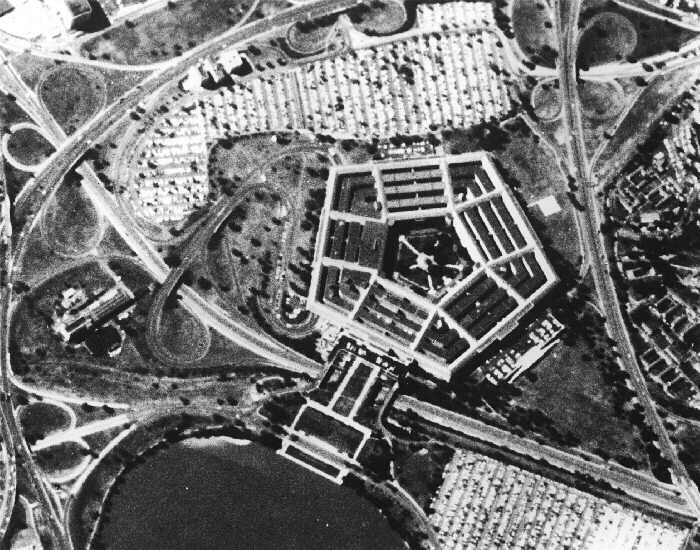
Satellite imagery in the 60's wasn't great......that's why the SR-71 blackbird was created for high altitude recon.
The uber secret 1959-1972 "Corona" satellite wasn't even that great.......this was 1967 from the Corona
Last edited by Aceshigh; Mar 19, 2013 at 11:25 PM.
Registered User
Joined: Jun 2009
Posts: 15,192
From: southeastern Michigan
Thank you, Obamacare.
CVS To Penalize Workers Who Don't Disclose Weight, Body Fat
http://www.huffingtonpost.com/2013/0...n_2915006.html
CVS To Penalize Workers Who Don't Disclose Weight, Body Fat
http://www.huffingtonpost.com/2013/0...n_2915006.html

Registered User
Joined: Feb 2008
Posts: 11,798
From: Plano, TX
Interesting thread for sure.
It is hard to have privacy even when you try hard at it!
Texas instruments has been doing that for 6 years - nothing new...
It is worded to say you get a $200 discount on health insurance, but it is really a $200 addition, aka penalty.
It sucks for sure.
It is hard to have privacy even when you try hard at it!
Thank you, Obamacare.
CVS To Penalize Workers Who Don't Disclose Weight, Body Fat
http://www.huffingtonpost.com/2013/0...n_2915006.html
CVS To Penalize Workers Who Don't Disclose Weight, Body Fat
http://www.huffingtonpost.com/2013/0...n_2915006.html
It is worded to say you get a $200 discount on health insurance, but it is really a $200 addition, aka penalty.
It sucks for sure.
Thread Starter
70 Cutlass SX
Joined: Apr 2011
Posts: 1,042
From: Bermuda
At the risk of upsetting some: the purpose of insurance is to spread risk over a large number of participants so that no single participant will surfer devastation in a single event. The concept began with the Dutch Guilds, the shipping guild in particular.
The importance of insurance is lost on many people, but without it businesses would not be able to operate, and society would suffer as individuals experienced devasting losses.
Insurance is not there to provide protection for individuals who take on excessive amounts of risk, intentionally or not. If an individual takes on inordinate amounts of risk then that will penialize the entire group. This is not fair, and is why insurance has been denied in certain circumstances. For example, if you sky dive then your life insurance will not cover you. Or in health insurance, some cases will continue to be covered, but at a higher cost. For example, smokers have a higher cost than non smokers.
I find this is not only acceptable, but critical to the continued provision of insurance.
The world over is experiencing an epidemic of obesity, with its attendant health risks. Most of this caused by the individual's behaviour. That is, they are voluntarily taking on excessive risk. Because of this I think it is perfectly reasonable for these cases to have a higher cost of insurance. It is not unlike charging someone who has five speeding tickets in one year more for their car insurance.
Further, because of the effect on the potential costs to the whole pool of insureds, I do not think it is out of bounds to request individuals to disclose those particulars which can significantly effect their health risk, such as weight, smoking, drug, drinking habits. This is not an invasion of privacy. This stuff is no longer private because it effects a larger group.
Waiting for the feedback,
Peter
PS - just to be clear - I am a firm believer in the protection of an individual's privacy. But I also feel that there is also an obligation to the larger community, and the two, the privacy and the obligation, must be balanced. My biggest fear in today's world is that this balance is not being maintained, and those with power are abusing the obligation in order to further their own agendas.
The importance of insurance is lost on many people, but without it businesses would not be able to operate, and society would suffer as individuals experienced devasting losses.
Insurance is not there to provide protection for individuals who take on excessive amounts of risk, intentionally or not. If an individual takes on inordinate amounts of risk then that will penialize the entire group. This is not fair, and is why insurance has been denied in certain circumstances. For example, if you sky dive then your life insurance will not cover you. Or in health insurance, some cases will continue to be covered, but at a higher cost. For example, smokers have a higher cost than non smokers.
I find this is not only acceptable, but critical to the continued provision of insurance.
The world over is experiencing an epidemic of obesity, with its attendant health risks. Most of this caused by the individual's behaviour. That is, they are voluntarily taking on excessive risk. Because of this I think it is perfectly reasonable for these cases to have a higher cost of insurance. It is not unlike charging someone who has five speeding tickets in one year more for their car insurance.
Further, because of the effect on the potential costs to the whole pool of insureds, I do not think it is out of bounds to request individuals to disclose those particulars which can significantly effect their health risk, such as weight, smoking, drug, drinking habits. This is not an invasion of privacy. This stuff is no longer private because it effects a larger group.
Waiting for the feedback,
Peter
PS - just to be clear - I am a firm believer in the protection of an individual's privacy. But I also feel that there is also an obligation to the larger community, and the two, the privacy and the obligation, must be balanced. My biggest fear in today's world is that this balance is not being maintained, and those with power are abusing the obligation in order to further their own agendas.
Connoisseur d'Junque
Joined: Sep 2010
Posts: 21,183
From: The Hudson Valley
The world over is experiencing an epidemic of obesity, with its attendant health risks. Most of this caused by the individual's behaviour. That is, they are voluntarily taking on excessive risk. Because of this I think it is perfectly reasonable for these cases to have a higher cost of insurance.
I think they call that a "perverse incentive."
- Eric
Registered User
Joined: Sep 2007
Posts: 118
From: Indiana
At the risk of upsetting some: the purpose of insurance is to spread risk over a large number of participants so that no single participant will surfer devastation in a single event. The concept began with the Dutch Guilds, the shipping guild in particular.
The importance of insurance is lost on many people, but without it businesses would not be able to operate, and society would suffer as individuals experienced devasting losses.
Insurance is not there to provide protection for individuals who take on excessive amounts of risk, intentionally or not. If an individual takes on inordinate amounts of risk then that will penialize the entire group. This is not fair, and is why insurance has been denied in certain circumstances. For example, if you sky dive then your life insurance will not cover you. Or in health insurance, some cases will continue to be covered, but at a higher cost. For example, smokers have a higher cost than non smokers.
I find this is not only acceptable, but critical to the continued provision of insurance.
The world over is experiencing an epidemic of obesity, with its attendant health risks. Most of this caused by the individual's behaviour. That is, they are voluntarily taking on excessive risk. Because of this I think it is perfectly reasonable for these cases to have a higher cost of insurance. It is not unlike charging someone who has five speeding tickets in one year more for their car insurance.
Further, because of the effect on the potential costs to the whole pool of insureds, I do not think it is out of bounds to request individuals to disclose those particulars which can significantly effect their health risk, such as weight, smoking, drug, drinking habits. This is not an invasion of privacy. This stuff is no longer private because it effects a larger group.
Waiting for the feedback,
Peter
PS - just to be clear - I am a firm believer in the protection of an individual's privacy. But I also feel that there is also an obligation to the larger community, and the two, the privacy and the obligation, must be balanced. My biggest fear in today's world is that this balance is not being maintained, and those with power are abusing the obligation in order to further their own agendas.
The importance of insurance is lost on many people, but without it businesses would not be able to operate, and society would suffer as individuals experienced devasting losses.
Insurance is not there to provide protection for individuals who take on excessive amounts of risk, intentionally or not. If an individual takes on inordinate amounts of risk then that will penialize the entire group. This is not fair, and is why insurance has been denied in certain circumstances. For example, if you sky dive then your life insurance will not cover you. Or in health insurance, some cases will continue to be covered, but at a higher cost. For example, smokers have a higher cost than non smokers.
I find this is not only acceptable, but critical to the continued provision of insurance.
The world over is experiencing an epidemic of obesity, with its attendant health risks. Most of this caused by the individual's behaviour. That is, they are voluntarily taking on excessive risk. Because of this I think it is perfectly reasonable for these cases to have a higher cost of insurance. It is not unlike charging someone who has five speeding tickets in one year more for their car insurance.
Further, because of the effect on the potential costs to the whole pool of insureds, I do not think it is out of bounds to request individuals to disclose those particulars which can significantly effect their health risk, such as weight, smoking, drug, drinking habits. This is not an invasion of privacy. This stuff is no longer private because it effects a larger group.
Waiting for the feedback,
Peter
PS - just to be clear - I am a firm believer in the protection of an individual's privacy. But I also feel that there is also an obligation to the larger community, and the two, the privacy and the obligation, must be balanced. My biggest fear in today's world is that this balance is not being maintained, and those with power are abusing the obligation in order to further their own agendas.
Thread Starter
70 Cutlass SX
Joined: Apr 2011
Posts: 1,042
From: Bermuda
I was responding to the issue of health questionnaires as it relates to privacy, so perhaps this should be the subject of a separate thread, but let's see where it goes.
Quote: "By your reasoning then, even those who have higher risk due to other factors should be excluded. Some races are at higher risk for hypertension or have illnesses that are all but exclusive to them. Should we go that far in assessing premiums for individuals? "
First of all there is a difference between "involuntary risk" and "voluntary risk". The first is associated with individuals like your son who has inherited a disease which incurs significant health costs, or to a members of a specific race. The second is associated with behavior that an individual has control over, like eating junk food every day, or sky diving.
Let us talk to involuntary risk first.
This is the subject of much debate within the health insurance industry. To be true to its intent, insurance would take groups which have different risk profiles and assign them different premiums. Remember, insurance is about combining risk into groups within a large population in order to protect individuals from catastrophic loss. To do this efficiently, segments of the population which have different risk profiles must be assessed separately. For those in a high risk group this may result in a higher cost, but over the whole population that is the most fair way to provide cover. Insurance was not designed to protect high risk individuals or groups at the expense of the whole community. This is where the modern debate of a social system comes into play. What is the responsibility of society as a whole in the care of individuals who have the misfortune to inherit a problem. To take it to a granular level, if your neighbour's child is born with a disability, would you feel it necessary to pay for half of her care for the rest of her life; taking money from your paycheck every week?
There is no easy answer to this, and as the costs of care continue to grow they will become a drag on our global productivity. My personal position (and I give it here in this group because I expect all opinions to be respected, even if not agreed to) is that there has to be a differentiation in determining insurance costs, otherwise we will not be putting continued limited resources to their most efficient use.
In the case of voluntary risk the debate seems to be much less contentious. Most of us agree that those individuals who take it upon themselves to engage in risky behavior should either not be accepted into our risk group, or should have significant premiums to make up for the more likely loss.
Quote:" It has been shown that some are genetically predisposed to obesity & diabetes runs in families. Who decides if my disease is nurture or nature, you?"
As the use of insurance modeling increases, the designation of risk as voluntary or involuntary is becoming more a result of the statistical analysis of various parameters and populations. Rather than taking your question on a personal level, I think the real point is that different insurance companies will use different models to make this designation. This will ultimately effect their accuracy and profitability. Those with bad models will go out of business. The result will be one which will provide the most efficient cover for the whole population. Again, this will mean that there are some groups who will pay higher premiums, and as a society we have to come to terms with that. This may mean some sort of subsidy to those groups from the government, and therein lies the can of worms.
Quote:"The rise it health care costs has as much to do with every hospital having to have the latest & greatest technology to compete with each other & the drug companies making commercials to convince people that they need their drugs to be healthy as the reasons you mention."
Without a doubt this is part of the problem. But this is ultimately driven by our society's demand for the best service technology can provide. The health companies and the pharmas are responding to our demands, but can only do so if they are profitable.
This is a HUGE current debate at many levels, and is highlighting many areas where we are headed towards a global health care disaster. As an example, and to illustrate the potential dire consequences, of this debate, we have the case of antibiotic resistant bacteria. Please see this link as a reference:
http://www.bbc.co.uk/news/health-21737844
Here is a case where the pharmas are not investing in R&D for a class of drugs because there is just no profit. Unfortunately these drugs are critical to life as we have come to expect it. Here is a clear case where it is society's responsibility to assume the cost, since it is all of society which will benefit. However, there does not seem to be any desire to do so.
So, we have a system that must make money in order to continue operations because society is not willing to make a preliminary sacrifice. The result is increased costs, and ultimately the inability to respond to our health care needs, much less our demands. Write your Congressman, MP or whomever is in charge.
Quote: "If you have a heart attack or develop cancer you will become expensive to the rest of us. Thus we should cut you from the herd? I' m willing to bet that at that point, your views will change."
I am a survivor of both heart and prostate procedures, as well as other life threatening trauma. These were not voluntary risks to be sure, but more a result of the universal ailment of age. My health premiums went up as a result and I have been refused life cover. Also, here in Bermuda at age 65 your lifetime health cover is reduced from $5 million to $500,000. This is not a large figure when spread over a life expectancy of 15 years. In addition, my premiums will grow significantly every year (the more the better -years that is). We have no Medicaid in Bermuda, but are responsible for our own costs, or can appeal to charity groups in extreme cases (more for the young people). So I am assigned a higher risk group, and am assessed a higher premium accordingly. I think that is completely fair and accept it wholeheartedly.
So, yes I will be cut from the herd, and it has not changed my view. If anything it has served to confirm my opinion that in order to be fair to the community, individuals have to pay their way. If they cannot afford it then unfortunately they will suffer, but the community will survive.
Again - these are my opinions. Please respect them, even if you do not agree.
Cheers, Peter
Quote: "By your reasoning then, even those who have higher risk due to other factors should be excluded. Some races are at higher risk for hypertension or have illnesses that are all but exclusive to them. Should we go that far in assessing premiums for individuals? "
First of all there is a difference between "involuntary risk" and "voluntary risk". The first is associated with individuals like your son who has inherited a disease which incurs significant health costs, or to a members of a specific race. The second is associated with behavior that an individual has control over, like eating junk food every day, or sky diving.
Let us talk to involuntary risk first.
This is the subject of much debate within the health insurance industry. To be true to its intent, insurance would take groups which have different risk profiles and assign them different premiums. Remember, insurance is about combining risk into groups within a large population in order to protect individuals from catastrophic loss. To do this efficiently, segments of the population which have different risk profiles must be assessed separately. For those in a high risk group this may result in a higher cost, but over the whole population that is the most fair way to provide cover. Insurance was not designed to protect high risk individuals or groups at the expense of the whole community. This is where the modern debate of a social system comes into play. What is the responsibility of society as a whole in the care of individuals who have the misfortune to inherit a problem. To take it to a granular level, if your neighbour's child is born with a disability, would you feel it necessary to pay for half of her care for the rest of her life; taking money from your paycheck every week?
There is no easy answer to this, and as the costs of care continue to grow they will become a drag on our global productivity. My personal position (and I give it here in this group because I expect all opinions to be respected, even if not agreed to) is that there has to be a differentiation in determining insurance costs, otherwise we will not be putting continued limited resources to their most efficient use.
In the case of voluntary risk the debate seems to be much less contentious. Most of us agree that those individuals who take it upon themselves to engage in risky behavior should either not be accepted into our risk group, or should have significant premiums to make up for the more likely loss.
Quote:" It has been shown that some are genetically predisposed to obesity & diabetes runs in families. Who decides if my disease is nurture or nature, you?"
As the use of insurance modeling increases, the designation of risk as voluntary or involuntary is becoming more a result of the statistical analysis of various parameters and populations. Rather than taking your question on a personal level, I think the real point is that different insurance companies will use different models to make this designation. This will ultimately effect their accuracy and profitability. Those with bad models will go out of business. The result will be one which will provide the most efficient cover for the whole population. Again, this will mean that there are some groups who will pay higher premiums, and as a society we have to come to terms with that. This may mean some sort of subsidy to those groups from the government, and therein lies the can of worms.
Quote:"The rise it health care costs has as much to do with every hospital having to have the latest & greatest technology to compete with each other & the drug companies making commercials to convince people that they need their drugs to be healthy as the reasons you mention."
Without a doubt this is part of the problem. But this is ultimately driven by our society's demand for the best service technology can provide. The health companies and the pharmas are responding to our demands, but can only do so if they are profitable.
This is a HUGE current debate at many levels, and is highlighting many areas where we are headed towards a global health care disaster. As an example, and to illustrate the potential dire consequences, of this debate, we have the case of antibiotic resistant bacteria. Please see this link as a reference:
http://www.bbc.co.uk/news/health-21737844
Here is a case where the pharmas are not investing in R&D for a class of drugs because there is just no profit. Unfortunately these drugs are critical to life as we have come to expect it. Here is a clear case where it is society's responsibility to assume the cost, since it is all of society which will benefit. However, there does not seem to be any desire to do so.
So, we have a system that must make money in order to continue operations because society is not willing to make a preliminary sacrifice. The result is increased costs, and ultimately the inability to respond to our health care needs, much less our demands. Write your Congressman, MP or whomever is in charge.
Quote: "If you have a heart attack or develop cancer you will become expensive to the rest of us. Thus we should cut you from the herd? I' m willing to bet that at that point, your views will change."
I am a survivor of both heart and prostate procedures, as well as other life threatening trauma. These were not voluntary risks to be sure, but more a result of the universal ailment of age. My health premiums went up as a result and I have been refused life cover. Also, here in Bermuda at age 65 your lifetime health cover is reduced from $5 million to $500,000. This is not a large figure when spread over a life expectancy of 15 years. In addition, my premiums will grow significantly every year (the more the better -years that is). We have no Medicaid in Bermuda, but are responsible for our own costs, or can appeal to charity groups in extreme cases (more for the young people). So I am assigned a higher risk group, and am assessed a higher premium accordingly. I think that is completely fair and accept it wholeheartedly.
So, yes I will be cut from the herd, and it has not changed my view. If anything it has served to confirm my opinion that in order to be fair to the community, individuals have to pay their way. If they cannot afford it then unfortunately they will suffer, but the community will survive.
Again - these are my opinions. Please respect them, even if you do not agree.
Cheers, Peter
Connoisseur d'Junque
Joined: Sep 2010
Posts: 21,183
From: The Hudson Valley
First of all there is a difference between "involuntary risk" and "voluntary risk". The first is associated with individuals like your son who has inherited a disease which incurs significant health costs, or to a members of a specific race... What is the responsibility of society as a whole in the care of individuals who have the misfortune to inherit a problem.
Should the patient be penalized then? How about the parents?
What if the "behavior" is that the mother used cocaine or drank heavily while pregnant, and the child has fetal alcohol syndrome or severe learning disabilities?
What if the "behavior" is that the mother got pregnant late in life (thought she "couldn't anymore," or married later, or believes that birth control is a sin), and the patient is born with Down's syndrome (trisomy 21 or "mongolism")?
If we were to spread the cost of that patient across the country, it would be pennies a year out of my pocket. Even spreading the costs of everyone with similar diseases across the entire population wouldn't add up to a fraction of our current health care premiums.
What sort of "voluntary risks" are we talking about - which are "okay," and which are not?
Riding in a car is one of the most dangerous things you can do - should be charge all who ride in cars extra (or offer a discount to exclusive pedestrians)?
What if a person contracted HIV from an encounter with someone they thought was free of STDs?
What if it happened because the barrier safeguard broke?
What if it happened because of a rape - will the victim have to "prove" s/he was raped, even though the perpetrator is never apprehended?
It's easy to talk about "voluntary risks," but very difficult to make decisions that a large proportion of the public will agree with.
The average member of the public, even most very intelligent members of the public, has no idea what the best medical service is.
Studies show that the best care is often the least - the old-time doc's "wait and see" approach - but people like shiny machines and computerized answers, even if it can be proven that they lead to worse care, instead of better.
Because of this, using the raw demand of those who do not understand medicine as the basis for allocation of hundreds of billions of dollars is inappropriate (but VERY profitable for some).
These were not voluntary risks to be sure, but more a result of the universal ailment of age. My health premiums went up as a result and I have been refused life cover. Also, here in Bermuda at age 65 your lifetime health cover is reduced from $5 million to $500,000. This is not a large figure when spread over a life expectancy of 15 years. In addition, my premiums will grow significantly every year (the more the better -years that is). We have no Medicaid in Bermuda... So I am assigned a higher risk group, and am assessed a higher premium accordingly. I think that is completely fair and accept it wholeheartedly.
So, yes I will be cut from the herd, and it has not changed my view.
So, yes I will be cut from the herd, and it has not changed my view.
Since the vast majority of lifetime health expenditures in the US occur in the last six months of life, health insurance would be immensely less expensive if the elderly were excluded from care once they became ill - after all, it is often their voluntary choice to say "Do everything you can for me, Doc," rather than to sign a DNR order.
If it was made clear to them that they would be charged full value for all care after a resuscitation, or if they (or their children and grandchildren) had to pay a high insurance premium in advance unless they signed a DNR order, then we'd really set things right, right?
- Eric
Thread Starter
70 Cutlass SX
Joined: Apr 2011
Posts: 1,042
From: Bermuda
Hey Eric: here are some thoughts. By the way I appreciate the opportunity to discuss thing like this.
---Quote (Originally by pcard)---
... if your neighbour's child is born with a disability, would you feel it necessary to pay for half of her care for the rest of her life; taking money from your paycheck every week?
---End Quote---
---Quote (Originally by Eric)---I'm sorry, but that is a completely bogus straw-man argument.
If we were to spread the cost of that patient across the country, it would be pennies a year out of my pocket. Even spreading the costs of everyone with similar diseases across the entire population wouldn't add up to a fraction of our current health care premiums.
---End Quote---
That is the benefit of spreading risk across groups. Actually I was not trying to make an argument here, just initiate a thought. However, within a population, when the costs associated with a small subsection of the group becomes disproportionate, the analogy holds, and those not suffering the ailments will ask themselves a similar question. This would be in support of my argument that high risk (or cost) groups should be separated from the larger population when assigning risk and insurance costs.
---Quote (Originally by pcard)---
... there has to be a differentiation in determining insurance costs, otherwise we will not be putting continued limited resources to their most efficient use.
---End Quote---
---Quote (Originally by Eric)---
How do you define "most efficient use"?
---End Quote---
I define the point where resources are no longer used efficiently as that point where the continued application reduces the productivity of the population.
---Quote (Originally by pcard)---
As the use of insurance modeling increases, the designation of risk as voluntary or involuntary is becoming more a result of the statistical analysis of various parameters and populations.
---End Quote---
---Quote (Originally by Eric)---
So you're saying that it is acceptable for a person to be denied health insurance because a computer model says so? Wow.
---End Quote---
This is common practice now.
---Quote (Originally by pcard)---
... this is ultimately driven by our society's demand for the best service technology can provide. The health companies and the pharmas are responding to our demands, but can only do so if they are profitable.
---End Quote---
---Quote (Originally by Eric)---
Not true. It is driven by society's demand for what they believe to be the best service.
The average member of the public, even most very intelligent members of the public, has no idea what the best medical service is.
Studies show that the best care is often the least - the old-time doc's "wait and see" approach - but people like shiny machines and computerized answers, even if it can be proven that they lead to worse care, instead of better.
Because of this, using the raw demand of those who do not understand medicine as the basis for allocation of hundreds of billions of dollars is inappropriate (but VERY profitable for some).
---End Quote---
My point here was that it is our demands which are unreasonable. We are the ones who are buying their products, it does not matter that we may be duped into believing we need them. This opens up another area of debate - truth in advertising. I personally mute ads on TV because I find them insulting - my wife and daughter like to listen to them.
---Quote (Originally by pcard)---
Here is a case where the pharmas are not investing in R&D for a class of drugs because there is just no profit.
---End Quote---
---Quote (Originally by Eric)---
Because profit is an inappropriate driver of medical decision making.
---End Quote---
I agree with you on this, but it is a system that prevails. This begs the question of what the appropriate drivers for medical decision making are. There is a lot of evidence that government sponsored health systems can provide very good care, see:
http://www.nytimes.com/2007/08/12/opinion/12sun1.html?pagewanted=all&_r=0
However, even in a non-profit system choices have to be made about what level of care to give to different groups. I know from experience that in England the choice of care provided is more often made by the institution than the patient or their family. This is so they can allocate the resources where they believe they will do the most good.
But who pays for these systems? Canada and Europe have very high tax rates. The tax payers do not like that, and they complain about the lack of choice. And they complain about their sponsorship of the non-tax payers.
---Quote (Originally by pcard)---
So, we have a system that must make money in order to continue operations because society is not willing to make a preliminary sacrifice. The result is increased costs, and ultimately the inability to respond to our health care needs, much less our demands.
---End Quote---
---Quote (Originally by Eric)---
We have a society that has chosen to exempt health insurance companies from antitrust laws, while holding individual physicians to those same laws as though they were multinational corporations.
---End Quote---
There is a great need for better regulation of the health industry, including insurance companies. This is the subject of continuing debate in many countries. (Let's start a debate on the activities of other industries that are designed to exploit society. Greed is the second of the seven sins and it dominates us.)
---Quote (Originally by Eric)---
Since the vast majority of lifetime health expenditures in the US occur in the last six months of life, health insurance would be immensely less expensive if the elderly were excluded from care once they became ill - after all, it is often their voluntary choice to say "Do everything you can for me, Doc," rather than to sign a DNR order.
If it was made clear to them that they would be charged full value for all care after a resuscitation, or if they (or their children and grandchildren) had to pay a high insurance premium in advance unless they signed a DNR order, then we'd really set things right, right?
---End Quote---
I do not know if we would "set things right", but the cost of health care would be much less. Most often in America and to a lesser degree in Bermuda the costs for end of life health care are borne by a larger population, either through government health care or private insurance. And while currently the DNR is an individual choice, once the costs reach an unsustainable level then it may become a societal choice, or the costs will be diverted directly to the individual.
Cheers, Peter
---Quote (Originally by pcard)---
... if your neighbour's child is born with a disability, would you feel it necessary to pay for half of her care for the rest of her life; taking money from your paycheck every week?
---End Quote---
---Quote (Originally by Eric)---I'm sorry, but that is a completely bogus straw-man argument.
If we were to spread the cost of that patient across the country, it would be pennies a year out of my pocket. Even spreading the costs of everyone with similar diseases across the entire population wouldn't add up to a fraction of our current health care premiums.
---End Quote---
That is the benefit of spreading risk across groups. Actually I was not trying to make an argument here, just initiate a thought. However, within a population, when the costs associated with a small subsection of the group becomes disproportionate, the analogy holds, and those not suffering the ailments will ask themselves a similar question. This would be in support of my argument that high risk (or cost) groups should be separated from the larger population when assigning risk and insurance costs.
---Quote (Originally by pcard)---
... there has to be a differentiation in determining insurance costs, otherwise we will not be putting continued limited resources to their most efficient use.
---End Quote---
---Quote (Originally by Eric)---
How do you define "most efficient use"?
---End Quote---
I define the point where resources are no longer used efficiently as that point where the continued application reduces the productivity of the population.
---Quote (Originally by pcard)---
As the use of insurance modeling increases, the designation of risk as voluntary or involuntary is becoming more a result of the statistical analysis of various parameters and populations.
---End Quote---
---Quote (Originally by Eric)---
So you're saying that it is acceptable for a person to be denied health insurance because a computer model says so? Wow.
---End Quote---
This is common practice now.
---Quote (Originally by pcard)---
... this is ultimately driven by our society's demand for the best service technology can provide. The health companies and the pharmas are responding to our demands, but can only do so if they are profitable.
---End Quote---
---Quote (Originally by Eric)---
Not true. It is driven by society's demand for what they believe to be the best service.
The average member of the public, even most very intelligent members of the public, has no idea what the best medical service is.
Studies show that the best care is often the least - the old-time doc's "wait and see" approach - but people like shiny machines and computerized answers, even if it can be proven that they lead to worse care, instead of better.
Because of this, using the raw demand of those who do not understand medicine as the basis for allocation of hundreds of billions of dollars is inappropriate (but VERY profitable for some).
---End Quote---
My point here was that it is our demands which are unreasonable. We are the ones who are buying their products, it does not matter that we may be duped into believing we need them. This opens up another area of debate - truth in advertising. I personally mute ads on TV because I find them insulting - my wife and daughter like to listen to them.
---Quote (Originally by pcard)---
Here is a case where the pharmas are not investing in R&D for a class of drugs because there is just no profit.
---End Quote---
---Quote (Originally by Eric)---
Because profit is an inappropriate driver of medical decision making.
---End Quote---
I agree with you on this, but it is a system that prevails. This begs the question of what the appropriate drivers for medical decision making are. There is a lot of evidence that government sponsored health systems can provide very good care, see:
http://www.nytimes.com/2007/08/12/opinion/12sun1.html?pagewanted=all&_r=0
However, even in a non-profit system choices have to be made about what level of care to give to different groups. I know from experience that in England the choice of care provided is more often made by the institution than the patient or their family. This is so they can allocate the resources where they believe they will do the most good.
But who pays for these systems? Canada and Europe have very high tax rates. The tax payers do not like that, and they complain about the lack of choice. And they complain about their sponsorship of the non-tax payers.
---Quote (Originally by pcard)---
So, we have a system that must make money in order to continue operations because society is not willing to make a preliminary sacrifice. The result is increased costs, and ultimately the inability to respond to our health care needs, much less our demands.
---End Quote---
---Quote (Originally by Eric)---
We have a society that has chosen to exempt health insurance companies from antitrust laws, while holding individual physicians to those same laws as though they were multinational corporations.
---End Quote---
There is a great need for better regulation of the health industry, including insurance companies. This is the subject of continuing debate in many countries. (Let's start a debate on the activities of other industries that are designed to exploit society. Greed is the second of the seven sins and it dominates us.)
---Quote (Originally by Eric)---
Since the vast majority of lifetime health expenditures in the US occur in the last six months of life, health insurance would be immensely less expensive if the elderly were excluded from care once they became ill - after all, it is often their voluntary choice to say "Do everything you can for me, Doc," rather than to sign a DNR order.
If it was made clear to them that they would be charged full value for all care after a resuscitation, or if they (or their children and grandchildren) had to pay a high insurance premium in advance unless they signed a DNR order, then we'd really set things right, right?
---End Quote---
I do not know if we would "set things right", but the cost of health care would be much less. Most often in America and to a lesser degree in Bermuda the costs for end of life health care are borne by a larger population, either through government health care or private insurance. And while currently the DNR is an individual choice, once the costs reach an unsustainable level then it may become a societal choice, or the costs will be diverted directly to the individual.
Cheers, Peter
Thread Starter
70 Cutlass SX
Joined: Apr 2011
Posts: 1,042
From: Bermuda
Check this out.
http://www.bbc.co.uk/news/science-environment-21923360
http://www.bbc.co.uk/news/science-environment-21923360
Registered User
Joined: Sep 2007
Posts: 118
From: Indiana
[QUOTE=pcard;524565]I was responding to the issue of health questionnaires as it relates to privacy, so perhaps this should be the subject of a separate thread, but let's see where it goes.
Quote: "By your reasoning then, even those who have higher risk due to other factors should be excluded. Some races are at higher risk for hypertension or have illnesses that are all but exclusive to them. Should we go that far in assessing premiums for individuals? "
First of all there is a difference between "involuntary risk" and "voluntary risk". The first is associated with individuals like your son who has inherited a disease which incurs significant health costs, or to a members of a specific race. The second is associated with behavior that an individual has control over, like eating junk food every day, or sky diving.
Let us talk to involuntary risk first.
This is the subject of much debate within the health insurance industry. To be true to its intent, insurance would take groups which have different risk profiles and assign them different premiums.
Your 1st point is wrong, making the rest of your dissertation mute! I believe the true intent of insurance is to spread the risk over the largest population possible, not the smallest. Now, you are probably right as far as the insurance industry. They love to make money! luckily over here at least there are regulations to keep them from "gigging" everyone.
I am referring to the U.S. We don't distinguish between this or that group. We are 340,000,000 people. Not people with CP or diebetes or...If we follow your example out, where do we draw the line on how many people are in each group. Is it broken down into diebetes type 1 & 2 or both? If one has multiple risk factors does he pay premiums bases on one, some, all? As for paying for the neighbors (ya'll spell funny over there ) child, yes I don't pay half their costs would be distributed to all. As the group gets bigger the risk gets smaller. Also the economies of scale take costs down. The downside to the system, or any system is not helping those that cannot help themselves. It is helping those that WILL NOT help themselves.
Quote: "By your reasoning then, even those who have higher risk due to other factors should be excluded. Some races are at higher risk for hypertension or have illnesses that are all but exclusive to them. Should we go that far in assessing premiums for individuals? "
First of all there is a difference between "involuntary risk" and "voluntary risk". The first is associated with individuals like your son who has inherited a disease which incurs significant health costs, or to a members of a specific race. The second is associated with behavior that an individual has control over, like eating junk food every day, or sky diving.
Let us talk to involuntary risk first.
This is the subject of much debate within the health insurance industry. To be true to its intent, insurance would take groups which have different risk profiles and assign them different premiums.
Your 1st point is wrong, making the rest of your dissertation mute! I believe the true intent of insurance is to spread the risk over the largest population possible, not the smallest. Now, you are probably right as far as the insurance industry. They love to make money! luckily over here at least there are regulations to keep them from "gigging" everyone.
I am referring to the U.S. We don't distinguish between this or that group. We are 340,000,000 people. Not people with CP or diebetes or...If we follow your example out, where do we draw the line on how many people are in each group. Is it broken down into diebetes type 1 & 2 or both? If one has multiple risk factors does he pay premiums bases on one, some, all? As for paying for the neighbors (ya'll spell funny over there
) child, yes I don't pay half their costs would be distributed to all. As the group gets bigger the risk gets smaller. Also the economies of scale take costs down. The downside to the system, or any system is not helping those that cannot help themselves. It is helping those that WILL NOT help themselves.
Thread Starter
70 Cutlass SX
Joined: Apr 2011
Posts: 1,042
From: Bermuda
Hey Double D: I guess we will just disagree on this one. This topic will be haunting us both for a while. We have similar issues here in Bermuda with increases in health care being far larger than the rate of inflation or earnings growth (actually in Bermuda we are in the fourth year of recession with decreases in earnings). It will be interesting to see how things fair with your upcoming federally mandated changes in health insurance requirements.
Cheers, Peter
Cheers, Peter

Thread
Thread Starter
Forum
Replies
Last Post
jaunty75
General Discussion
5
Jun 7, 2013 01:57 PM
1957 Super 88
Transmission and Driveline
0
Jun 1, 2013 03:21 PM


