


Rear boxed lower control arms question

Thread Starter
Registered User
Joined: Jan 2009
Posts: 5,572
From: Harrison, Michigan
Rear boxed lower control arms question
I bought a set of boxed lower control arms and a rear sway bar for my 71 Convertible at a swap meet aprx 15 years ago. I think the guy said they were off a Chevelle. I have since put them on. My question is if a car has a rear sway bar originally, must it also have boxed lower arms? I later bought a 70 Vista Cruiser and it has a sway bar but the arms are not boxed. This car doesn't seem to be the type to be modified like that.... but who knows?
Registered User
Joined: Feb 2009
Posts: 11,900
From: Brazil Indiana
If it was factory installed they would only be found together. The boxed part was for a couple things. One was to keep them from being smashed when you tighten the sway bar and the other was for more strength for when the sway bar applies more force on it from the sway of the car.

Old(s) Fart
Joined: Mar 2007
Posts: 50,802
From: Northern VA
I bought a set of boxed lower control arms and a rear sway bar for my 71 Convertible at a swap meet aprx 15 years ago. I think the guy said they were off a Chevelle. I have since put them on. My question is if a car has a rear sway bar originally, must it also have boxed lower arms? I later bought a 70 Vista Cruiser and it has a sway bar but the arms are not boxed. This car doesn't seem to be the type to be modified like that.... but who knows?

Registered User
Joined: May 2009
Posts: 1,452
When I was car shopping I noticed 9/10 cars I looked at that had the sway bars had the open rear control arms.
I made it a point to look at them and I could never see any signs that it compromised the strength of the walls if you will.
I mean spacers would help, but I guess I'm asking if it's really necessary for the boxes lower control arms.
Registered User
Joined: Feb 2009
Posts: 1,076
From: Columbus, OH
When I was car shopping I noticed 9/10 cars I looked at that had the sway bars had the open rear control arms.
I made it a point to look at them and I could never see any signs that it compromised the strength of the walls if you will.
I mean spacers would help, but I guess I'm asking if it's really necessary for the boxes lower control arms.
I made it a point to look at them and I could never see any signs that it compromised the strength of the walls if you will.
I mean spacers would help, but I guess I'm asking if it's really necessary for the boxes lower control arms.
I think what you want to hear is boxed arms are not necessary. Boxed control arms are not necessary with sway bar, there I said it.
Registered User
Joined: Feb 2009
Posts: 11,900
From: Brazil Indiana
What is right and what you may or may not get away with are two differant things. I would recommend getting at least a set of repop bottom plates to box in your non boxed arms. You don't even need to remove the control arms to weld these plates in. If you don't have a welder then just bolt the sway bar into place with the plates and then take it to a local welder and have them weld them. It wouldn't take them 15 minutes to weld them.
Here is a link to them but you can find them for less than this.
http://www.ebay.com/itm/CONTROL-ARM-...9f4a90&vxp=mtr
Here is a link to them but you can find them for less than this.
http://www.ebay.com/itm/CONTROL-ARM-...9f4a90&vxp=mtr
Old(s) Fart
Joined: Mar 2007
Posts: 50,802
From: Northern VA
When I was car shopping I noticed 9/10 cars I looked at that had the sway bars had the open rear control arms.
I made it a point to look at them and I could never see any signs that it compromised the strength of the walls if you will.
I mean spacers would help, but I guess I'm asking if it's really necessary for the boxes lower control arms.
I made it a point to look at them and I could never see any signs that it compromised the strength of the walls if you will.
I mean spacers would help, but I guess I'm asking if it's really necessary for the boxes lower control arms.
(There, I said it...
 )
)Seriously, there are two reasons why bolting a bar to the unreinforced arms is a bad idea. The first is that the two sides of the U-shaped arm are a spring. Bolting across there means that you are compressing this "spring" with the bolts (ie, squeezing the sides of the arms together). This adds compliance to the sway bar mounting, making it less effective (and potentially leading to metal fatigue over time). The second, and more important reason, is that adding the sway bar imparts a significant offset load into the LCA. This causes the arm to twist about it's long axis. A closed cross section box beam is MUCH stiffer in torsion than an open U-channel. In addition, the LCAs normally only carry axial loads. The bar also imparts a torque in the vertical plane at the middle of the arm. Again, the box beam is much better at carrying this second torque. Not using boxed arms can lead to failure of the LCA and will definitely result in compliance that negates much of the advantage of adding the rear bar. Note also that the stiffer the rear bar that is added, the worse this compliance gets.
Bottom line is, why waste the time and money of installing a rear bar and then negate a significant portion of it's effectiveness?
Old(s) Fart
Joined: Mar 2007
Posts: 50,802
From: Northern VA
GM did this starting with the 1973 A-body cars. On the 73-77 cars there is a reinforcing bracket that bolts into the LCA and the sway bar bolts to the bottom of those. On the 78-88 A/G body cars there is a dumbbell-shaped spacer that goes into the LCA and the bar bolts to the inside of the arm like on the 64-72 cars. From a structural standpoint, neither of those is as effective as the boxed LCAs on the early cars, but they are less expensive to build. You'll note this was a theme at GM, especially from the mid-70s on.
Registered User
Joined: May 2009
Posts: 1,452
I mean my car has plates welded in, they aren't actual boxes arms, and that was done by the previous, so there was some time in between when they were welded and the sway bar was installed, but I doubt the car would/could be pushed to the point of the metal exceeding the elasticity point of the steel of the arms without being on a race track.
Old(s) Fart
Joined: Mar 2007
Posts: 50,802
From: Northern VA

Thread Starter
Registered User
Joined: Jan 2009
Posts: 5,572
From: Harrison, Michigan
I can get a picture next time I'm under the car. The sway bar appears to be a factory type. It bolts only to the inside of the control arms. It doesn't have long bolts that would go thru the whole arm and smash it if tightened. The bolts go thru the bar, then thru the inside of the unboxed arms. The nuts are inside the arms. They have been on there a long time. I think it probably was added back in the day. Has anyone seen a sway bar on a Vista?
Just an Olds Guy
Joined: Jul 2008
Posts: 24,528
From: Edmonton, AB. And "I am Can 'eh' jun - eh"
Registered User
Joined: Feb 2009
Posts: 11,900
From: Brazil Indiana
I only have one set left but saving them for a project. I can not contact my buddy that was making them. he is the guy i got the barn full from. I have tried to email him a couple times and tried to call over the past couple months. He was not in great health so I hope he is ok. I plan to drive up to his place soon. I sure hope to show him the W-30 after it is done.
Old(s) Fart
Joined: Mar 2007
Posts: 50,802
From: Northern VA
I can get a picture next time I'm under the car. The sway bar appears to be a factory type. It bolts only to the inside of the control arms. It doesn't have long bolts that would go thru the whole arm and smash it if tightened. The bolts go thru the bar, then thru the inside of the unboxed arms. The nuts are inside the arms. They have been on there a long time. I think it probably was added back in the day. Has anyone seen a sway bar on a Vista?


Registered User
Joined: Dec 2011
Posts: 7,286
Joe P nailed it again.
Thanks Joe
Do it the best way possible- with boxed LCA's.
Otherwise, will it exceed the LCA's limits? Maybe no. But, what if yes? At the least if reduces the Factor of Ignorance, er, of SAFETY... built in, when less than fully boxed and interior-supported LCA's are used with the rear stabilizer.
Thanks Joe
Do it the best way possible- with boxed LCA's.
Otherwise, will it exceed the LCA's limits? Maybe no. But, what if yes? At the least if reduces the Factor of Ignorance, er, of SAFETY... built in, when less than fully boxed and interior-supported LCA's are used with the rear stabilizer.
Old(s) Fart
Joined: Mar 2007
Posts: 50,802
From: Northern VA
It's not difficult to understand the fallacy of only bolting the sway bar to one leg of an unboxed LCA. Just think about how much force (technically, torque) is required to twist the rear bar. Now imagine putting all that force into the sheet metal inner wall of the LCA. You can visualize how much that inner wall will deflect. As I noted above, at a minimum, you are negating the benefit of the sway bar by deflecting the LCA instead of twisting the bar. At worst, you'll eventually fail the LCA.
Thread Starter
Registered User
Joined: Jan 2009
Posts: 5,572
From: Harrison, Michigan
Well I think I have found the answer to my question, no sway bar from factory on a Vista, and no sway bar on a Cutlass/442 unless it has boxed lower control arms. That is what I thought. Thanks to you all. I may take the sway bar off or maybe I'll get the aftermarket reinforcements.

Old(s) Fart
Joined: Mar 2007
Posts: 50,802
From: Northern VA

Registered User
Joined: May 2009
Posts: 1,452
Well I think I have found the answer to my question, no sway bar from factory on a Vista, and no sway bar on a Cutlass/442 unless it has boxed lower control arms. That is what I thought. Thanks to you all. I may take the sway bar off or maybe I'll get the aftermarket reinforcements.
I don't know that It'd take it off. I've been thinking about this quite a bit. My first car was a 1988 thunderbird, and it didn't come with a sway bar. I added a factory turbo coupe sway bar, and I took the car to the track a couple of times before I got rid of it, and I never had a problem. The stock factory installed bars weren't any different either.
Most of us only take our cars to shows, most of us don't push them to the limits that would cause any harm. Supercars, etc sell the aftermarket bars and list them as compatible to stock, open control arms. I would think if the possibility was there they would disclaimer it. I mean what if I put one on my open control arm car, hit an on ramp and crushed my open bars, and I went spiraling off into the woods.... Just my thoughts.
I see and understand the importance of the boxed arms, but I doubt the majority of us ever push our car to the limit where it would matter.
Old(s) Fart
Joined: Mar 2007
Posts: 50,802
From: Northern VA
I don't know that It'd take it off. I've been thinking about this quite a bit. My first car was a 1988 thunderbird, and it didn't come with a sway bar. I added a factory turbo coupe sway bar, and I took the car to the track a couple of times before I got rid of it, and I never had a problem. The stock factory installed bars weren't any different either.
Most of us only take our cars to shows, most of us don't push them to the limits that would cause any harm.
Supercars, etc sell the aftermarket bars and list them as compatible to stock, open control arms. I would think if the possibility was there they would disclaimer it. I mean what if I put one on my open control arm car, hit an on ramp and crushed my open bars, and I went spiraling off into the woods.... Just my thoughts.
And again, you're talking about an AFTERMARKET bar. I don't know anything about the aftermarket bars that SU sells, but I've seen others that include a U-shaped reinforcing bracket that goes inside the LCA. Not the best design, but it is similar to how the factory installed the rear bar on the 1973-77 cars. By the way, this is what SU says about their OEM style rear bar:
Originally Posted by Supercars Unlimited
Original GM style rear bar as used on all 4-4-2's and models with FE2 suspension. Will also fit all other 64-72 Cutlass models and wagons when used with original boxed lower arms or our box kit listed below.
I see and understand the importance of the boxed arms, but I doubt the majority of us ever push our car to the limit where it would matter.

Registered User
Joined: Dec 2011
Posts: 7,286
The illustrious Joe P. Writes:
"The second, and more important reason, is that adding the sway bar imparts a significant offset load into the LCA. This causes the arm to twist about its long axis. A closed cross section box beam is MUCH stiffer in torsion than an open U-channel."
===================
For a quick example of this, which everyone can do, next time you get a paper towel tube leftover... grasp each end and twist the tube. It can't be done w/o crushing the end of the tube. If you support the tube inside somehow, like with a stopper, then you have a surprisingly sturdy item, for a thin wall cardboard tube.
Now cut the tube lengthwise, all the way down. Notice how flimsy it is now, cannot resist any appreciable torsion at all. [Aside: Note also that along your slit, the two edges slide past each other axially as the member twists.]
The slitted tube is just like the 3-sided open "U" shape of the standard issue LCA. It offers very little resistance to twisting. The twisting that it does experience is tolerated in order to help accommodate the travel of the suspension- the few degrees of difference as the body rolls with respect to the rear axle, etc.
The paper towel tube you started with is torsionally MUCH more stiff or rigid, like the boxed LCA's. The boxed LCA's can really only twist appreciably at the end unboxed sections, from the 4th wall start/end to the securing fastener. The rubber bushings are called on to deflect any additional required amount.
As JP pointed out, the load relationship between LCA and stabilizer bar is much more complex than a strut secured and contacted only at the ends. But, this example is a great way to see how much difference a fully enclosed boxed shape makes to the sturgidity of the member.
"The second, and more important reason, is that adding the sway bar imparts a significant offset load into the LCA. This causes the arm to twist about its long axis. A closed cross section box beam is MUCH stiffer in torsion than an open U-channel."
===================
For a quick example of this, which everyone can do, next time you get a paper towel tube leftover... grasp each end and twist the tube. It can't be done w/o crushing the end of the tube. If you support the tube inside somehow, like with a stopper, then you have a surprisingly sturdy item, for a thin wall cardboard tube.
Now cut the tube lengthwise, all the way down. Notice how flimsy it is now, cannot resist any appreciable torsion at all. [Aside: Note also that along your slit, the two edges slide past each other axially as the member twists.]
The slitted tube is just like the 3-sided open "U" shape of the standard issue LCA. It offers very little resistance to twisting. The twisting that it does experience is tolerated in order to help accommodate the travel of the suspension- the few degrees of difference as the body rolls with respect to the rear axle, etc.
The paper towel tube you started with is torsionally MUCH more stiff or rigid, like the boxed LCA's. The boxed LCA's can really only twist appreciably at the end unboxed sections, from the 4th wall start/end to the securing fastener. The rubber bushings are called on to deflect any additional required amount.
As JP pointed out, the load relationship between LCA and stabilizer bar is much more complex than a strut secured and contacted only at the ends. But, this example is a great way to see how much difference a fully enclosed boxed shape makes to the sturgidity of the member.
Registered User
Joined: Jan 2009
Posts: 1,565
From: Dallas Texas
I basically understand what y'all are talking about. My question: last year a rear wheel disc brake conversion kit was installed (I didn't do it; y'all that know me, know I don't do things like that, without problems, so I leave it to better minds/techs to perform their magic). Prior to the install, the Silver Bullet really held the road, with no significant rear end "drift", for lack of a better term. Had boxed control arms, and sway bar. Since the install, you can feel it in your own rear end (in the seat), seems to be giving in the turns. What/where should I look for possible problems/solutions? Thanks, ahead of time.
Aron
Aron
Old(s) Fart
Joined: Mar 2007
Posts: 50,802
From: Northern VA
I basically understand what y'all are talking about. My question: last year a rear wheel disc brake conversion kit was installed (I didn't do it; y'all that know me, know I don't do things like that, without problems, so I leave it to better minds/techs to perform their magic). Prior to the install, the Silver Bullet really held the road, with no significant rear end "drift", for lack of a better term. Had boxed control arms, and sway bar. Since the install, you can feel it in your own rear end (in the seat), seems to be giving in the turns. What/where should I look for possible problems/solutions? Thanks, ahead of time.
Aron
Aron
Clearly the disk brake install should not have touched the rear suspension and sway bar in any way. Without knowing the details of the swap, I can only surmise that either the axle shafts were not installed properly or the bearings were somehow damaged in the install, allowing side-to-side play. Other than that, I can not think of a reason why the disk install would affect handling.
Thread Starter
Registered User
Joined: Jan 2009
Posts: 5,572
From: Harrison, Michigan
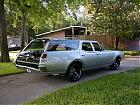
I think I will get the aftermarket reinforcements and put the sway bar back on. I plan to rebuild the rear suspension this winter w/ new bushings, etc. I wonder why Olds never put a sway bar on the rear of a Vista or flat top wagon- seems like with the added weight on the rear of the car a sway bar would be a good thing.. Or maybe not... maybe they figured a wagon wouldn't be driven like a 442? Maybe I should just leave the sway bar off? What you guys think??
Registered User
Joined: Jan 2009
Posts: 1,565
From: Dallas Texas
Greg: Way back when we bought the Silver bullet, good friend Murphy Walker gave me a boxed set and a sway bar and told me to get them installed, they would make a world of difference in the way the FlatTop handled. It certainly did, and I would highly recommend you do the install, also. Think I'm gonna' go out and back the SB out of her garage, and crawl around underneath to see if anything is obviously wrong.
Last edited by Aron Nance; Oct 11, 2014 at 06:17 AM.

Thread Starter
Registered User
Joined: Jan 2009
Posts: 5,572
From: Harrison, Michigan
Greg: Way back when we bought the Silver bullet, good friend Murphy Walker gave me a boxed set and a sway bar and told me to get them installed, they would make a world of difference in the way the FlatTop handled. It certainly did, and I would highly recommend you do the install, also. Think I'm gonna' go out and back the SB out of her garage, and crawl around underneath to see if anything is obviously wrong.

Thread Starter
Registered User
Joined: Jan 2009
Posts: 5,572
From: Harrison, Michigan
Bought the weld in pieces from Columbia off ebay for about $35.00 shipped. Got them welded in a pair of lower control arms I took off my parts car. So far so good. This winter I plan to rebuild the rear suspension and replace the carrier and pinion bearings in the rear end of my Vista Beater.
Old(s) Fart
Joined: Mar 2007
Posts: 50,802
From: Northern VA

Thread
Thread Starter
Forum
Replies
Last Post


