


71 Cutlass brake issue.


Thread Starter
Registered User
Joined: Apr 2016
Posts: 9
71 Cutlass brake issue.
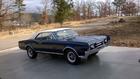
71 Cutlass supreme 4 wheel drum brakes.
Does this vehicle have a proportioning valve (unlikely), a distribution block or combo valve?
Symptoms: When brakes are applied there is no reaction until pedal is about half way down. Then very suddenly the drivers side wheel brakes hard (will lock up on dirt). Passenger side seems to do little braking. Car as whole stops about as well as a ship.
Considering the parts I've already replaced in an attempt to resolve the issue I believe the problem is either with the brake lines or junctions. I have not looked at the system yet. I'm not sure if the vehicle has a proportioning valve (unlikely) or just a distribution block. I know in 72 it was a combo valve. Trying to get an idea for comment fail points and what to look for before I tear into it.
New:
front wheel cylinders
Hardware
Shoes
Master cylinder (replaced to resolve different issue)
Brakes and master cylinder bled
Have new hoses but due to corrosion have not replaced yet.
Does this vehicle have a proportioning valve (unlikely), a distribution block or combo valve?
Symptoms: When brakes are applied there is no reaction until pedal is about half way down. Then very suddenly the drivers side wheel brakes hard (will lock up on dirt). Passenger side seems to do little braking. Car as whole stops about as well as a ship.
Considering the parts I've already replaced in an attempt to resolve the issue I believe the problem is either with the brake lines or junctions. I have not looked at the system yet. I'm not sure if the vehicle has a proportioning valve (unlikely) or just a distribution block. I know in 72 it was a combo valve. Trying to get an idea for comment fail points and what to look for before I tear into it.
New:
front wheel cylinders
Hardware
Shoes
Master cylinder (replaced to resolve different issue)
Brakes and master cylinder bled
Have new hoses but due to corrosion have not replaced yet.
Administrator
Joined: Oct 2009
Posts: 42,475
From: Poteau, Ok
Replace the hoses and they are known to degrade on the inside and prevent fluid from returning back to the MC. Are you losing fluid? How are the rear brakes? Was the MC bench bled? When pressing on the pedal 1/2 way down is it hard? Have the brakes been adjusted correctly? Are the self adjusters working?

Old(s) Fart
Joined: Mar 2007
Posts: 50,770
From: Northern VA
71 Cutlass supreme 4 wheel drum brakes.
Does this vehicle have a proportioning valve (unlikely), a distribution block or combo valve?
Symptoms: When brakes are applied there is no reaction until pedal is about half way down. Then very suddenly the drivers side wheel brakes hard (will lock up on dirt). Passenger side seems to do little braking. Car as whole stops about as well as a ship.
Does this vehicle have a proportioning valve (unlikely), a distribution block or combo valve?
Symptoms: When brakes are applied there is no reaction until pedal is about half way down. Then very suddenly the drivers side wheel brakes hard (will lock up on dirt). Passenger side seems to do little braking. Car as whole stops about as well as a ship.
No four wheel drum system ever used a prop valve. The 1967-up drum cars with the dual circuit master cylinder use a distribution block. All that really does is house the differential pressure switch that illuminates the BRAKE light on the dash if you loose pressure in half the system.
If nothing happens for half the pedal stroke the problem is either improperly adjusted shoes or air in the lines. Pulling can be due to one side improperly adjusted, contaminated linings or drum, or a problem in the hoses that could cause a blockage.
Thread Starter
Registered User
Joined: Apr 2016
Posts: 9
Replace the hoses and they are known to degrade on the inside and prevent fluid from returning back to the MC. Are you losing fluid? How are the rear brakes? Was the MC bench bled? When pressing on the pedal 1/2 way down is it hard? Have the brakes been adjusted correctly? Are the self adjusters working?
Yes the master was bench bled. The brakes are auto adjust but they were manually adjusted (almost to point of drag) when I replaced them and set very close to drum. No fluid is leaking.
I do have new hoses but I was unable to remove the old hoses due to 46 years of corrosion on the joints.
So I should put every effort into replacing the hoses first? Makes sense. Thank you.
Any suggestion on removing the hose from the line? I may have to cut it and splice in a new end with a union. But I really don't want to have to do that.
Welcome.
No four wheel drum system ever used a prop valve. The 1967-up drum cars with the dual circuit master cylinder use a distribution block. All that really does is house the differential pressure switch that illuminates the BRAKE light on the dash if you loose pressure in half the system.
If nothing happens for half the pedal stroke the problem is either improperly adjusted shoes or air in the lines. Pulling can be due to one side improperly adjusted, contaminated linings or drum, or a problem in the hoses that could cause a blockage.
No four wheel drum system ever used a prop valve. The 1967-up drum cars with the dual circuit master cylinder use a distribution block. All that really does is house the differential pressure switch that illuminates the BRAKE light on the dash if you loose pressure in half the system.
If nothing happens for half the pedal stroke the problem is either improperly adjusted shoes or air in the lines. Pulling can be due to one side improperly adjusted, contaminated linings or drum, or a problem in the hoses that could cause a blockage.
Both sides were adjusted just to the point of drag, then backed off just till the wheels spin freely. The entire system was bled. Master was bench bled. So it's likely those hoses.
Any suggestion on removing the hose from the line? I may have to cut it and splice in a new end with a union. But I really don't want to have to do that.
Old(s) Fart
Joined: Mar 2007
Posts: 50,770
From: Northern VA
If you are concerned about the flare nut being rusted to the hard line, cut the hose just past the bracket on the frame. Remove the "U" clip that holds it to the bracket and push the end of the hose and the flare nut through the bracket far enough to disengage the flats on the hose end. Hold the flare nut and turn the hose end to unscrew it.
Once you do that, you should be able to loosen the flare nut on the end of the hard line. Penetrating oil can help. Once loose, I apply a dab of anti-seize to the outside of the tube where the flare nut sits. Do not get any on the inside of the flare. I also put a dab on the flare nut threads.
Once you do that, you should be able to loosen the flare nut on the end of the hard line. Penetrating oil can help. Once loose, I apply a dab of anti-seize to the outside of the tube where the flare nut sits. Do not get any on the inside of the flare. I also put a dab on the flare nut threads.

Thread
Thread Starter
Forum
Replies
Last Post
Dead Reckon
Small Blocks
18
Jul 14, 2014 02:35 PM


