


71 442 455 situation


Thread Starter
Registered User
Joined: Aug 2010
Posts: 990
From: Economy, Nova Scotia
71 442 455 situation
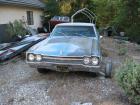
The restoration of my 71 442 is progressing well, with the body currently on a rotisserie, the roof and quarters have been replaced and the body blocked and reprimed. Thanks to “Blackpage” for the roof and cowl that I acquired from him in 2012 with the help of “Stick W31”. Work on the chassis will commence soon, which leads me to seek opinions and information concerning the engine.
I bought the numbers matching 442 in 2010, as a retirement project and have spent the past four years restoring all the pieces and just completed rebuilding the T400. The 455 was sitting in the car when I bought it, having been rebuilt, but never started. Actually only the block and heads are assembled. Items to complete ie., exhaust manifolds , harmonic balancer, water pump, carburetor are not installed. I had a quick conversation with the builder, a Chevy builder, and GM shop foreman. He only said,” I put a lot of money in that engine and you’ll have no trouble with it.” End of conversation. He had built it for the owner I acquired it from. Needless to say I wasn't too assured. I have been turning it over several times a year and added oil in the spark plug holes to keep it coated in the cylinders. Apparently, it is a totally stock rebuild. As the body man is starting to work on the frame he would like the engine done so we are able to install the drive train prior to lowering the body. This all makes sense. I have a new Gardner exhaust system waiting to install when I am ready. My body guy does entire restorations so it’s great he will do the entire front end and control arm bushing replacements in his one man shop. You can see the progress on my car on his website, jeffyorkeautorestoration.com. He calls it a Cutlass on his site. While you are at it, look at the work on the 70 GTO and the 69 Camaro, among others. An unbelievable amount of work and of course expense was spent on those two cars.
The long winded point of this story is that I need opinions and recommendations on how to treat this engine. I’m most concerned about clearances and valve train geometry. I have a series of questions, and I need to be educated on the finer points of Olds engines and what would be my best course of action in this situation. I have recently read a thread on this forum about issues concerning pushrod lengths and lifter preloads. I have determined the engine has been built with “Silvo-lite” pistons, with the numbers 1630 06 found underneath the piston. Does this number represent .030” oversize? 06 the year?
My first step taken was to check the state of the valve stem heights and lifter preload. I have the Mondello tool for checking the height of the stems, but I am wondering if this tool is identical to the GM BT6428? Is the correct measurement for the Mondello tool when the stem just touches the bottom of the gauge part of the tool? How does this relate to the CSM page 6B-16? It doesn’t appear the CSM gives a simple stem to gauge spec that lets you move on to other details. They are tying in the rotator/retainer height to gauge clearance along with the stem to gauge clearance. Maybe it’s a roundabout way of checking two areas, but I’m confused and need some clarity on this and how the Mondello gauge compares. The picture of the Mondello tool is shown on another G head I acquired.
My simple check of the valve stem tip to the Mondello gauge reveals all different heights; ranging from .002 (1 case) to .025. Most clearances were in the range of .020 for intakes and .014 for exhausts. As the lifters are dry, not pumped up, I backed off the pivot bolts for each cylinder and spun the pushrod as I tightened the bolt until all lash was taken out. I then measured the clearance between the pivot and the head to get the clearances. According to Mondello’s manual, the distance should be between .035- .045 in order to have the correct preload in the lifter after torquing down the bolts to 25 ft/lbs. I have five valves that don’t have the required distance, with the intake on cylinder 3 sitting directly on the head, therefore no preload is available. I am unclear as to whether this is the correct way to do this and what requires you to use the light checking valve spring. In order to correct this situation, am I correct that I should order five longer pushrods in the necessary lengths? Where should I get these and what type should I request? There seems to be various qualities, and two different thicknesses. I am sure someone will suggest the comp cam roller tip rockers. I have these and tried them on my 71 SX, but the engine sounded like a sewing machine, so I removed them. I want the engine to be smooth and quiet like it was new. I should say, I have the Comp Cam push rod length checker #7704-1.
I would also like to know the purpose of the inner valve springs or dampers and as they weren’t included in this rebuild what disadvantage will there be, if any? I can’t imagine GM putting parts in that aren’t required. It appears there are rotators on all valves in the 442 G head along with dampers.
My next concern is that I don’t know what camshaft is in the engine and I’m thinking I should change it so I’ll know the specs. In a totally stock, low compression large valve G head, what would be suggested that would keep it smooth but liven it up a bit? I have a totally stock deal here, factory quadrajet and manifolds. As stated before, Gardner exhaust with their turbo mufflers and the factory 3:23 rear end. I notice Comp Cam has a variety of series of cams, which further adds to my dilemmas. Advice appreciated.
If I was to consider checking the crank clearances, can you just remove one or two bearing caps and then retorque them without concern to the overall crankshaft?
It seems, I can buy a few pushrods and take a chance on the rest of the engine or have a reputable shop tear it down , change the cam , redo the valves with the help of the gauge, buy a new cam and have the rotating mass balanced, which I presume was never done. At this point one could ask, should I put higher compression Keith Black hypereutectic pistons in place of what I have, or would that not be of much value as everything else is stock and I already have these low comp pistons? Cost/benefit?
I've asked a lot and I realize different people will have different views, but I welcome all opinions and any other help or explanations which will help me get through this part of the restoration. Many thanks for your inputs so I am able to put together a course of action.
I bought the numbers matching 442 in 2010, as a retirement project and have spent the past four years restoring all the pieces and just completed rebuilding the T400. The 455 was sitting in the car when I bought it, having been rebuilt, but never started. Actually only the block and heads are assembled. Items to complete ie., exhaust manifolds , harmonic balancer, water pump, carburetor are not installed. I had a quick conversation with the builder, a Chevy builder, and GM shop foreman. He only said,” I put a lot of money in that engine and you’ll have no trouble with it.” End of conversation. He had built it for the owner I acquired it from. Needless to say I wasn't too assured. I have been turning it over several times a year and added oil in the spark plug holes to keep it coated in the cylinders. Apparently, it is a totally stock rebuild. As the body man is starting to work on the frame he would like the engine done so we are able to install the drive train prior to lowering the body. This all makes sense. I have a new Gardner exhaust system waiting to install when I am ready. My body guy does entire restorations so it’s great he will do the entire front end and control arm bushing replacements in his one man shop. You can see the progress on my car on his website, jeffyorkeautorestoration.com. He calls it a Cutlass on his site. While you are at it, look at the work on the 70 GTO and the 69 Camaro, among others. An unbelievable amount of work and of course expense was spent on those two cars.
The long winded point of this story is that I need opinions and recommendations on how to treat this engine. I’m most concerned about clearances and valve train geometry. I have a series of questions, and I need to be educated on the finer points of Olds engines and what would be my best course of action in this situation. I have recently read a thread on this forum about issues concerning pushrod lengths and lifter preloads. I have determined the engine has been built with “Silvo-lite” pistons, with the numbers 1630 06 found underneath the piston. Does this number represent .030” oversize? 06 the year?
My first step taken was to check the state of the valve stem heights and lifter preload. I have the Mondello tool for checking the height of the stems, but I am wondering if this tool is identical to the GM BT6428? Is the correct measurement for the Mondello tool when the stem just touches the bottom of the gauge part of the tool? How does this relate to the CSM page 6B-16? It doesn’t appear the CSM gives a simple stem to gauge spec that lets you move on to other details. They are tying in the rotator/retainer height to gauge clearance along with the stem to gauge clearance. Maybe it’s a roundabout way of checking two areas, but I’m confused and need some clarity on this and how the Mondello gauge compares. The picture of the Mondello tool is shown on another G head I acquired.
My simple check of the valve stem tip to the Mondello gauge reveals all different heights; ranging from .002 (1 case) to .025. Most clearances were in the range of .020 for intakes and .014 for exhausts. As the lifters are dry, not pumped up, I backed off the pivot bolts for each cylinder and spun the pushrod as I tightened the bolt until all lash was taken out. I then measured the clearance between the pivot and the head to get the clearances. According to Mondello’s manual, the distance should be between .035- .045 in order to have the correct preload in the lifter after torquing down the bolts to 25 ft/lbs. I have five valves that don’t have the required distance, with the intake on cylinder 3 sitting directly on the head, therefore no preload is available. I am unclear as to whether this is the correct way to do this and what requires you to use the light checking valve spring. In order to correct this situation, am I correct that I should order five longer pushrods in the necessary lengths? Where should I get these and what type should I request? There seems to be various qualities, and two different thicknesses. I am sure someone will suggest the comp cam roller tip rockers. I have these and tried them on my 71 SX, but the engine sounded like a sewing machine, so I removed them. I want the engine to be smooth and quiet like it was new. I should say, I have the Comp Cam push rod length checker #7704-1.
I would also like to know the purpose of the inner valve springs or dampers and as they weren’t included in this rebuild what disadvantage will there be, if any? I can’t imagine GM putting parts in that aren’t required. It appears there are rotators on all valves in the 442 G head along with dampers.
My next concern is that I don’t know what camshaft is in the engine and I’m thinking I should change it so I’ll know the specs. In a totally stock, low compression large valve G head, what would be suggested that would keep it smooth but liven it up a bit? I have a totally stock deal here, factory quadrajet and manifolds. As stated before, Gardner exhaust with their turbo mufflers and the factory 3:23 rear end. I notice Comp Cam has a variety of series of cams, which further adds to my dilemmas. Advice appreciated.
If I was to consider checking the crank clearances, can you just remove one or two bearing caps and then retorque them without concern to the overall crankshaft?
It seems, I can buy a few pushrods and take a chance on the rest of the engine or have a reputable shop tear it down , change the cam , redo the valves with the help of the gauge, buy a new cam and have the rotating mass balanced, which I presume was never done. At this point one could ask, should I put higher compression Keith Black hypereutectic pistons in place of what I have, or would that not be of much value as everything else is stock and I already have these low comp pistons? Cost/benefit?
I've asked a lot and I realize different people will have different views, but I welcome all opinions and any other help or explanations which will help me get through this part of the restoration. Many thanks for your inputs so I am able to put together a course of action.
CH3NO2 LEARN IT BURN IT
Joined: Jul 2010
Posts: 5,635
From: Land of Taxes
You're retired and this is a project whats the question..... Pull that 455 apart and at the very least inspect re-lube and re-gasket it.... go for it IMO. Was it broken in at all? If not then maybe Im out of line but I want to see and measure everything. This is a definite MAW. The engines out and looks like its sat for a while. You know if you dont do it you'll have the remorse of "should have while it was out". Not to mention peace of mind. Whats that worth...Same deal with the TH400.
Thread Starter
Registered User
Joined: Aug 2010
Posts: 990
From: Economy, Nova Scotia
You're retired and this is a project whats the question..... Pull that 455 apart and at the very least inspect re-lube and re-gasket it.... go for it IMO. Was it broken in at all? If not then maybe Im out of line but I want to see and measure everything. This is a definite MAW. The engines out and looks like its sat for a while. You know if you dont do it you'll have the remorse of "should have while it was out". Not to mention peace of mind. Whats that worth...Same deal with the TH400.

Registered User
Joined: Nov 2008
Posts: 8,484
From: Central Fl
If you're looking for advice then here's mine.
You can either take the heads to a machine shop and have them even out the valve stems/heights or just buy an adjustable valvetrain.
As far as pistons go I'd use the Icon or Wiseco forged ones. They're not that much more than the hypers and a whole lot better with a better ring pack.
And if you plan on making any power at all and/or want to have reliable fun then ditch the stock rods as well and get a set of Eagles. Take it apart and do it right, if for no other reason than to replace the $4.00 timing set that's on it.
Then you can do what you want, how you want from there.
Jmo.
You can either take the heads to a machine shop and have them even out the valve stems/heights or just buy an adjustable valvetrain.
As far as pistons go I'd use the Icon or Wiseco forged ones. They're not that much more than the hypers and a whole lot better with a better ring pack.
And if you plan on making any power at all and/or want to have reliable fun then ditch the stock rods as well and get a set of Eagles. Take it apart and do it right, if for no other reason than to replace the $4.00 timing set that's on it.
Then you can do what you want, how you want from there.
Jmo.
Last edited by cutlassefi; Nov 18, 2014 at 03:44 PM.
Thread Starter
Registered User
Joined: Aug 2010
Posts: 990
From: Economy, Nova Scotia
Can the valves stems be leveled without removing them from the head?
What would Eagle rods do for a nearly stock engine?
What cam would you suggest and what timing gear set would be best for this application?
I hope someone can explain the Mondello tool. I would presume the valve stems should be cut to just touch the gauge portion of the tool. Is that the same as the GM tool?
What would Eagle rods do for a nearly stock engine?
What cam would you suggest and what timing gear set would be best for this application?
I hope someone can explain the Mondello tool. I would presume the valve stems should be cut to just touch the gauge portion of the tool. Is that the same as the GM tool?
Registered User
Joined: Nov 2008
Posts: 8,484
From: Central Fl
I wouldn't attempt evening the valve stems while still assembled. I'd just get and adjustable valvetrain. I offer them as well as others.
As far as the cam goes, once you've finalized your combination then we can talk camshafts.
No you don't need Eagle rods for a stock build. However I was under the impression you were wanting more power. That might warrant the change.
As far as the cam goes, once you've finalized your combination then we can talk camshafts.
No you don't need Eagle rods for a stock build. However I was under the impression you were wanting more power. That might warrant the change.
CH3NO2 LEARN IT BURN IT
Joined: Jul 2010
Posts: 5,635
From: Land of Taxes
I hear you. I hope some people can chime in with specific answers to my questions. I did already rebuild the T400 myself, so that is taken care of. I like doing the T400s, but am kind of intimidated by engine work. I think part of the problem is that you are at the mercy of whatever machine shop is in your area and of course Chevy knowledge prevails.
Be patient there are several experts in valve train geometry here. Do some searchin as its been covered before.

Thread
Thread Starter
Forum
Replies
Last Post


