When you click on links to various merchants on this site and make a purchase, this can result in this site earning a commission. Affiliate programs and affiliations include, but are not limited to, the eBay Partner Network.
It says the 1970 Deltla 88 455 365 HP HAS 510 Torque - See Below & Attached links - I'm not sure is this is accurate of just whatever +-?
I always read the 510 Torque from the Buick GS 455 was the MOST Ever from GM (?)
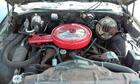
Was this 510 Torque From the Delta omitted because it was from a Full Size car (ps - this is the motor that's transplanted into my 69 Cutlass)
Off the Internet - 1970 Buick GS
Known for their torquey engines, Buick stuffed plenty of 350s and 400s into their GS. In 1970, Buick dropped their own 455 into the GS. With 360 hp and a crushing 510 lb/ft, the GS455 held the record for most torque in a factory American engine, until the second gen Viper.
Below is the Oldsmobile engine page from my 1976 version MOTOR manual.
But keep in mind, this is a print book from last century with data taken from the manufacturer's publications and not what someone posted on the internet.
And I guess those folks forgot about Cadillac engines.
How about we just look at the actual specs published by Oldsmobile in 1970? Of course, as I've pointed out in the past, take these with a grain of salt. Does anyone REALLY think Olds would have gone through all the trouble to design and build new heads, intake, and cam for the 1970 W-30 just to make LESS HP and torque than the Toronado motor without all that stuff? Does anyone REALLY think that the Ninety Eight motor with a single exhaust made more HP and torque than a W-30? Does anyone REALLY think that the 1970 W-30 AT motor with a 285/287 cam made the same HP and torque as the manual trans motor with the 328/328 cam? Keep in mind that GM had a corporate mandate of no less than 10 lbs per HP in the A-body cars, and the 70 442 curb weight was right around 3700 lbs. Do the math.
and miraculously..........the 1970 W-30 Sport Coupe weighed in at 3707 pounds. It was a numbers game back then, insurance companies also penalyzed those "performance cars" with much higher premiums. You can run your finger along a horsepower or torque line on a graph and pick any point to rate an engine. What does that really mean ? You'll notice the words "peak horsepower" or "peak torque" are not used.
"In the old days", flaunting numbers back and forth was called "bench racing", today its called BS'ing. Everybody had a 600 horsepower Camaro "on paper", but none of those ever appeared at the drag strip.
........Just my two cents worth.
Last edited by OLDSter Ralph; Dec 21, 2019 at 02:07 PM.
Reason: typo's
You can run your finger along a horsepower or torque line on a graph and pick any point to rate an engine. What does that really mean ? You'll notice the words "peak horsepower" or "peak torque" are not used.
Exactly. That reminded me of DaveH posting about a W-31 dyno run. The engine did make 325 hp @ 5400 RPM as the factory literature stated, and it kept climbing as the RPM increased.
I'm a big fan, I think the site is great. I am a numbers junkie, so the fact that they have simulated performance specs for every car they list hits home.
Originally Posted by Fun71
Exactly. That reminded me of DaveH posting about a W-31 dyno run. The engine did make 325 hp @ 5400 RPM as the factory literature stated, and it kept climbing as the RPM increased.
Awesome info, its one of the legendary underrated muscle cars. A factory road test from that time confirms this also. Car Life tested a 1969 W31 at 3935 LBS test weight, it ran 14.90 @ 96 MPH in the 1/4. This equates to 350 Gross HP. When you adjust gross to net, you get 270 HP which is what you need to achieve those performance numbers at that weight.
Of note, the W31s test shift points were 6200 RPM 1-2 and 6200 RPM 2-3.
I never seen the Cadillac numbers
Anyone here care to comment on the actual performance of the 1970 Cadillac 500 CI motor (not the behemoth car) that's rated with with
400 HP & 550 Torque ? as listed above ...
Just more hype or was it something to take note of back in the day ?
I'm a big fan, I think the site is great. I am a numbers junkie, so the fact that they have simulated performance specs for every car they list hits home.
Awesome info, its one of the legendary underrated muscle cars. A factory road test from that time confirms this also. Car Life tested a 1969 W31 at 3935 LBS test weight, it ran 14.90 @ 96 MPH in the 1/4. This equates to 350 Gross HP. When you adjust gross to net, you get 270 HP which is what you need to achieve those performance numbers at that weight. Of note, the W31s test shift points were 6200 RPM 1-2 and 6200 RPM 2-3.
That is about right for an automatic. I ran the same cam in a 400 E with a 4 speed and shifted about 6500.
I never seen the Cadillac numbers
Anyone here care to comment on the actual performance of the 1970 Cadillac 500 CI motor (not the behemoth car) that's rated with with
400 HP & 550 Torque ? as listed above ...
Just more hype or was it something to take note of back in the day ?
Incredible vehicle, I owned a 1971 Eldorado about 15 years ago. An absolute monster when it came to brute force. Have never felt anything like it before or since, and the 70 is slightly more powerful so forget about it. Luxury Beast and the ride was like you where floating, it felt like you would barely feel a missing manhole cover. An impressive vehicle to say the least.
1/4 mile not so much, after all the car weighed 5000 lbs, was front wheel drive, single traction, modest gear, etc. Motor Trend July 1970 1/4 mile 16.37 @ 85.87 MPH, curb weight 4721 lbs + 2 aboard.
As far as hype there may have been some... Over the years the engines have been rebuilt to spec. 1970 Dynoed to 323 HP and 504 LB FT, 1971-1976 Dynoed to 302 HP and 493 LB FT, GROSS
Originally Posted by OLDSter Ralph
That is about right for an automatic. I ran the same cam in a 400 E with a 4 speed and shifted about 6500.
Good stuff Ralph ! That W31 was automatic and 2 aboard.
Man were those early 400s killer or what. I tried a 5500 RPM shift in my 69 once, it sounded like it was about to explode, never again...
Anyone here care to comment on the actual performance of the 1970 Cadillac 500 CI motor (not the behemoth car) that's rated with with 400 HP & 550 Torque?
Charlie, in 1970 I had a 1970 350 LT-1 Corvette (13.7 quarter-mile time). On a downtown street I had a block to get in the other lane when the light changed. A 1970 Eldo was next to me with a young woman driver. The light changed and it was dead even for that block.
The LT-1 had a more radical cam than the W-31, so it was not known for its off-the-line performance. Nevertheless, I was astounded at the low-end power of the Eldo engine.
I'm a big fan, I think the site is great. I am a numbers junkie, so the fact that they have simulated performance specs for every car they list hits home.
Awesome info, its one of the legendary underrated muscle cars. A factory road test from that time confirms this also. Car Life tested a 1969 W31 at 3935 LBS test weight, it ran 14.90 @ 96 MPH in the 1/4. This equates to 350 Gross HP. When you adjust gross to net, you get 270 HP which is what you need to achieve those performance numbers at that weight.
Of note, the W31s test shift points were 6200 RPM 1-2 and 6200 RPM 2-3.
96 MPH @ 4000 pounds is roughly 275 crankshaft HP observed.
Here are some bits I collected off the internet a while back - not sure what's what +- (LOL)
Horsepower is how fast you hit a wall, whereas torque is how far you will push the wall.
Torque is a raw measurement that accounts for rotational force that occurs within the engine, specifically at the crankshaft.
Horsepower is a man-made calculation that measures the amount of power that occurs on a larger scale at the wheels and under the hood. Horsepower encompasses weight, distance, and time (i.e., what’s being moved, how far it’s going, and how long it takes to do so).
Torque Gets You Off the Line, Horsepower Gets You Ahead
In an evenly matched race, with Racecar A touting more torque at lower RPMs and Racecar B possessing more high RPM horsepower, who would win? Racecar A will be quicker to accelerate off the line and might look as if it has the lead at the beginning. But once Racecar A shifts into second gear, it will lose its acceleratory bump. By the time Racecar A shifts into third gear, high-horsepower Racecar B will be the new leader.
For normal driving useage, torque ALWAYS beats horsepower!
Horsepower is the measure of the amount of work an “engine” can perform. It is expressed as a lifting capacity. A 10 hp B&S engine can lift the equivalent weight that 10 “standard” horses can lift (in simple terms).
Torque is the twisting motion that can be applied to an axle. 100 foot pounds of torque apllied to a vehicle axle will determine the rate the vehicle will accelerate.
100 horsepower has the ability to, perhaps , overcome the mechanical and aerodynamic drag of a given vehicle to sustain a speed of 100 miles per hour.
The torque curve doesn’t really matter all that much because it can be easily influenced by gearing. Horsepower is not changed by gearing, so focus on the power curve.
In short
Horsepower is the best measure of both acceleration and top speed (assuming weight, grip, drag and everything else is the same).
Torque doesn’t mean much without an RPM figure or range.
More torque and lower peak-torque RPM usually means more low-end push which makes for a better daily-driver.
However, headline numbers don’t tell the whole story.
Simply put: torque measures how much work is being done and horsepower measures how quickly the work is being done (or how quick the torque is applied).
Let’s complicate matters further. Most engines apply the amount of torque they can generate in different parts of the RPM spectrum. i.e. they can produce 150 lb/ft at 2500 RPM and 225 lb/ft at 4500 RPM. Electric motors are well known for their ability to produce maximum torque right from 0 RPM.
Why is this important? For any wheeled vehicle to get moving from a dead stop they have to overcome the inertia of not moving to the momentum of moving. That must mean torque is more important and the larger it is at lower RPM the better, right? Well, that does have some truth to it, but there are ways to get around it.
Just about every modern vehicle has a transmission which allows the engine to spin the wheels at different speeds relative to the engine RPM. Notice how a car feels faster in lower gears? That’s because the torque that the engine is supplying is being multiplied to be more via the transmission and differential putting more torque at the wheels of the vehicle. Look up the gear ratios and final drive of your vehicle. That number is the multiplier as to how much torque is being applied to the wheels and tires of the vehicle.
Last edited by Cosmic Charlie; Dec 25, 2019 at 06:59 AM.
Why does HP and TQ always cross at 5252 rpm on a Dyno Graph ?
Horsepower is calculated from torque. Torque is measured, horsepower is not.
HP = (TQ*RPM) / 5250 A Dyno measures torque and extrapolates HP from it.
That's also why an engine which revs to less than 5252 RPM WILL have more torque than horsepower
Here's an interesting bit of trivia; below 5252 rpm any engine's torque number will always be higher than its horsepower number, and above 5252 rpm any engine's horsepower number will always be higher than its torque number. At 5252 rpm the horsepower and torque numbers will be exactly the same.
What is the significance of 5252, or perhaps better said, where does this number come from???
Have you ever looked at the specs of an engine in a magazine and seen something like "this engine makes 300 pound-feet of torque at 4,000 RPM," and wondered how much power that was? How much horsepower are we talking about here? You can calculate how many foot-pounds of horsepower this engine produces using a common equation:
The engine that makes 300 pound-feet of torque at 4,000 RPM produces [(300 x 4,000) / 5,252] 228 horsepower at 4,000 RPM. But where does the number 5,252 come from?
To get from pound-feet of torque to horsepower, you need to go through a few conversions. The number 5,252 is the result of lumping several different conversion factors together into one number.
First, 1 horsepower is defined as 550 foot-pounds per second (read How Horsepower Works to find out how they got that number). The units of torque are pound-feet. So to get from torque to horsepower, you need the "per second" term. You get that by multiplying the torque by the engine speed.
But engine speed is normally referred to in revolutions per minute (RPM). Since we want a "per second," we need to convert RPMs to "something per second." The seconds are easy -- we just divide by 60 to get from minutes to seconds. Now what we need is a dimensionless unit for revolutions: a radian. A radian is actually a ratio of the length of an arc divided by the length of a radius, so the units of length cancel out and you're left with a dimensionless measure.
*You can think of a revolution as a measurement of an angle. One revolution is 360 degrees of a circle. Since the circumference of a circle is (2 x pi x radius), there are 2-pi radians in a revolution. To convert revolutions per minute to radians per second, you multiply RPM by (2-pi/60), which equals 0.10472 radians per second. This gives us the "per second" we need to calculate horsepower.
Let's put this all together. We need to get to horsepower, which is 550 foot-pounds per second, using torque (pound-feet) and engine speed (RPM). If we divide the 550 foot-pounds by the 0.10472 radians per second (engine speed), we get 550/0.10472, which equals 5,252.
So if you multiply torque (in pound-feet) by engine speed (in RPM) and divide the product by 5,252, RPM is converted to "radians per second" and you can get from torque to horsepower -- from "pound-feet" to "foot-pounds per second."
Horsepower vs Torque - A Simple Explanation (nearly 5 million views)


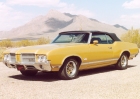


 It was a numbers game back then, insurance companies also penalyzed those "performance cars" with much higher premiums. You can run your finger along a horsepower or torque line on a graph and pick any point to rate an engine. What does that really mean ? You'll notice the words "peak horsepower" or "peak torque" are not used.