


To See What I'm In F/ Pulled A Valve Cover

Thread Starter
Texas Jim
Joined: Aug 2009
Posts: 437
From: Killeen, Texas
To See What I'm In F/ Pulled A Valve Cover
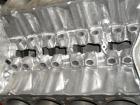
Pulled a valve cover today, would like to have pulled the intake,
just to see what kind of build-up I have inside my '71 455 (w/ 93,300 miles on it) that I'll be going through in the near future. The beauty of a one-owner, well maintained, low mileage vehicle. Just happened to hit it right, f/ two hundred dollars.
just to see what kind of build-up I have inside my '71 455 (w/ 93,300 miles on it) that I'll be going through in the near future. The beauty of a one-owner, well maintained, low mileage vehicle. Just happened to hit it right, f/ two hundred dollars.
Last edited by Texas Jim; Feb 3, 2010 at 12:16 PM.







Registered User
Joined: Feb 2008
Posts: 11,798
From: Plano, TX
Stupid question...
The internals look nice for the age and mileage!
But since I never had an Olds engine apart ( ), what are the little straps for that 'connect' each E & I set of valves together? For oil deflection?
But since I never had an Olds engine apart (
), what are the little straps for that 'connect' each E & I set of valves together? For oil deflection?



Thread Starter
Texas Jim
Joined: Aug 2009
Posts: 437
From: Killeen, Texas
Thanks f/ the complements. I'll admit that I was happy when I got the valve cover off. I hope the TH400 tranny is in the same shape overall. The pan didn't have alot of silver residue in it when I changed the fluid and filter a month or so ago.
Not only am I happy to have a 455 Olds Rocket that's in good shape, but the fact that it's something "different" is the reason I wanted it to begin w/. It's not a big or small block Chevy, or Ford, or Chrysler product, but a big block Oldsmobile, not as rare as the old "nail heads" or the 401s or 425s, but a BBO just the same and going into a '62 Ford pick-up that I've had f/ (going on) 24 years now. I'm keeping the straight axle to preserve some originality, but still going w/ a Ford 9" rear, already in the truck and been there since '91 summer. The truck has the original 223ci 6 cylinder in it, which I'll keep, just as a keep-sake, as it has the old top end oiler tubes f/ the tappits, solid lifters and the timing is set counting the chain links instead of lining up the marks. The main neat thing about the engine is that it still has the standard bore size and standard bearing size, rod and main alike. It didn't need to be bored or the crank turned when I did the engine in '90 summer, and it still runs great and not a bit of smoke ever. I stated all this not long ago on another topic. I do like this site, and the people here are very friendly, and a very "different" crowd. Thanks f/ the opportunity to be part of this crowd.
Not only am I happy to have a 455 Olds Rocket that's in good shape, but the fact that it's something "different" is the reason I wanted it to begin w/. It's not a big or small block Chevy, or Ford, or Chrysler product, but a big block Oldsmobile, not as rare as the old "nail heads" or the 401s or 425s, but a BBO just the same and going into a '62 Ford pick-up that I've had f/ (going on) 24 years now. I'm keeping the straight axle to preserve some originality, but still going w/ a Ford 9" rear, already in the truck and been there since '91 summer. The truck has the original 223ci 6 cylinder in it, which I'll keep, just as a keep-sake, as it has the old top end oiler tubes f/ the tappits, solid lifters and the timing is set counting the chain links instead of lining up the marks. The main neat thing about the engine is that it still has the standard bore size and standard bearing size, rod and main alike. It didn't need to be bored or the crank turned when I did the engine in '90 summer, and it still runs great and not a bit of smoke ever. I stated all this not long ago on another topic. I do like this site, and the people here are very friendly, and a very "different" crowd. Thanks f/ the opportunity to be part of this crowd.
Last edited by Texas Jim; Feb 4, 2010 at 10:54 AM.
Thread Starter
Texas Jim
Joined: Aug 2009
Posts: 437
From: Killeen, Texas
Started the tare-down, and here are afew pics f/ today, more before the weekend is gone. The pan(center of pan-first pic, in center of pan, top to bottom, rubbed left and right- shows where I gently rubbed back and forth w/ the finger of my leather glove.) So far, so good. I'm going to try to find out what kind of motor oil this guy used in this engine.
Last edited by Texas Jim; Feb 18, 2010 at 09:27 PM.

Registered User
Joined: Aug 2009
Posts: 314
From: Sweden
Looks nice an clean Jim! I dont think that is so important to find out what kind of oil as how often did he change it,that makes the difference,since almost all oils today are overqualified for those old motors imo. Keep it coming! and good luck with the build.
Panos.
and good luck with the build.Panos.
Last edited by panos; Feb 19, 2010 at 12:05 AM.

Moderator
Joined: Jun 2008
Posts: 18,063
From: Atlanta, Georgia
I can hardly believe how nice that engine looks. If anyone wants to see grunge...............I can post some pics.
Just out of curiousity, What type of valve spring compressor did you use? I've always wanted a hydraulic one.
Just out of curiousity, What type of valve spring compressor did you use? I've always wanted a hydraulic one.
Thread Starter
Texas Jim
Joined: Aug 2009
Posts: 437
From: Killeen, Texas
Thanks f/ the luck, and other's complements.
Spring compressor; the old manual "muscle the spring" type. LOL! I work out f/ three months prior to building anything w/ a big lift cam needing the "monster" springs. LOL!
Registered User
Joined: Aug 2009
Posts: 314
From: Sweden
I agree! If you get that stuff changed every 2 to 3 thousand miles, you won't be in too bad a shape at 100,000, but ie; I've had a simi-heavy yellowish film on everything from "Castrol" on the inside of engines I've done after running them 100,000 miles or so. Mind you, nothing harmful or built up to any degree, yet still there. And you're right about oils of today, something my brother and I have discussed a number of times and have agreed on. But taking into consideration that this guy has been working on this w/ oil changes since '71, and the leaps ahead that we've come in motor oil development since the early '70s, he had to be using something that worked as far as keeping residue from building up, and in all honesty, I wasn't up on motor oils when I was in my first year of high school. And I don't remember what developments were being made back then, but I do remember very well alot of older people and motor-heads alike saying that if you keep your oil changed regularly, you'd keep your engine clean. You've made a good point f/ sure!
Thanks f/ the luck, and other's complements.
Spring compressor; the old manual "muscle the spring" type. LOL! I work out f/ three months prior to building anything w/ a big lift cam needing the "monster" springs. LOL!
Thanks f/ the luck, and other's complements.
Spring compressor; the old manual "muscle the spring" type. LOL! I work out f/ three months prior to building anything w/ a big lift cam needing the "monster" springs. LOL!
http://www.garaget.org/?car=44955
Thread Starter
Texas Jim
Joined: Aug 2009
Posts: 437
From: Killeen, Texas
"In Ref. To: type of oil or changing the oil regularly:" Spoke w/ my brother this morning about the two issues, and what's the more important issue of the two. My brother worked in the Homelte Chainsaw research lab in the '70s, and also in the lab f/ Phyllips Petroleum right after, also in the '70s. (He's now w/ IBM in their research lab f/ the past 20 plus years-unrelated) He told me that there were good detergent oils at the time and that changing the oil would have been more important/had more of a bearing on no build-up on internal parts. Like Panos said, regular changing of the oil would be the key, even in the early '70s, which was my question, as at that time, I wasn't up on how good oil was or which one was really better, but only that changing it regularly using just a good brand was a good thing.
When I pumped gas in '73 thru '75, (during the gas shortage) at a full service Mobil station, oil was about .45 to .65 per quart, from the regular, (gas was .35 or .40 per gal. there in NYC) to mid and then special, the cans that you stuck the spout into, and when you'd check the oil and wash the windows as you filled the car up w/ gas. A .50 tip was good money f/ giving a regular customer good service. And Bobby Unser was a big time Indy racer. LOL!
Anyway, thanks f/ setting me straight, and also bringing back some good memories of good times not really too long ago.
When I pumped gas in '73 thru '75, (during the gas shortage) at a full service Mobil station, oil was about .45 to .65 per quart, from the regular, (gas was .35 or .40 per gal. there in NYC) to mid and then special, the cans that you stuck the spout into, and when you'd check the oil and wash the windows as you filled the car up w/ gas. A .50 tip was good money f/ giving a regular customer good service. And Bobby Unser was a big time Indy racer. LOL!
Anyway, thanks f/ setting me straight, and also bringing back some good memories of good times not really too long ago.


Oldsdruid
Joined: Dec 2007
Posts: 10,629
From: Southside Vajenya
I have to admit that's the cleanest engine with that miles I've ever seen torn down. Seems like every Olds I ever pulled apart had a big lump of coked-up oil in the lifter valley. I used to keep an old beat-up shop vac around just to suck that mess out- that was its only purpose in life. It stunk so bad it lived outside the shop with a bucket over the motor.
A good friend who retired from Olds Zone Service once told me that oil is oil as long as it's changed according to how the car is driven. I've pulled down Quaker State engines that had had regular oil & filter changes and no worse than any other brand. I've pulled them down that had been run on Castrol or Havoline and hadn't been changed often enough and looked like the LaBrea tar pits in there.
A good friend who retired from Olds Zone Service once told me that oil is oil as long as it's changed according to how the car is driven. I've pulled down Quaker State engines that had had regular oil & filter changes and no worse than any other brand. I've pulled them down that had been run on Castrol or Havoline and hadn't been changed often enough and looked like the LaBrea tar pits in there.
Thread Starter
Texas Jim
Joined: Aug 2009
Posts: 437
From: Killeen, Texas
Cecil,
I ran that engine in that 98 from August thru January, had the valve covers off while it ran, etc. It pushed out plenty of oil, and fresh oil is in all the right places. The old guy just changed it regularly and he was the only one who drove it. It also sat f/ almost 10 years just prior to me getting it, I thought it would have SOMETHING built up in it due to that, but didn't. The cylinders, which I'll post pics of this weekend, look great too, no sign of excess wear anywhere in the engine. It's not dry, just no sludge or heavy residue.
Rocketraider,
Seems that's the concensus, change it regularly and that's the key, and the brand isn't the important factor. I also used my shop vacs after scrapping and digging in the lifter galley on many engines, the return holes in the heads also. Just cooked up crud, hard and soft. From pure laziness on someone's part, no?
I ran that engine in that 98 from August thru January, had the valve covers off while it ran, etc. It pushed out plenty of oil, and fresh oil is in all the right places. The old guy just changed it regularly and he was the only one who drove it. It also sat f/ almost 10 years just prior to me getting it, I thought it would have SOMETHING built up in it due to that, but didn't. The cylinders, which I'll post pics of this weekend, look great too, no sign of excess wear anywhere in the engine. It's not dry, just no sludge or heavy residue.
Rocketraider,
Seems that's the concensus, change it regularly and that's the key, and the brand isn't the important factor. I also used my shop vacs after scrapping and digging in the lifter galley on many engines, the return holes in the heads also. Just cooked up crud, hard and soft. From pure laziness on someone's part, no?

Registered User
Joined: Feb 2010
Posts: 140
From: Woodstock,Ga.
I got a '70 455 with no clue as far as the history of the engine. After a bare bones reconditioning in my garage I'm very happy with the results.(Turn crank,new bearings,new standard rings,timing chain/gear set,honed cylinders and gasket kit)
A 455 is as close to bullet prof as you can get. I think you will be very happy with it as well.
A 455 is as close to bullet prof as you can get. I think you will be very happy with it as well.
Thread Starter
Texas Jim
Joined: Aug 2009
Posts: 437
From: Killeen, Texas
I got a '70 455 with no clue as far as the history of the engine. After a bare bones reconditioning in my garage I'm very happy with the results.(Turn crank,new bearings,new standard rings,timing chain/gear set,honed cylinders and gasket kit)
A 455 is as close to bullet prof as you can get. I think you will be very happy with it as well.
A 455 is as close to bullet prof as you can get. I think you will be very happy with it as well.
Agreed. I like the fact that it's quite abit less weight than the BBC and it's still a big block, long stroke, w/ the very good low end and mid range torque, it's really friendly to work on, and not everyone and his brother has one. I originally got the 455 to have something different, and then found it has so much more to offer than just that. You're right, just a stock rebuild makes f/ a smooth and dependable long-life runner w/ plenty of power.

Registered User
Joined: Mar 2008
Posts: 1,012
From: Phx, AZ
Jim, as nice as that is, and as clean as it is, it HAS been down before. Some work has been done on it. That engine would not have come with fel-pro 8171 head gaskets on it. The fel-pro 8171 imprint is clearly on the pic, by the 5 cast. Those heads have been off. And with as clean as it is, I'll bet the engine was out. MY opinion.
Look at the timing chain, cam and lifters. Look for the plastic gear, cam and part number.
Check a few bearings. You should have m400 bearings, it is stamped in the backside of the bearing. Check them for wear, no matter who made them.
You may not want to rebuild, a rebuilt engine. Really.
I like what you're doing with it too!
Jim
Look at the timing chain, cam and lifters. Look for the plastic gear, cam and part number.
Check a few bearings. You should have m400 bearings, it is stamped in the backside of the bearing. Check them for wear, no matter who made them.
You may not want to rebuild, a rebuilt engine. Really.
I like what you're doing with it too!
Jim
Last edited by Warhead; Feb 21, 2010 at 08:27 AM.
Thread Starter
Texas Jim
Joined: Aug 2009
Posts: 437
From: Killeen, Texas
Jim, as nice as that is, and as clean as it is, it HAS been down before. Some work has been done on it. That engine would not have come with fel-pro 8171 head gaskets on it. The fel-pro 8171 imprint is clearly on the pic, by the 5 cast. Those heads have been off. And with as clean as it is, I'll bet the engine was out. MY opinion.
Look at the timing chain, cam and lifters. Look for the plastic gear, cam and part number.
Check a few bearings. You should have m400 bearings, it is stamped in the backside of the bearing. Check them for wear, no matter who made them.
You may not want to rebuild, a rebuilt engine. Really.
I like what you're doing with it too!
Jim
Look at the timing chain, cam and lifters. Look for the plastic gear, cam and part number.
Check a few bearings. You should have m400 bearings, it is stamped in the backside of the bearing. Check them for wear, no matter who made them.
You may not want to rebuild, a rebuilt engine. Really.
I like what you're doing with it too!
Jim
Not want to rebuild a rebuilt engine??? If it really were rebuilt, and everything were standard, or even over-sized, what's the difference? Unless it was taken all the way out and worn past (all-out) specs?
UPDATE: They are "Fel-Pro 8171's. Rubbed off the dirt and checked. Never looked f/ it as I would have never thought it was apart. GOOD EYE. Were the early '70s models known f/ needing valve jobs after a short amount of time, due to the unleaded fuel situation, or any reason of the likes? Or due to rolling slow around town? I know f/ a fact that this guy never took the car on a trip, as he bought it after he retired and it went to the grocery store and church, etc.. He was from Texas and had his family, and wife's, near by. My neighbor f/ 15 years or so, and we talked often. Like I said, pistons are standard size, no markings on the top. I wonder if he got the heads done? I originally thought I'd see atleast some smoke initially at start-up, from dry valve seals, w/ an engine that old and taking into consideration that it sat f/ almost 10 years, but never saw anything.
Thanks again f/ the noticing of the gaskets. Unless I run into something else that's been apart, or when I get the heads done and the machinist sees evidence of a prior valve job, I very well may have never known it had been apart in any way, due to taking f/ granted-assume=(what an old boss of mine told me years ago, the old saying)makes an "***" out of "u" and "me" that it was all untouched original. LOL! I won't forget you f/ that, Warhead. You beat everyone to the punch, something to be said f/ that.
Last edited by Texas Jim; Feb 21, 2010 at 01:25 PM.
Registered User
Joined: Mar 2008
Posts: 1,012
From: Phx, AZ
That engine originally came with a steel shim head gasket that is around .017-.020 thick. The fel-pro (also known as the fel-pro BLUE gasket-because it is blue) that left the imprint is a composition gasket .041-.043 in thick.The gasket has that number (part #) on the face of it, and will leave that mark. There is the chance they had a valve job done on it, or a sealing issue that was performed by a qualified shop. Still an excellent score, but it may account for the cleanliness.
Was the imprint on the other head also?
What size valves are in them?
Jim
Was the imprint on the other head also?
What size valves are in them?
Jim
Last edited by Warhead; Feb 21, 2010 at 01:25 PM.
Registered User
Joined: Mar 2008
Posts: 1,012
From: Phx, AZ
By the way, how much ring ridge, and taper do you have?
I'll bet it will not be much.
Did you do a leakdown test on this engine before you tore it down? That can help gauge how much cylinder pressure the rings are holding. It is what I recommend before pulling the heads off.
Jim
I'll bet it will not be much.
Did you do a leakdown test on this engine before you tore it down? That can help gauge how much cylinder pressure the rings are holding. It is what I recommend before pulling the heads off.
Jim
Thread Starter
Texas Jim
Joined: Aug 2009
Posts: 437
From: Killeen, Texas
That engine originally came with a steel shim head gasket that is around .017-.020 thick. The fel-pro (also known as the fel-pro BLUE gasket-because it is blue) that left the imprint is a composition gasket .041-.043 in thick.The gasket has that number (part #) on the face of it, and will leave that mark. There is the chance they had a valve job done on it, or a sealing issue that was performed by a qualified shop. Still an excellent score, but it may account for the cleanliness.
Was the imprint on the other head also?
What size valves are in them?
Jim
Was the imprint on the other head also?
What size valves are in them?
Jim
You came back as I was checking and typing; I'll check the rest of everything this evening. I have to get the engine on the stand tonight, as it's supposed to get cold here, in the 70s today, tomorrow, and I want to have it in the warm part of the garage. I'll check the valve size and everything else, and ofcourse post it. I plan on posting the whole project, engine/body, etc., to the time it runs well and after. Alot of work to do... Thanks again, many heads are better than one, no matter how well one works. ie; taking f/ granted...
Thread Starter
Texas Jim
Joined: Aug 2009
Posts: 437
From: Killeen, Texas
Haven't accomplished near what I wanted to in the amount of time that's lapsed, w/ wife home after being gone f/ 2 months, some work on the 'Vette, family car and work van, and freakin' house.
Finally got the tranny off and took a good look at everything I've pulled apart so far. I took a cotton glove and rubbed the tops of the pistons, and there are "B"s and "C"s stamped on the tops of the pistons and above the bolt holes to the right of the corresponding cylinders on the block. Also see over spray on the nose cone of the starter and the flexplate. Now I'm pretty sure that the whole engine has been down and not just the heads off. No indication of over-sized pistons. I suppose the Bs and Cs were f/ fit purposes, no? (I posted all this in another thread)
The numbers on the back of the block are 68 F4. Next to the distributor hole are "5" and below that "82." Looks like 507Olds' theory is right, according to this block. On the pad (driver's side on block) is: "31m477453."
Haven't pulled the pan yet. Possibly there's more evidence of the engine tare-down in there. Considering the car sat f/ 10 years or so, and the original owner and I were good neighbors since about 5 or 7 years prior to that, the engine couldn't have been done any more recently than 17 years back. W/ the cotton glove, I also rubber on the cylinder ridges, and they were nothing but alittle carbon. No "wear" ridge at all that I can feel w/ my finger tips.
Can you guys give me some info as to the numbers on the block (3m477453)? Does the "F4 68" under the flexplate really mean anything, or is all that out the window now? Thanks in advance, Sincerely, Jimmy C.
Finally got the tranny off and took a good look at everything I've pulled apart so far. I took a cotton glove and rubbed the tops of the pistons, and there are "B"s and "C"s stamped on the tops of the pistons and above the bolt holes to the right of the corresponding cylinders on the block. Also see over spray on the nose cone of the starter and the flexplate. Now I'm pretty sure that the whole engine has been down and not just the heads off. No indication of over-sized pistons. I suppose the Bs and Cs were f/ fit purposes, no? (I posted all this in another thread)
The numbers on the back of the block are 68 F4. Next to the distributor hole are "5" and below that "82." Looks like 507Olds' theory is right, according to this block. On the pad (driver's side on block) is: "31m477453."
Haven't pulled the pan yet. Possibly there's more evidence of the engine tare-down in there. Considering the car sat f/ 10 years or so, and the original owner and I were good neighbors since about 5 or 7 years prior to that, the engine couldn't have been done any more recently than 17 years back. W/ the cotton glove, I also rubber on the cylinder ridges, and they were nothing but alittle carbon. No "wear" ridge at all that I can feel w/ my finger tips.
Can you guys give me some info as to the numbers on the block (3m477453)? Does the "F4 68" under the flexplate really mean anything, or is all that out the window now? Thanks in advance, Sincerely, Jimmy C.
Registered User
Joined: Mar 2008
Posts: 1,012
From: Phx, AZ
A/B/C/D were marked on the blocks deck surface by "measuring" techs, so the piston guys would use the correct size piston upon assembly at the factory.
You never know how far they got into the engine when it was worked on. Look at bearings, and sizes...cam gear (nylon coated is original, most people replaced that with a steel gear), camshaft (should be marked at the rear if aftermarket), and if the rods are numbered. These usually did not have much bore wear at all, even after 75K+ miles, so many will hone, and re-ring.
If Brian posts on a subject, I usually listen, he knows his stuff.
Keep us posted.
Jim in Phx.
You never know how far they got into the engine when it was worked on. Look at bearings, and sizes...cam gear (nylon coated is original, most people replaced that with a steel gear), camshaft (should be marked at the rear if aftermarket), and if the rods are numbered. These usually did not have much bore wear at all, even after 75K+ miles, so many will hone, and re-ring.
If Brian posts on a subject, I usually listen, he knows his stuff.
Keep us posted.
Jim in Phx.



Thread Starter
Texas Jim
Joined: Aug 2009
Posts: 437
From: Killeen, Texas
Thanks f/ the info. Last thing; So does the "F4 68" under the flywheel on the block really mean anything, or is all that just bullshit?
Found out: "nothing."
Found out: "nothing."
Last edited by Texas Jim; Mar 9, 2010 at 07:02 AM.

Registered User
Joined: Sep 2009
Posts: 746
From: Braintree, Mass
I opened my 350 up at 59,000 to change to an Edel intake. It was spotless inside, very light coating. After 8 years I had to replace the intake gaskets at about 78,000, Still spotless. I was happy to see that my engine was well maintained, and of course i maintained it well. How was your timing chain? I'm starting to wonder If I should start planning to replace mine.

Thread
Thread Starter
Forum
Replies
Last Post


