


Low Vacuum!?


Thread Starter
Registered User
Joined: Jan 2013
Posts: 15
From: NJ
Low Vacuum!?
'am hoping someone with experience can tell me how far off I am / point me in the right direction. I ran vacuum and compression tests today on a car that I recently purchsased and the vacuum looks low.
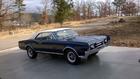
Car is a 1970 Cutlass Holiday coupe with a W-30 OAI. I don't know if the 455 is original to the car - can't see any numbers on the pad where they should be stamped. "C" Heads, stock/iron Manifold.
- Under-hood sticker is "OM", indicating 4BBL Auto-Trans, 12 degrees, R44S plugs, and stock compression was 10:25:1... but I don't know when the sticker was placed there or if/when the engine was rebuilt/swapped and what parts were used.
- Quadrajet is from a 1977 Buick.
- plugs are R45S. They look OK. Several had enough soot to make the insulator black, the rest were tan, probably from whatever fuel system cleaner I have in there now. About half had oil present on the washer when I removed them.
- Timing is set to 12 degrees, but as I watch with a timing light, it periodically flashes lower and then returns to 12.
- Vacuum advance is set to use ported vacuum (none at idle).
- Idle is set at just under 600 RPM and fluctuates about 50 RPM.
- Compression (cylinders 1 - 8): 170, 185, 175, 160, 175, 180, 165, 180
- Vacuum:
600 RPM - fast twitch between 13" and 14"
1000 RPM - 15"
1500 RPM - 16"
2000 RPM - 17" steady
2500 RPM - 16" steady
3000 ROM - 16" steady
About 15 minutes earlier, I had 20" steady at 3000 RPM, but only 12"-13" at idle.
Flashing the throttle causes vacuum to drop to 0 and then jump to 20 before settling back down to ~13"
I am guessing this vacuum is excessively low (I live close to sea level). Are worn rings the likely cause or do the compression test results make this less likely?
I've re-torqued the manifold and carb to specs and checked for open portsd / good fitting plugs and hoses to reduce chance of vacuum leak. Vacuum canisters on carberator are operating correctly. Disconnecting / plugging vacuum canister on distributor hasa no effect on idle. Should I suspect a worn throttle shaft or a leaking carb/manifold gasket?
Car is a 1970 Cutlass Holiday coupe with a W-30 OAI. I don't know if the 455 is original to the car - can't see any numbers on the pad where they should be stamped. "C" Heads, stock/iron Manifold.
- Under-hood sticker is "OM", indicating 4BBL Auto-Trans, 12 degrees, R44S plugs, and stock compression was 10:25:1... but I don't know when the sticker was placed there or if/when the engine was rebuilt/swapped and what parts were used.
- Quadrajet is from a 1977 Buick.
- plugs are R45S. They look OK. Several had enough soot to make the insulator black, the rest were tan, probably from whatever fuel system cleaner I have in there now. About half had oil present on the washer when I removed them.
- Timing is set to 12 degrees, but as I watch with a timing light, it periodically flashes lower and then returns to 12.
- Vacuum advance is set to use ported vacuum (none at idle).
- Idle is set at just under 600 RPM and fluctuates about 50 RPM.
- Compression (cylinders 1 - 8): 170, 185, 175, 160, 175, 180, 165, 180
- Vacuum:
600 RPM - fast twitch between 13" and 14"
1000 RPM - 15"
1500 RPM - 16"
2000 RPM - 17" steady
2500 RPM - 16" steady
3000 ROM - 16" steady
About 15 minutes earlier, I had 20" steady at 3000 RPM, but only 12"-13" at idle.
Flashing the throttle causes vacuum to drop to 0 and then jump to 20 before settling back down to ~13"
I am guessing this vacuum is excessively low (I live close to sea level). Are worn rings the likely cause or do the compression test results make this less likely?
I've re-torqued the manifold and carb to specs and checked for open portsd / good fitting plugs and hoses to reduce chance of vacuum leak. Vacuum canisters on carberator are operating correctly. Disconnecting / plugging vacuum canister on distributor hasa no effect on idle. Should I suspect a worn throttle shaft or a leaking carb/manifold gasket?
Thread Starter
Registered User
Joined: Jan 2013
Posts: 15
From: NJ
There is also a knocking noise in the engine - don't know what is causing this. I tried to isolate the sound with no luck. The car has completely seperate dual exhaust (no cross-over) and I can hear a noise in the drivers side (odd cyclinder bank) exhaust.

Registered User
Joined: Sep 2010
Posts: 3,057
From: Shorewood, Il.
That W-30 cam was a little large, which would account for low vacuum, which really isn't bad.
Almost sounds like it needs a timing chain - how many miles?
Knocking could be a loose chain, if most of the nylon is gone.
Almost sounds like it needs a timing chain - how many miles?
Knocking could be a loose chain, if most of the nylon is gone.

Registered User
Joined: Sep 2011
Posts: 2,146
From: Plano, TX
Make sure you don't have an exhaust leak on the driver's side first. I prefer to start the car cold and quickly run my hand around the manifold feeling for leaks.
Depending on the cam in the engine, those numbers may be OK. Try to hook up a gauge from inside the cabin and watch it while driving. You should get a slightly higher reading while cruising.
Depending on the cam in the engine, those numbers may be OK. Try to hook up a gauge from inside the cabin and watch it while driving. You should get a slightly higher reading while cruising.
Administrator
Joined: Oct 2009
Posts: 42,386
From: Poteau, Ok
The knocking you describe may be valve train noise, or possibly an exhaust leak. What distributer are you running. Have you sprayed some carb cleaner around your manifold, carb and linkage to check for vacuum leaks?

morgan
Joined: Mar 2011
Posts: 1,925
From: CT
sounds like your ruling out the obvious by checking vacuum leaks...how about the brake booster? ... i remember spraying all along the intake and carb and fittings to rule out leaks...but it was so long ago I forgot what the problem was

Registered User
Joined: Oct 2012
Posts: 225
From: Wilmington, Delaware
Step by step procedure:
Plug every vacuum port on the carburetor and intake manifold. This includes the brake booster port. If there is still no change in the vacuum gauge than pour water all over and around the intake manifold and base of the carb as a way of looking for minor vacuum leaks. If still no change than confirm Top Dead Center matches up with the timing marks. If TDC and the timing marks line up I would suspect a valve issue is causing the low and fluttery vacuum reading.
Plug every vacuum port on the carburetor and intake manifold. This includes the brake booster port. If there is still no change in the vacuum gauge than pour water all over and around the intake manifold and base of the carb as a way of looking for minor vacuum leaks. If still no change than confirm Top Dead Center matches up with the timing marks. If TDC and the timing marks line up I would suspect a valve issue is causing the low and fluttery vacuum reading.

Registered User
Joined: Jun 2010
Posts: 3,613
From: Rogues Island, USA

Registered User
Joined: Feb 2012
Posts: 542
From: Sault ste Marie ,Ont
Thread Starter
Registered User
Joined: Jan 2013
Posts: 15
From: NJ
Brake booster check
good advice - I didn't disconnect and plug the brake booster. although the brakes work consistently, they are a bit hard. I expect to be able to test within. A few days and will post the results. Thanks again.
Last edited by Erick; Jan 8, 2013 at 03:30 PM.
Thread Starter
Registered User
Joined: Jan 2013
Posts: 15
From: NJ
Thread Starter
Registered User
Joined: Jan 2013
Posts: 15
From: NJ
Make sure you don't have an exhaust leak on the driver's side first. I prefer to start the car cold and quickly run my hand around the manifold feeling for leaks.
Depending on the cam in the engine, those numbers may be OK. Try to hook up a gauge from inside the cabin and watch it while driving. You should get a slightly higher reading while cruising.
Depending on the cam in the engine, those numbers may be OK. Try to hook up a gauge from inside the cabin and watch it while driving. You should get a slightly higher reading while cruising.
Thread Starter
Registered User
Joined: Jan 2013
Posts: 15
From: NJ
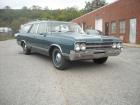
Aegean Aqua
It was originally code 48 - Sherwood Green - inside and out, but it's now got a black interior and is Aegean Aqua exterior - code #38, a special order color in 1970.
I heard that the car was in N.Carolina before going to Long Island where I found it.
I heard that the car was in N.Carolina before going to Long Island where I found it.
Thread Starter
Registered User
Joined: Jan 2013
Posts: 15
From: NJ
See if the vacuum gauge in this video is similar to your readings.
http://www.youtube.com/watch?v=vh3Z-F6KGkI
http://www.youtube.com/watch?v=vh3Z-F6KGkI
I should pull the valve covers off next - perhaps there is somehting obvious.

Registered User
Joined: Jan 2010
Posts: 6,061
From: central Indiana
If the engine is in fact a W-30 engine, I would be willing to be the idle vacuum is correct. The W-30 cam is pretty aggressive. If the engine is a unknown or modified in some way who knows what the idle vacuum should be. If the reading is steady, engine runs strong, and all the vacuum accessories work correctly it probably fine. You could add a few degrees of initial timing, that would probably raise idle vacuum and improve drivability. Shoot for 36* of total timing all in by 3000. Do that and see where the initial timing is.
Thread Starter
Registered User
Joined: Jan 2013
Posts: 15
From: NJ
Because I hear a noise form the tail-pipe of the od cylinder bank and not the even cylinder bank, I'll use that as my excuse for not jumping into the timing chain right away.
I believe that the distributoer is the original with a pertronix conversion. I need to dig into it further. I also have an MSD-6AL lying around that I can install.
Thread Starter
Registered User
Joined: Jan 2013
Posts: 15
From: NJ
W-30 Cam? Vacuum Leak? Timing Chain?
Hopefully it's not the timing chain, but thanks for putting that on my radar. When I listen from the top of the engine, I can't isolate it to one bank or the other and it does seem louder from the front of the engene. I was using a stick of wood to listen to various surfaces. I am putting some credence in the fact that I hear a noise from the drivers side exhaust pipe that's not in the passenger side exhaust, but I'd feel more confident if I could isolate the noise to at least one cylinder bank or the other while listening from the engine compartment.
It is possible that a W30 can was installed along with an aftermarket hood. The car does have some power. I pushed the peddle a bit too hard today while rolling at about 50MPH - the right rear tire started spinning while still on the primary throttle bodies (opening the secondaries results in a bog - one more adjustment / item for my "to do" list). - But that's not saying much because the car has short (235/60R14) tires and an open/non-LSD (or possibly burnt out) rear-end somewhere in the 3.xx:1 range (I still need drive a measured mile and do some calculations.)
Thread Starter
Registered User
Joined: Jan 2013
Posts: 15
From: NJ
Part Throttle Pinging
Another clue - it's pinging on part throttle - often when maintaining a steady speed - over about 50MPH. Perhaps this should be addressed
A) with the 1977 (Buick) Quadrajet's "Adjustable Part Throttle" (APT)?
or
B) another pointed toward a timign chain issue
or
C) should be chased down in the distributor's mechainical advance or vacuum advance canister.
or
?
A) with the 1977 (Buick) Quadrajet's "Adjustable Part Throttle" (APT)?
or
B) another pointed toward a timign chain issue
or
C) should be chased down in the distributor's mechainical advance or vacuum advance canister.
or
?
Thread Starter
Registered User
Joined: Jan 2013
Posts: 15
From: NJ
If the engine is in fact a W-30 engine, I would be willing to be the idle vacuum is correct. The W-30 cam is pretty aggressive. If the engine is a unknown or modified in some way who knows what the idle vacuum should be. If the reading is steady, engine runs strong, and all the vacuum accessories work correctly it probably fine. You could add a few degrees of initial timing, that would probably raise idle vacuum and improve drivability. Shoot for 36* of total timing all in by 3000. Do that and see where the initial timing is.
Thread Starter
Registered User
Joined: Jan 2013
Posts: 15
From: NJ
Found!?
So you know this specific vehicle! - Can you tell me anything about it? - particularly the engine: cam, head or cylinder work, decking, pistons / compression, etc, etc...
The previous owner told me that it had an aftermarket aluminum intake and perhaps chrome valve covers when he got it. It now has an iron intake and stock valve covers. there are extra pulleys in front that I assume connected an A/C compressor at one time.
The previous owner told me that it had an aftermarket aluminum intake and perhaps chrome valve covers when he got it. It now has an iron intake and stock valve covers. there are extra pulleys in front that I assume connected an A/C compressor at one time.

Thread
Thread Starter
Forum
Replies
Last Post
Terrifying Toronado
Cars For Sale
0
Oct 18, 2005 12:15 AM


