


engine timing?

Thread Starter
Registered User
Joined: Apr 2010
Posts: 305
From: Daphne, AL
 engine timing?
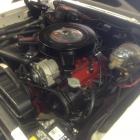
Problem: putting enough timing into new motor. Motor will detonate with more than 28 Degress of total timing (initial+mechanical). Every one says Olds motors run the best with 34-36 degrees. Hopefully some helpful information: 67 400 E block, 350 pistons(4.057), Stock C heads, cast iron original manifold. Harlan rockers adjusted to 1/2 turn from zero lash, engle 2720H cam (equates to 20/22 Mondello cam), .496/.512 226/230@.050, degreed@110 LSA, new Johnson Topline .921 hydraulic lifters. Oil press. with std Melling oil pump is 40@ idle, 60@ cruise. Rebuilt original Q-Jet #7027156, 72 mains/44needles, AU secondary rods. Stock distributor with new wires and a pertronicsII/ flamethrower coil, 12v ign power/ no resistance wire. Bushed to limit mechanical advance to 16 degrees, Medium springs all in by 2800. initial @ 12 degrees. Vacuum advance disconnected and plugged. Vacuum is 16 in hg @idle. Power disc brakes work good. Compression test 195/200 psi all cylinders. Stock deck height (.019). Head chambers @ 79cc. Had 7cc dishes machined into the stock forged 350 flat top pistons. Hoping this along with .039 compressed felpro head gasket would allow 93 octane and the better 34-36 degree timing. New rebuild w/500 miles. Engine revs well to 5200+. Stock TH400 with non working switch pitch (next project), 3:08 limited slip rear. Also tried another bushing to limit dizzy to 10 degrees. Engine would only tolerate 18 degrees initial on my dial back. Once again nothing above 28 degrees total timing. Verified timing light with a different one. (Both read the same). Balancer jives spot on with No.1 at TDC. Have used three different distributors Brand new Summit HEI (post for spring broke first minute running), Olds original HEI. Ran O.K. but could only put in 4 degrees initial because of 24 degrees mechanical built in. As soon as I went to 30 degrees, detonation. Vacuum advance still disconnected and plugged. Spark plugs are AC-43s and are a very light beige. Would really like at least 34 degrees total timing and 44 degrees with vacuum advance @cruise. Thinking better throttle response and gas mileage. Anything I'm missing? Tried to give all the information I could hoping this will help with troubleshooting or suggestions. Engine/car runs good but I think I'm leaving something on the table with the limited timing. 
Administrator
Joined: Oct 2009
Posts: 42,385
From: Poteau, Ok
This is a pretty good article on how to set your advance, without having to go through the 20+ questions. There has been a lot of talk about high comp 195+ and the quality of fuels. I think it can be tuned.
Is your carb running to lean?
http://www.gofastforless.com/ignition/advance.htm
Is your carb running to lean?
http://www.gofastforless.com/ignition/advance.htm
Last edited by oldcutlass; Oct 15, 2013 at 01:32 PM.
Thread Starter
Registered User
Joined: Apr 2010
Posts: 305
From: Daphne, AL
engine timing
Thanks so much for the informative article. Thicker head gasket to try and lower compression a little? At what point does timing up/compression down maximize power output? Think I may have to live with 28 degrees. Would Water/alcohol injection allow you the extra 6-8 degrees?
Thread Starter
Registered User
Joined: Apr 2010
Posts: 305
From: Daphne, AL
engine timing
Thanks again for your help. Made three bushings for distributor. One limits it to 12 degrees, another 14 degrees, and the one installed now limits it to 16. With 18 degrees initial she is just starting to labor the starter when hot cranking so I think that would be my limit. Had the 12 degree bushing in with 18 degree initial, no vacuum advance and she had a slight ping in high gear under load (up hill). Experimenting now with spring tensions. Heavier springs seem to make the motor lazier, at least by my "seat of the pants" dyno. Tinkering and tuning still yielding results. Maybe when the switch pitch gets fixed the higher stall will tolerate more advance? Really appreciate your help and consideration. South Alabama.
Registered User
Joined: Oct 2010
Posts: 1,275
From: Boise ID
Sorry to sound like a downer but todays gas won't support that much CCP without some water injection or lots of octane booster and that 2 speed with a 3.08 gear sure isn't helping matters either.
Thread Starter
Registered User
Joined: Apr 2010
Posts: 305
From: Daphne, AL
engine timimg
I understand your input and as you can tell from my first post I attempted to get the compression down to a more reasonable 9.5 to 1 to try and avoid what we both understand. By the by it has a TH 400. I limited the advance and was getting all 16 degrees of centrifugal ( made a bushing for the timing slot).Problem was all 16 degrees came in by 2000 rpm. I tried the heaviest springs from a Mr. Gasket kit (928G). Still all in by 2000 rpm. I got the heaviest set I could find (Chevy HEI), no change. Started grinding metal off the weights on the big end. All in came up to 2400 rpm. Ground some more (by now they were half their original width). All in is now 2800. Took a test run no detonation @ 28 degrees total timing. Bumped the timing up to 32 degrees. No detonation, but today is overcast and 15 degrees cooler. So now the timing is set at 16 degrees initial, 16 degrees centrifugal, 10 degrees vacuum. Made a vacuum limiter to limit vacuum from 16 degrees down to 10. Will ease up on the vacuum limiter 2 degrees at a time until I'm sure it won't rattle. Would really like to have the centrifugal come in around 3200. This experimentation is really kind of cool and I have learned a great deal from this website. I have read and studied many threads from people that, Like I, love Oldsmobiles. I absolutely appreciate every ones inputs and suggestions. Does anyone run a 1967 400 with the Mondello 20-22 cam? If so what is the Max vacuum at idle?
Thread Starter
Registered User
Joined: Apr 2010
Posts: 305
From: Daphne, AL
engine timing
The switch pitch is next. I have a good firewall switch (and 3 spares). It reads 12v at idle, then off till about 3/4 throttle, then 12v all the way till WOT. Suspect solenoid is bad. Tranny guy here says he'll take a look at it to see what it needs. I have a new front pump, input shaft, solenoid, two pin case terminal, and even the little limiting bushing with the .040 hole in it. Hopefully he'll find something simple and I'll be up and running. Think the SP will make the engine more timing tolerant. Thanks oldcutlass.
Thread Starter
Registered User
Joined: Apr 2010
Posts: 305
From: Daphne, AL
engine timing
Timing is getting all in too early. 2000 rpm and its got the full 16 degrees of mechanical. Have the strongest springs I had out of 12 sets. Ground weights to half their original width. Left thickness to same. All in now @ 2200. How does everyone get their's to 3000 and some even say 3500? Would ideally like 2800 to 3000 fully advanced with vacuum plugged. Thanks everyone for your inputs.
Connoisseur d'Junque
Joined: Sep 2010
Posts: 21,183
From: The Hudson Valley
There's something wrong inside your distributor. Or could it be possible that there's a problem with your tach or timing light?
What kind of distributor is it again? Points or HEI, factory or aftermarket?
Generally, nobody has to do anything to get mechanical timing all in around 3,000, other than to install aftermarket timing kit springs (one heavy, one medium), which bring it down from the original maximum of about 3,500 or 4,000.
- Eric
What kind of distributor is it again? Points or HEI, factory or aftermarket?
Generally, nobody has to do anything to get mechanical timing all in around 3,000, other than to install aftermarket timing kit springs (one heavy, one medium), which bring it down from the original maximum of about 3,500 or 4,000.
- Eric
Administrator
Joined: Oct 2009
Posts: 42,385
From: Poteau, Ok
You may have to get another set of weights and trial and error again. Limiting the amount of advance is usually done with a stop on the advance plate. The springs set the rate or speed at which the timing comes in.
You said a couple of posts ago you had it to 2800, what did you change?
You said a couple of posts ago you had it to 2800, what did you change?
Thread Starter
Registered User
Joined: Apr 2010
Posts: 305
From: Daphne, AL
engine timing
Have tried three different distributors. Summit HEI, 1974 olds HEI, and a points distributor with pertronics conversion. Ground on the weights that I had previously ground on and lowered the all in rate instead of raising it. Can't figure that one out. So evidently I went too far. OOPS! I will send the points distributor off and have it curved to 20 degrees all in @3000-3200 rpm. Believe my dial back timing light is fairly accurate (as compared to another light and on other cars) and my tictoctac reads same as tach/dwell meter. Will let everyone know the results when I get it back. Thanks again.
Administrator
Joined: Oct 2009
Posts: 42,385
From: Poteau, Ok
On an HEI there is about 17 degrees of mechanical advance. So you can set it around 18 initial and go from there. The issue with an HEI is usually when it's all in and the amount of vacuum advance needs to be limited.
Thread Starter
Registered User
Joined: Apr 2010
Posts: 305
From: Daphne, AL
engine timing
I've accepted my ignition timing fate. Seems like the 455 can develop 500+ hp and 500+ TQ from 2000pm to 6000rpm, all at 36-38 degrees on pump gas. In my poor old 400's case I am limited to a more mundane existence.
Well fiddled with timing back and forth. Got good idle quality with the old 1974 olds HEI. Got lousy idle quality (almost dies when put in gear and you can kill it with too much power steering input), with pertronix converted points dizzy. The HEI has 14 degrees of mechanical all in by 3000-3200 rpm and initial set at 14 degrees for a total of 28. Vacuum has a homemade limit stop set for 10 degrees. Engine will not tolerate more than 28 degrees total or any additional vacuum over 10-14 degrees unless I ease into it at cruise. This is running on 93 high test. I probably should have talked to Cutlassefi before I bought my 20-22 Engle cam and considered one that bled off more cylinder pressure. Everything is running good at the above ignition settings. Suspect there are a lot more out there like me with the above specs.
The engine is smooth but has some sewing machine noise coming from the valve covers. Removed the baffles. Thick gaskets, no witness marks. Harlan sharp S50026 rockers seem to barely ooze oil out. Second set of .921 lifters (Johnson/topline). Especially noisy cold or after engine sits for more than an hour. Between rocker arms, springs, pushrods, two sets of lifters, and a cam. I could have darn near had a roller set-up. Any ideas on the noisy lifters? Still love my Oldsmobile, even if it blew up tomorrow. Thanks everybody, I love the support and advice.
Well fiddled with timing back and forth. Got good idle quality with the old 1974 olds HEI. Got lousy idle quality (almost dies when put in gear and you can kill it with too much power steering input), with pertronix converted points dizzy. The HEI has 14 degrees of mechanical all in by 3000-3200 rpm and initial set at 14 degrees for a total of 28. Vacuum has a homemade limit stop set for 10 degrees. Engine will not tolerate more than 28 degrees total or any additional vacuum over 10-14 degrees unless I ease into it at cruise. This is running on 93 high test. I probably should have talked to Cutlassefi before I bought my 20-22 Engle cam and considered one that bled off more cylinder pressure. Everything is running good at the above ignition settings. Suspect there are a lot more out there like me with the above specs.
The engine is smooth but has some sewing machine noise coming from the valve covers. Removed the baffles. Thick gaskets, no witness marks. Harlan sharp S50026 rockers seem to barely ooze oil out. Second set of .921 lifters (Johnson/topline). Especially noisy cold or after engine sits for more than an hour. Between rocker arms, springs, pushrods, two sets of lifters, and a cam. I could have darn near had a roller set-up. Any ideas on the noisy lifters? Still love my Oldsmobile, even if it blew up tomorrow. Thanks everybody, I love the support and advice.
Thread Starter
Registered User
Joined: Apr 2010
Posts: 305
From: Daphne, AL
engine timing
Tried 1/4, then 1/2, then 3/4. Called Harlan Sharp they recommended 1/4 to 1/2. My experience from dealing with hyd flat tappets are some stay pumped up for weeks and some bleed down in minutes. If they are one of the ones that are in the process of opening the valve(s) when engine is shut off then those bleed down from constant valve spring pressure that is, in my case anyway, something above 120 lbs. (closed) all the way up to 320 lbs. (open). Used stethoscope when engine was cold number two cylinder was loudest. 75% of tapping noise gone in 60-90 seconds. Ran VR1 10W-30 first 1500 miles. Switched to Mobil! 10W-30. No changed in noise or time to quieted down by my calibrated ear anyway. Oil pressure 40-45@idle, 60-80@1500+. TicTacToc not extremely accurate so had direct reading gauge and obtained those readings. Sewing machine noise and oozing of oil out every single rocker arm has me concerned. Harlan Sharp says they don't flow near as much as stock. Stock rockers, on my motor anyways, was at least double or triple the flow of the Harlans. Harlan sharp rockers may be built in restrictors to the upper end? Have a set of Comp 1442-16 roller tip rockers and guide plates and studs/nuts with 9.50 hardened pushrods that I will try on one side to see if noise decreases on both start up and after warm up. Some say needle roller rockers are a little noisy while others say they are quiet. Maybe base circle/spring press/lobe ramp angle. If anyone else is running an Engle/Mondello 20-22 cam with Harlan Sharp rockers, what noise and oil flow out of the rockers to the springs have you experienced? Thanks everyone.

Thread
Thread Starter
Forum
Replies
Last Post


