When you click on links to various merchants on this site and make a purchase, this can result in this site earning a commission. Affiliate programs and affiliations include, but are not limited to, the eBay Partner Network.
Seems like i got another gremlin to deal with. I noticed when driving, my engine temp creeps up as the rpms increase, but shifting and dropping the rpms will lower the engine temp. It also lowers as I'm idling.
When i swapped out my intake manifold i also replaced the thermostat and thermostat housing. I don't have any coolant leaks anywhere. Hoping someone on here may have come across the same issue and can provide some insight.
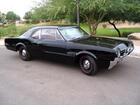
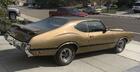
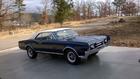
Sorry, i have a 69 442 with a 455. There's a fan shroud in place already. Didn't have these issues prior to the manifold swap and thermostat replacement.
Seems to be around 180-190 but creeps up to 200 as the rpms increase, then will get back down to 180-190 as the rpms go down. This is with the outside temp around 45-55 degrees. Id like to get this fixed before it gets warmer outside and the temps really start to climb.
Yeah i guess my thought process was that at idle the temps would increase and at in motion the engine temps would decrease. It seems to be doing the opposite right now.
Are you saying it was not doing this before? If so, something changed. What manifold did you swap from and to? Did you replace the thermostate , with same temp? Did the remove the distributer , when install the manifold, or move the timing?
Seems to be around 180-190 but creeps up to 200 as the rpms increase, then will get back down to 180-190 as the rpms go down.
These are perfectly normal operating temperatures. Your problem is that you have a temperature gauge. Put a piece of duct tape over it, and drive your car and enjoy it.
Swapped the stock manifold for an Ebrock Performer, swapped the 180F thermostat with a new 180F thermostat from Fusick. I did remove the distributor, but made all the markings so it went in exactly the same way it came out.
@jaunty75 might be right, think i'm over analyzing it as I tend to do when i replace something, just trying to see if there are any new noises and if I did it all correctly.
Did you check the timing after the manifold swap? Even though you marked the distributor, and your marks lined up after reinstalling, it could still be off a few degrees.
Did you burp all the air out of the cooling system? Air pockets can cause the temperature to swing. Raise the right front corner of the car, make sure the radiator cap is the highest point of the cooling system. Leave the radiator cap off overnight. Gravity will naturally force the coolant into the air pockets, snd force the air out.
What radiator do you have and how old is it? A clogged radiator can cause over heating at speed.
In any case, as others have noted, 200 is not particularly worrisome. Keep in mind that with a 16 psi cooling system, water boils at about 250 deg F. Is the temp issue at part throttle cruise or wider throttle openings? Also, how is your advance curve configured? Insufficient vacuum advance at part throttle will cause overheating. Inoperable or insufficient mechanical advance at speed will cause overheating.
When you replaced your intake, did you lose coolant? Sometimes air in the system could do it. A cooler thermostat is also cheap and easy to do. And if you're really worried, a new radiator is like $100 and takes 30 mins to swap if need be. My cutlass (330) only sees 180° when I'm doing 70+ on the highway for extended times in the summer. Only goes above that if I go straight from that into traffic.
@no1oldsfan The previous thermostat was a 180F, same as the new one that got installed.
@joe_padavano Radiator is fairly new, replaced it back in March of last year with a three core Be Cool radiator. Don't believe it to be clogged. I am going to burp the coolant system and look into the timing. To be honest it'll be my first go around with timing and I'll have to read up some more (even more than i already have) on it to make sure i'm doing it correctly. Gonna go pick up a timing light from auto store here shortly. Temps appear to rise with acceleration and as rpm increases, as I easy off the gas and the rpms come down or up-shift to next gear the temps also drop.
I also might be over-analyzing this as I tend to be slightly paranoid when I do something myself and I look for anything and everything that might not be right.
Gonna go pick up a timing light from auto store here shortly.
Are you running contact points? HEI? Fuel Injection?
If you have the 1969 CSM, follow the procedure in the CSM. Additionally, there should be a tune-up sticker on the fan shroud.
If you are running contact points & distributor:
Whatever the parameters regarding your dwell, RPM & timing for the 455 (generally 30° dwell @ 1100RPM & 12°BTC) follow your CSM or cowl tag - ensure you disconnect & plug vacuum advance (as indicated during tune-up). It's best if you have a vacuum gauge to establish the correct A/F mixture. The process is always the same - there is no fudging the order in which the operation(s) are performed:
(1) Establish Dwell
(2) Set Timing
(3) Adjust A/F Mixture (set to highest achievable vacuum - most likely in the range of 16" Hg to 18" Hg).
Dwell effects timing; therefore ensure your dwell is established correctly right out of the gate.
Timing never effects dwell. Again, ensure you establish dwell correctly before you establish timing.
Are you running contact points? HEI? Fuel Injection?
If you have the 1969 CSM, follow the procedure in the CSM. Additionally, there should be a tune-up sticker on the fan shroud.
If you are running contact points & distributor:
Whatever the parameters regarding your dwell, RPM & timing for the 455 (generally 30° dwell @ 1100RPM & 12°BTC) follow your CSM or cowl tag - ensure you disconnect & plug vacuum advance (as indicated during tune-up). It's best if you have a vacuum gauge to establish the correct A/F mixture. The process is always the same - there is no fudging the order in which the operation(s) are performed:
(1) Establish Dwell
(2) Set Timing
(3) Adjust A/F Mixture (set to highest achievable vacuum - most likely in the range of 16" Hg to 18" Hg).
Dwell effects timing; therefore ensure your dwell is established correctly right out of the gate.
Timing never effects dwell. Again, ensure you establish dwell correctly before you establish timing.
Keep in mind that I'm talking about ignition advance at higher RPMs, not at idle. Yes, an improperly set initial timing will effect total timing, but that would also show up as a crappy idle. Checking operation of the vacuum advance and mechanical advance can be done with a timing light, but you can't just set the initial timing and assume all is good. Also keep in mind that the factory adjustments were written assuming you are using the gasoline available in the 1960s, not the cat urine that's sold today. Also keep in mind that 10% ethanol effectively makes the A/F ratio leaner, which also causes hotter operating temps. And again, simply adjusting the idle mixture screws will not fix a part throttle or higher RPM problem. That would require different jets and/or metering rods.
Joe - Agreed. I was making helpful suggestions to NoVA regarding timing (tune-up) protocols since it's his first-round at timing & he's going to pick up a timing light; but now, he knows the "The Rest Of The Story - Good Day".
All, appreciate the laying everything out for me so I can get a better understanding of the whole timing thing. With everyone's explanation and watching numerous youtube videos i think i am starting to understand all the terms and how to check for initial timing and total timing and what the timing advance curve is.
I burped the coolant yesterday, def saw some air bubble make their way out of the radiator (i have one of those funnel burping kits you hook up to the radiator). So I'm hoping with this and checking the timing I can put this issue to bed. If anything, this whole thing is giving me a much better understanding of timing.
@Vintage Chief i am currently running an HEI setup. I don't believe there is a sticker on the fan shroud for the tune-up process, don't believe its original or if it is the sticker is long gone. I'm reading up on dwell that you mentioned to establish. Does this apply to an HEI setup? It has a vacuum advance canister, will I need to configure as I check/adjust the timing accordingly? Sorry for all the questions, trying to wrap my head around the whole concept and points, hei, vacuum advance, mechanical advance, gets a little overwhelming, plus i am always paranoid i'm gonna do something to ruin the engine.
NoVA - I am not the best resource for assisting you w/ your HEI setup - there are other members more qualified than me so I will let them assist you. One area they'll most likely prefer you indicate is what HEI system do you have installed on the vehicle? Therefore, provide some information regarding the HEI manufacturer. Good Luck - nice work - you got this.
Your not going to do anything to ruin your engine. HEI's do not have a dwell adjustment. Also with that said the stock timing setting are n/a as the HEI has a different timing curb than points. If you buy a timing light get a setback type if you want more flexibility in fine tuning.
Read these links: Microsoft Word - Timing101Article.doc (corvette-restoration.com)
If the engine ram fine before, with no wild fluctuations in coolant temp before the intake swap, assuming there are no vacuum leaks or other contributing factors or should be fine now.
Keep in mind, HEI came out during the dark years of automotive performance. As mentioned before, the timing curves are different than breaker point ignition. Obviously, it can be adjusted to work just as well as points, without the occasional maintenance.
I would suggest raising the front of the car overnight with the radiator cap off. You said you got some air out of the system, you might have some still in the radiator. It takes zero money to leave the cap off, and might solve your issue.
Finally got around to checking/adjusting my timing to see if it causing my engine temp issues. Of course my starter crapped out when i tried to fire her up, but got that swapped out and she's back up and running.
**Please correct me if I'm doing this incorrectly, i've been reading up on timing but not entirely sure I had it completely down**
My initial timing, after engine was warm, was around 2 degrees. I adjusted the timing to 8 degrees and noticed the idle rpm increased, which i lowered back down to roughly 750. I had my dad rev the engine up to 3500 rpm, noticed my mark was below the 0 so i adjusted my timing light down to 31 which is when i lined up with the 0 degree mark. I slowly adjusted my initial timing until my all in timing at 3500 rpm was at 34 degrees, which put my initial timing at 12 degrees. Took her out to drive and she ran real good. Just wanted to make sure the 12 degrees initial was ok for timing and that 34 degrees was good for all in. I have an HEI distributor which i dont believe has an adjustable vacuum advance canister on it, there is a canister connected to the distributor but it's got a plastic plug where a hose would have connected.
I watched my engine temp as i got on it (up to 5k rpm) and while cruising and it sat at 190 and didn't creep at all, even in the 95 degree heat we got going on. So I think it's fixed, but I'll let the knowledge base here let me know if my timing in good.
You need to raise the rpms higher 3500, you need to go all the way up to the rpm where the timing stops advancing to get your total. You can probably raise your initial up to 14 or even 16 and get a bit more performance. What is your timing with the vacuum advance connected at idle and the rpm where it stops advancing.
You have the timing in the ballpark as is, you can spend as much time fine tuning things as you like. If the engine is happy with 34 degrees total timing, but idles/runs better at part throttle with more than the 12 degrees you have now, you need to take some centrifugal advance out.
You can also play around with different springs to change the rate the timing advances. Lighter springs brings the advance in quicker, heavier springs slow it down.
Do you have the vacuum advance hooked up? If not, give it a try. If the engine runs well with it unhooked, when you connect the vacuum advance, whatever you do, DO NOT CHANGE THE INITIAL TIMING!!! The idea is to find the happy place with the distributor advance curve, then use the vacuum advance to fine tune the part throttle timing. If the engine pings and rattles with it connected, you need to reduced the amount of advance the canister adds. You can braze the slot closed, use a small nut/bolt, or crane cams use to offer a adjustable timing stop.
Some people think vacuum advance is a waste of time and only for emissions, but it has a huge effect of part throttle engine efficiency and fuel economy. Don’t be one of the lazy people, take the time to do it right.
Thanks for the feedback. Vacuum advance is where things get a little murky for. I don't have anything hooked up as it stands. Couple of questions regard vacuum advance and my current setup. I've attached a pic of my vacuum advance and that outlet on my vacuum advance canister goes to my carb? Or a gauge? Am i inserting an allen key into that to outlet to adjust the timing advance? I've never had a hose on it in the few years I've owned the car. Sorry for all the questions.
Thanks for the feedback. Vacuum advance is where things get a little murky for. I don't have anything hooked up as it stands. Couple of questions regard vacuum advance and my current setup. I've attached a pic of my vacuum advance and that outlet on my vacuum advance canister goes to my carb? Or a gauge? Am i inserting an allen key into that to outlet to adjust the timing advance? I've never had a hose on it in the few years I've owned the car. Sorry for all the questions.
Excellent article - easy to consume/understand explanation of both mechanical advance & vacuum advance & how they relate to initial timing: How to Set Ignition Curves and Create Optimal Performance
I'm not going to speak for Matt & hopefully I'm not muddying the waters, but I don't believe Matt wants you to change the setting (allen wrench) of the vacuum advance canister (mechanism) itself (at least at this point). Instead, I believe you should simply 'hook up' your vacuum advance at this point (do not make any changes to the vacuum advance canister & do not make any changes to your initial timing as Matt suggested). Just see what happens when the vacuum advance is 'hooked up'.
I don't know (believe) the 1969 has the T.C.S. solenoid (maybe it does), but yes you would hook up the vacuum advance canister hose from the vacuum advance canister (the circle in your image) to the carburetor. Some people hook it directly to manifold vacuum on the intake manifold. If you know you have a port available and know which port it is on the carburetor, then hook up the vacuum advance canister vacuum hose to carburetor. Make sense? I'm sure Matt will chime in later (perhaps) but again, simply hook it up to see the effect as Matt suggested.
Last edited by Vintage Chief; Jun 27, 2021 at 06:56 PM.
Reason: sp
I've never seen it proven where timing or fuel mixture causes higher temps = old wive's tales.
When I had to bring my car through emissions testing, I would disconnect the vacuum advance and reduce the initial timing to bring the emission readings down, and that would cause the engine to run hotter. As soon as I left the emissions test center, I would bump up the initial and connect the vacuum canister, and the engine temp would come down immediately.
I've never seen it proven where timing or fuel mixture causes higher temps = old wive's tales.
It doesn’t have an much of an affect on cooling. It has a HUGE affect of efficiency.
Fuel mixture can affect temperature, but I would think the engine would have to be pretty close to overheating anyway, or the fuel mixture so far out of tune the engine would barely run.
Thanks for the feedback. Vacuum advance is where things get a little murky for. I don't have anything hooked up as it stands. Couple of questions regard vacuum advance and my current setup. I've attached a pic of my vacuum advance and that outlet on my vacuum advance canister goes to my carb? Or a gauge? Am i inserting an allen key into that to outlet to adjust the timing advance? I've never had a hose on it in the few years I've owned the car. Sorry for all the questions.
If that vacuum canister is adjustable, pop off the distributor cap. You may already have the limiter cam installed.
Look up Crane cam HEI adjustable vacuum advance instructions.
Connect the vacuum advance to manifold vacuum. Other than resetting the idle speed, don’t change anything. Drive the car, pay attention to how it runs, and any pinging.
Think of the timing curves as separate systems that have to work together. You want enough initial timing that the engine, starts, runs and accelerates smoothly at lower speed, centrifugal advance that comes in fast enough and with the right amount to run well during normal driving, the right initial and centrifugal timing combined for maximum power at WOT, and the correct vacuum advance for cruising efficiency.
You had basically minimal advance! He may have got by with that timing with the vacuum advance hooked up. Iron head Olds V8's like timing, as much as compression and fuel octane will allow part throttle. I have seen this curve in factory HEI's, most have less mechanical advance. As far as advance over 3500 rpm, yes it happens but we are talking like 4 degrees from what I have seen. That would put him around 38. If he wants it limited, add a threaded in stud in the base of the advance mechanism to psychically stop the weights and adjust as necessary. You want at least 10 degrees vacuum advance, the aftermarket adjustable have 20 degrees max, the factory are quite often 30 degrees. Good luck.
So i hooked up the vacuum advance line from my advance canister to a vacuum portv on my carb and took her out for a drive. No pinging, no stuttering, she ran good. I noticed idle was high, arund 900, so i lowered it down to 750. I am not sure if I'm looking for a difference in performance but the car seemed to have more pep in first and second gear. Itv always pulled in 3rd and 4th, but 1st and 2nd felt sluggish but my today, felt it pulling in second gear.
Should I increase timing to see if i can further increase performance?
Thanks again for all the help.
Last edited by NoVA_69_442; Jun 28, 2021 at 06:22 PM.
I would recommend doing what oldcutlass said above and check the total advance at higher than 3500 RPM before making any more changes. You need to make sure the total advance is maxed out before making changes to the initial advance.
Another thought you may have already covered: in addition to the hard plastic rear shroud, be sure the rubber curtains in front of the radiator are there and in good shape.
The side curtains, bottom curtain and top plate more or less force air into the radiator core, acting like a front shroud. Fusick sells the material for you to cut and make for your car in case yours are gone.