


Cold start procedure?


Thread Starter
Registered User
Joined: May 2014
Posts: 23
From: Canada
Cold start procedure?
Silly newbie question - but when are you supposed to use the cold start procedure? I know how to do it, but not clear when supposed to do it. Cold - as in winter? Or cold - as in summer, but you haven't run the car in a few days? Thanks for any replies.
Administrator
Joined: Oct 2009
Posts: 42,385
From: Poteau, Ok
Cold as in you haven't run the car. I pump the gas pedal halfway down and release in summer, all the way in winter. My car has no issues with losing fuel out of the carb unless it sits for a long time, like a month.
Registered User
Joined: Aug 2013
Posts: 12,655
From: Evansville, IN
I find there to be three conditions, warm, cold, and no gas in fuel bowl. Warm start is depress pedal 25% and start. Cold is depress once fully to set fast idle cam and choke, then either hold pedal down 50% and start, or hit it right when it catches. Long period of sitting means no fuel in bowl, pump a few times, crank until it starts (5 or 6 seconds), hit it when it catches.

Just an Olds Guy
Joined: Jul 2008
Posts: 24,528
From: Edmonton, AB. And "I am Can 'eh' jun - eh"
When you have a mechanical fuel pump, how does pumping the gas pedal make any sense if there's no fuel in the bowl? It's not going to get there unless the pump is working, which means cranking the engine.
Registered User
Joined: Aug 2013
Posts: 12,655
From: Evansville, IN
Yeah, I said a few times, not until it starts. I guess you really only need it once to reset the choke and set the fast idle cam, I just like to hit it a couple times for same reason I shake a 4 speed shifter left and right a bit before cranking, if I want to take off in reverse or something and shift in there before I start it.
Registered User
Joined: Feb 2011
Posts: 1,591
From: Denmark
Sat for a while: Crank until fuel gets to carb, pump pedal fully once, to squirt fuel and set choke. Start.
Sat for a day/night: Pump pedal fully once, to squirt fuel and set choke. Start.
Warm motor: Crank. Start.
Sat for a day/night: Pump pedal fully once, to squirt fuel and set choke. Start.
Warm motor: Crank. Start.

Registered User
Joined: Jun 2010
Posts: 3,613
From: Rogues Island, USA
Once to the floor to set the fast idle cam, release the gas pedal and start the car. That's my procedure when the engine is cold, no matter what time of year. If the engine is warm I just start the car, there's no need to set the fast idle cam at that point.

Oldsdruid
Joined: Dec 2007
Posts: 10,600
From: Southside Vajenya
Generally an engine that has not run in 8 hours (overnight or a normal workday) is considered a cold engine. Set the automatic choke and if the engine needs it, choke will close and kick up the fast idle cam. If engine is warm enough or you're in a hot climate, it may not need it.
But that little shot of fuel when you mash the pedal to floor and set the choke generally makes starting easier whether the engine is warm or cold.
But that little shot of fuel when you mash the pedal to floor and set the choke generally makes starting easier whether the engine is warm or cold.

Registered User
Joined: Jun 2009
Posts: 15,116
From: southeastern Michigan
Cold as in the engine is not at operating temperature. This has has nothing to do with the time of year or how many days it's been since the engine was last run. If, for example, you drive your car to work in the morning and come out to it 8 hours later to go home, it will have cooled off completely and thus be "cold."
Registered User
Joined: Dec 2007
Posts: 1,124
From: Fort Pierce, FL
Push the pedal to the floor once, release, turn the key. My cars start first time, every time. If it sits a few weeks, it is the same procedure but it may take 15 seconds of cranking, then it starts, runs and doesn't stall.

Registered User
Joined: Nov 2011
Posts: 77
From: Wellsboro Pa
But that little shot of fuel when you mash the pedal to floor and set the choke generally makes starting easier whether the engine is warm or cold.
Connoisseur d'Junque
Joined: Sep 2010
Posts: 21,183
From: The Hudson Valley
Registered User
Joined: Jun 2009
Posts: 15,116
From: southeastern Michigan
Remember, the way to start a flooded carbureted engine is to push the gas pedal to the floor and hold it there while cranking the engine.
The three rules of starting carbureted engines always were:
1. Cold engine: press gas pedal to floor and release (sets choke). Then crank. Foot off the pedal while cranking.
2. Warm engine: press gas pedal half-way and hold. Crank engine.
3. Flooded engine: press gas pedal to floor and hold. Crank engine.
The three rules of starting carbureted engines always were:
1. Cold engine: press gas pedal to floor and release (sets choke). Then crank. Foot off the pedal while cranking.
2. Warm engine: press gas pedal half-way and hold. Crank engine.
3. Flooded engine: press gas pedal to floor and hold. Crank engine.
Registered User
Joined: Jun 2009
Posts: 15,116
From: southeastern Michigan
Having to resort to starting fluid is indicative of a problem that needs attention and is not required for a properly tuned, adjusted, and running engine. Having it handy for emergencies is fine, but its use should not be considered normal procedure.

Registered User
Joined: Jul 2013
Posts: 1,815
From: Mo-Ray-Al, K-Bec.
I'd heard this as the way to start a flooded injected engine, never heard it for carbs. A flooded carb always got a screwdriver down the throat and crank until something blows up .... hoping it's in the cylinder, but I've seen a blast of fire shoot back up often enough.
Registered User
Joined: Jun 2009
Posts: 15,116
From: southeastern Michigan
Connoisseur d'Junque
Joined: Sep 2010
Posts: 21,183
From: The Hudson Valley
In a non-computer-managed injected motor, holding the throttle down will increase the fuel output, thus making the flooding worse.
- Eric
Registered User
Joined: Jun 2009
Posts: 15,116
From: southeastern Michigan
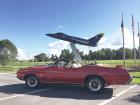
Below are the relevant pages (15 and 16) out of the 1973 Olds full-size owner's manual. Note what it says on page 15 in the second column under "cold engine" and then what it says in the third column under "warm engine." Then look at page 16 and what it says in the first column under "If engine fails to start," particularly the first thing it says under this.


Registered User
Joined: Jul 2013
Posts: 1,815
From: Mo-Ray-Al, K-Bec.
Wasn't saying you were wrong, just commented that I'd never heard it. MD, I understood it that the injector system would detect that the car wasn't running and cut fuel delivery with the pedal to the floor.
Registered User
Joined: Dec 2012
Posts: 1,605
From: Fuquay Varina NC
Most of the above procedures work well. BUT! All of them assume a properly tuned engine. Throw a couple fouled plugs into the equation and......how about a burnt set of points or timing that is a couple degrees off. My point being that if your engine does not start well with some of the tips above you may need to look elsewhere. Or as Oldcutlass suggested...."get out the ether"
Registered User
Joined: Jun 2009
Posts: 15,116
From: southeastern Michigan
Those come to my mind when I think of "looking elsewhere."
Registered User
Joined: Dec 2012
Posts: 1,605
From: Fuquay Varina NC
Exactly my point! But I have seen a lot of people who will crank and crank and crank and engine until it finally catches. Pump and pump and pump the accelerator to overcome a faulty float level etc. there is a reason if your car doesn't start quickly.
Connoisseur d'Junque
Joined: Sep 2010
Posts: 21,183
From: The Hudson Valley
Straight mechanical systems, like the old 'Vettes and the Bosch injection used on Mercedes diesels and Porsches of the early '70s: Nope. They'll pump fuel as though the engine is running, with an extra blast if cold.
Electromechanical systems like CIS: Nope. They'll deliver fuel according to airflow (which shouldn't be much at cranking speed), with an extra blast when cold starting.
Computerized systems: I'm not sure, there are too many, but I believe the early TBI units just sprayed according to the program.
I'm no FI expert, so others may fine-tune my answer, but that's basically it.
- Eric

Registered User
Joined: Jun 2011
Posts: 877
From: Austin, TX
Not sure how you "flood" a modern FI car, much less clear it. Just keep your foot away from the gas pedal when starting and let the computer do its thing. Like the early days of ABS when folks continued to attempt threshhold braking when they needed to plant the brake pedal and ignore the "stutter" as the system worked.
On our old cars, I fully agree with following the owners manual. Assuming the car is in good tune as mentioned above, I've seen lots of hard start issues due to the method rather than the mechanicals.
On our old cars, I fully agree with following the owners manual. Assuming the car is in good tune as mentioned above, I've seen lots of hard start issues due to the method rather than the mechanicals.
Registered User
Joined: Feb 2011
Posts: 1,591
From: Denmark
Registered User
Joined: Jul 2013
Posts: 1,815
From: Mo-Ray-Al, K-Bec.

Registered User
Joined: Dec 2011
Posts: 7,286
I have seen that in one FI car's manual. The cue to the engine that you are trying to start it flooded is the WOT during cranking- a leftover from the carb days, when a mechanism did that.


