


The car that could not be fixed


Thread Starter
1978 Ninety Eight
Joined: Jul 2014
Posts: 449
The car that could not be fixed
Here is another reason to go back to classics for daily drivers, or at least anything made before the mid 2000s. In addition to the high cost of repairs, dramatically increasing unreliability mechanically and electrically, now it's getting to the point where some cars can't even be repaired at all.
Last edited by illumined; Apr 19, 2025 at 01:09 PM.
Administrator
Joined: Oct 2009
Posts: 42,385
From: Poteau, Ok
Couple what this guy says and the lack of new modules after the time period expires for manufacturers to support their cars. These new cars are a computer on wheels where all the modules communicate together on information busses and none of this stuff is plug and play.
Last edited by oldcutlass; Apr 19, 2025 at 02:27 PM.

Registered User
Joined: Aug 2019
Posts: 2,057
Illumined I am a fan of Uncle Tonys, he reminds me of the guys I would meet in the car scene back in the early 80s when I tagged along with my brothers. The kind you trusted when they told you something. The kind that time proved correct. Didn't have a chance to watch entire video yet but I will.
Registered User
Joined: Aug 2013
Posts: 12,655
From: Evansville, IN
Uncle Tony is not an expert in this area and he didn't get it all right in this area.
A little over two years ago, my managers were yet again tired of me, and, when a guy retired and the Indian contractor who replaced him sucked like most of them do, they looked at me and said, hey, he builds computers and redid our certification and vin label printers, let's move him to electronics. So, time goes by, and now I'm one of the top hardware guys in the Toyota factories in the US for our electronic programming system for all the ECUs in the cars as they are assembled and checked. In fact, this past week I did my first training class for new people. This is not something I wanted; I don't like being a teacher and subject matter expert when they won't promote me to that level, nor do I enjoy electronics unless it is my gaming PC or my 70s rock quadraphonic rig. Point being, I know this horseshit despite not wanting to. I can speak to Toyotas here.
The issue at hand is the original computers, the engine control units (which is not what ECU stands for, that's electronics control units) have been joined by other ECUs. That is not a big deal, but, like Tony said, and he is right on this part, it's the communication between them that is the issue. Most everything is Phase 4 or 5 CAN bus now, but it will move to ethernet soon. These ECUs have to speak encryptedly to each other using keys, because people have hacked into cars. See the video on the Jeep Cherokee or the stories on getting into the headlights. It has to be encrypted or keyed because, if it isn't, ECUs can be impersonated and the car can be compromised.
For further detail, the communication strings go like this "Hey, I am ECU 1000, here is my key, I want to talk to ECU 500, please tell me if there is anything in the backup sensors." "Hey, ECU 1000, key recognized, this is 500, here is my key, you want to know if there is anything in the backup sensors; there ain't, proceed." So, in that communication string, the ECUs identify, authenticate, and talk to each other. They are all programmed with the same software and settings to talk to each other at the factory by computers (hey, that's my job!) and the car leaves as one big happy family of computers. If you attempt to piece a car together using random ECUs from other cars, it won't work. It's important to realize the software is just as important as the hardware here. The wrong software makes it the wrong part.
The question here is why didn't they put it together as far as they could, and go get new ECUs from Dodge? They could take it to them and they could fix it, or they could just order new ECUs on the VIN, and they would be flashed appropriately and would work. I am guessing they either did not have the money, or Dodge did not want to work on the car being pieced together.
Why are cars so complicated? Customers demand features, and governments demand performance. Why is this not planned obsolescence? These parts will be offered just as long as any other car part is from a dealer. Will there be Rock Auto ECUs in several years? I don't know. Why is this not a right to repair issue? You can go buy a properly programmed ECU from the dealer for the planned life of the car, which is much longer than most people think it is, and is longer than most of them actually last (in other words, it will rust out before the ECUs are no longer made.) So, I think Tony is wrong on a lot of this; this isn't an attack on shade tree mechanics, because OEMs don't care about the miniscule amount of people who work on their own cars; it's an attempt to lock down the car so people can't steal or hijack it. Those guys in the youtube video he refers to talked to everyone but the people they needed to talk to, which are the guys with the actual software to program ECUs. Provided that car was put together right, it probably could be electronically repaired in a couple hours.
The question is, will there be, and should there be, aftermarket support for ECUs for old cars? Ever notice how no one fixes modern TVs or stereos? Computers are just thrown away? Cars are becoming computers, and no one supports old computers, nor will anyone ever get any traction on no support on a 20 year old car with 300,000 on it; a court would say you have gotten your money out of it.
A little over two years ago, my managers were yet again tired of me, and, when a guy retired and the Indian contractor who replaced him sucked like most of them do, they looked at me and said, hey, he builds computers and redid our certification and vin label printers, let's move him to electronics. So, time goes by, and now I'm one of the top hardware guys in the Toyota factories in the US for our electronic programming system for all the ECUs in the cars as they are assembled and checked. In fact, this past week I did my first training class for new people. This is not something I wanted; I don't like being a teacher and subject matter expert when they won't promote me to that level, nor do I enjoy electronics unless it is my gaming PC or my 70s rock quadraphonic rig. Point being, I know this horseshit despite not wanting to. I can speak to Toyotas here.
The issue at hand is the original computers, the engine control units (which is not what ECU stands for, that's electronics control units) have been joined by other ECUs. That is not a big deal, but, like Tony said, and he is right on this part, it's the communication between them that is the issue. Most everything is Phase 4 or 5 CAN bus now, but it will move to ethernet soon. These ECUs have to speak encryptedly to each other using keys, because people have hacked into cars. See the video on the Jeep Cherokee or the stories on getting into the headlights. It has to be encrypted or keyed because, if it isn't, ECUs can be impersonated and the car can be compromised.
For further detail, the communication strings go like this "Hey, I am ECU 1000, here is my key, I want to talk to ECU 500, please tell me if there is anything in the backup sensors." "Hey, ECU 1000, key recognized, this is 500, here is my key, you want to know if there is anything in the backup sensors; there ain't, proceed." So, in that communication string, the ECUs identify, authenticate, and talk to each other. They are all programmed with the same software and settings to talk to each other at the factory by computers (hey, that's my job!) and the car leaves as one big happy family of computers. If you attempt to piece a car together using random ECUs from other cars, it won't work. It's important to realize the software is just as important as the hardware here. The wrong software makes it the wrong part.
The question here is why didn't they put it together as far as they could, and go get new ECUs from Dodge? They could take it to them and they could fix it, or they could just order new ECUs on the VIN, and they would be flashed appropriately and would work. I am guessing they either did not have the money, or Dodge did not want to work on the car being pieced together.
Why are cars so complicated? Customers demand features, and governments demand performance. Why is this not planned obsolescence? These parts will be offered just as long as any other car part is from a dealer. Will there be Rock Auto ECUs in several years? I don't know. Why is this not a right to repair issue? You can go buy a properly programmed ECU from the dealer for the planned life of the car, which is much longer than most people think it is, and is longer than most of them actually last (in other words, it will rust out before the ECUs are no longer made.) So, I think Tony is wrong on a lot of this; this isn't an attack on shade tree mechanics, because OEMs don't care about the miniscule amount of people who work on their own cars; it's an attempt to lock down the car so people can't steal or hijack it. Those guys in the youtube video he refers to talked to everyone but the people they needed to talk to, which are the guys with the actual software to program ECUs. Provided that car was put together right, it probably could be electronically repaired in a couple hours.
The question is, will there be, and should there be, aftermarket support for ECUs for old cars? Ever notice how no one fixes modern TVs or stereos? Computers are just thrown away? Cars are becoming computers, and no one supports old computers, nor will anyone ever get any traction on no support on a 20 year old car with 300,000 on it; a court would say you have gotten your money out of it.

Registered User
Joined: May 2009
Posts: 2,179
From: Northern California
Koda,
Current & ex-computer geek here. Solid post. I’m happy to hear that manufacturers are encrypting comms among the digital modules.
Part of me truly loves that GM cars from the 60’s maxed out their electrical complexity at resistor wires, brass contacts & springs. Encryption in my ‘66 big cars is a set of lock cylinders & tumblers. Good thing no one wants to steal them…
But as you say, modern car module encryption inhibits or prevents failed module replace-ability since swapped modules can’t authenticate to cooperate with factory installed modules. This suggests the need for an in-the-field reboot/reauthentication procedure which is, in itself, insecure because criminals could get the gear, hack cars and steal them, or maybe even garage door opener (Homelink) rolling codes. Yuck.
For anyone watching, your iPhone, iPad, Galaxy, Mac, PC’s are all now potential banking / investment devices. Treat them like you would treat your debit card.
Point is, we think of cars as vehicles, when actually they’re computers on wheels. My friends joke about Teslas being a 4 wheeled iPad. We also think of phones, tablets and computers mostly for innocent activities like email or web surfing, when actually, these days they can also be an attack vector for your savings…
I’m wondering if there’s an opportunity for a trusted 3rd party to get good at servicing these modules such that they could be rebuilt/reauthenticated to extend the life of modern cars? Cynically I’m guessing the manufacturers would resist this to sell more cars - like Apple makes fixing iPhones hard by making tools & repair parts unavailable. But in the name of extending the life of used-but-useful cars, are there some companies out there who can keep the modern cars on the road?
Curious,
Chris
PS: I recently learned that my 2016 Audi Q7 has no less than 38 CPUs on board. After 2 weeks not driving it, I found the aging battery at <30% charge from keeping all that RAM powered on standby.
Current & ex-computer geek here. Solid post. I’m happy to hear that manufacturers are encrypting comms among the digital modules.
Part of me truly loves that GM cars from the 60’s maxed out their electrical complexity at resistor wires, brass contacts & springs. Encryption in my ‘66 big cars is a set of lock cylinders & tumblers. Good thing no one wants to steal them…
But as you say, modern car module encryption inhibits or prevents failed module replace-ability since swapped modules can’t authenticate to cooperate with factory installed modules. This suggests the need for an in-the-field reboot/reauthentication procedure which is, in itself, insecure because criminals could get the gear, hack cars and steal them, or maybe even garage door opener (Homelink) rolling codes. Yuck.
For anyone watching, your iPhone, iPad, Galaxy, Mac, PC’s are all now potential banking / investment devices. Treat them like you would treat your debit card.
Point is, we think of cars as vehicles, when actually they’re computers on wheels. My friends joke about Teslas being a 4 wheeled iPad. We also think of phones, tablets and computers mostly for innocent activities like email or web surfing, when actually, these days they can also be an attack vector for your savings…
I’m wondering if there’s an opportunity for a trusted 3rd party to get good at servicing these modules such that they could be rebuilt/reauthenticated to extend the life of modern cars? Cynically I’m guessing the manufacturers would resist this to sell more cars - like Apple makes fixing iPhones hard by making tools & repair parts unavailable. But in the name of extending the life of used-but-useful cars, are there some companies out there who can keep the modern cars on the road?
Curious,
Chris
PS: I recently learned that my 2016 Audi Q7 has no less than 38 CPUs on board. After 2 weeks not driving it, I found the aging battery at <30% charge from keeping all that RAM powered on standby.
Registered User
Joined: Jan 2009
Posts: 1,647
From: McCormick, SC
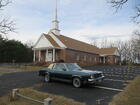
1979 was pretty much the last year of a non-computerized car, I think with some exceptions with the California cars, at least for the Cutlass. The ECM started to be used in 1980. For this reason, and also the due to 79 being the (next to) last year chrome bumpers were used on the CS, and I simply wanted to drive a car made in the decade of the years which I grew up led me to sticking with 1979. Heck, even my 2014 Ford F-150 (with its steel body) is "grossly obsolete" these days.

Old(s) Fart
Joined: Mar 2007
Posts: 50,539
From: Northern VA
There already are for some cars. As with any other aftermarket parts, manufacturers will stock and sell parts for popular models when there's a business case. Owners of less-popular cars are S.O.L. This is no different than trying to find repro parts for my 62 F85 today. I don't waste my time watching ZooTube videos like this because they are typically 80% BS and incorrect info. The fact that there's so much misinformation about automotive stuff on the web should make one question the accuracy all the other stuff on the web as well.

Registered User
Joined: Aug 2020
Posts: 773
Auto technology is amazing these days. Lots of folks are already repairing modules with some of the older stuff. The FICM on the ford diesel comes to mind. There are enough dorks out there that can repair these, and like anything else if there is enough demand the market will respond. Also this module "problem" is at least 20 years old. Its been a long time since an ecu could be swapped painlessly with a used one.. this is clickbait.
Registered User
Joined: Aug 2013
Posts: 12,655
From: Evansville, IN
Something I didn't think of here. We work on these Olds cars via chassis service manuals and other documentation sent to mechanics. It was widely known, and understood, back then, that local garages would work on cars, and it was supported by the OEMs as they could come order parts. As long as that methodology still works for Jim's Garage coming to get an ECU to replace the burned out one on the car in his garage, it will work for the shade tree hobbyist. That's the first hurdle.
The second hurdle is the lack of availability down the road, like Joe mentioned.
I don't think this is clickbait, as I believe Tony to be sincere and he knows his stuff. However, like said, by Joe and Jetstar, there is a lot of misinformation and this problem has been here for a while.
The second hurdle is the lack of availability down the road, like Joe mentioned.
I don't think this is clickbait, as I believe Tony to be sincere and he knows his stuff. However, like said, by Joe and Jetstar, there is a lot of misinformation and this problem has been here for a while.
Registered User
Joined: Aug 2020
Posts: 773
Calling it click bait might be a little aggressive. I'm sure uncle tony is collecting money from you tube these days, and this one is out there just for views. As mentioned there is no valuable information, and uncle tony knows it. Or at least ought to...
Registered User
Joined: Aug 2019
Posts: 2,057
Exactly, and trying to justify this is ridiculous because its necessity was created not organic.
Completely intentional and by design.
Uncle Tony is one of us and he clearly says as much. Stating, this direction needed to stop in the 1990s, and at the end of the day prefers points vehicles. 10:30 to 11:00 minute mark of video.
When I was growing up car hoods were always open and cars were banged up. Nowadays you almost never see a hood open. And cars are replaced so often banged up rarely happens.
Again, all intentional all by design. Who needs overly complicated computer run mumbo jumbo to go 25 & 50 mph. A cavalcade of features to get you to the deli and back... all nonsense to keep buyers entranced in meaningless fluff. And sure it works in swaying the masses but some of us see right through the bullshit.
And for those saying ohh but the Demon 170 is a race car. You definitely don't need any of that stuff to have a car that runs like it. Modified muscle, carbureted non computer controlled made 8 second passes way back when. A car doesn't need to be a smartphone.
Cars have been "advancing" while being rendered more and more replaceable since malaise era began. "The car that could not be fixed" was always the final intent.
Completely intentional and by design.
When I was growing up car hoods were always open and cars were banged up. Nowadays you almost never see a hood open. And cars are replaced so often banged up rarely happens.
Again, all intentional all by design. Who needs overly complicated computer run mumbo jumbo to go 25 & 50 mph. A cavalcade of features to get you to the deli and back... all nonsense to keep buyers entranced in meaningless fluff. And sure it works in swaying the masses but some of us see right through the bullshit.
And for those saying ohh but the Demon 170 is a race car. You definitely don't need any of that stuff to have a car that runs like it. Modified muscle, carbureted non computer controlled made 8 second passes way back when. A car doesn't need to be a smartphone.
Cars have been "advancing" while being rendered more and more replaceable since malaise era began. "The car that could not be fixed" was always the final intent.
Registered User
Joined: Aug 2013
Posts: 12,655
From: Evansville, IN
I disagree. It has nothing to do with making them unfixable. Again, the OEMs simply do not care about the 1% of people that wrench on their own cars; there's simply not enough of us to matter.
Cars have all the electronics because they are required to have 300 hp, 30 mpg, and meet emissions standards all at the same time, while having nanny features to keep you in the lane, maintain traction in snow, ice, mud, oil, and sand despite driving like Fireball Roberts, stop you before you hit someone, and, if you do hit someone, blow 13 airbags and die in a crumpled, totaled mess to avoid your injury, all the multimedia stuff you, your lack of navigational skills, and the lack of attention span of your children could possibly want, heavy creature comforts like cell phone chargers, heated and cooled seats, and giant panoramic sunroofs, and all this at the same time. Yes, the road is the same as it was in the 70s, and I can still get to my car show in another state with about 15 mpg in style and relative safety and comfort in my 50 year old classic just like it could when new, but they don't make the cars for us, guys, they make them for the average consumer.
The problem with being an anachronism is dealing with a world that has moved on.
Cars have all the electronics because they are required to have 300 hp, 30 mpg, and meet emissions standards all at the same time, while having nanny features to keep you in the lane, maintain traction in snow, ice, mud, oil, and sand despite driving like Fireball Roberts, stop you before you hit someone, and, if you do hit someone, blow 13 airbags and die in a crumpled, totaled mess to avoid your injury, all the multimedia stuff you, your lack of navigational skills, and the lack of attention span of your children could possibly want, heavy creature comforts like cell phone chargers, heated and cooled seats, and giant panoramic sunroofs, and all this at the same time. Yes, the road is the same as it was in the 70s, and I can still get to my car show in another state with about 15 mpg in style and relative safety and comfort in my 50 year old classic just like it could when new, but they don't make the cars for us, guys, they make them for the average consumer.
The problem with being an anachronism is dealing with a world that has moved on.

Registered User
Joined: Sep 2017
Posts: 5,171
From: St. Paul Minnesota
I disagree. It has nothing to do with making them unfixable. Again, the OEMs simply do not care about the 1% of people that wrench on their own cars; there's simply not enough of us to matter.
Cars have all the electronics because they are required to have 300 hp, 30 mpg, and meet emissions standards all at the same time, while having nanny features to keep you in the lane, maintain traction in snow, ice, mud, oil, and sand despite driving like Fireball Roberts, stop you before you hit someone, and, if you do hit someone, blow 13 airbags and die in a crumpled, totaled mess to avoid your injury, all the multimedia stuff you, your lack of navigational skills, and the lack of attention span of your children could possibly want, heavy creature comforts like cell phone chargers, heated and cooled seats, and giant panoramic sunroofs, and all this at the same time. Yes, the road is the same as it was in the 70s, and I can still get to my car show in another state with about 15 mpg in style and relative safety and comfort in my 50 year old classic just like it could when new, but they don't make the cars for us, guys, they make them for the average consumer.
The problem with being an anachronism is dealing with a world that has moved on.
Cars have all the electronics because they are required to have 300 hp, 30 mpg, and meet emissions standards all at the same time, while having nanny features to keep you in the lane, maintain traction in snow, ice, mud, oil, and sand despite driving like Fireball Roberts, stop you before you hit someone, and, if you do hit someone, blow 13 airbags and die in a crumpled, totaled mess to avoid your injury, all the multimedia stuff you, your lack of navigational skills, and the lack of attention span of your children could possibly want, heavy creature comforts like cell phone chargers, heated and cooled seats, and giant panoramic sunroofs, and all this at the same time. Yes, the road is the same as it was in the 70s, and I can still get to my car show in another state with about 15 mpg in style and relative safety and comfort in my 50 year old classic just like it could when new, but they don't make the cars for us, guys, they make them for the average consumer.
The problem with being an anachronism is dealing with a world that has moved on.
Thread Starter
1978 Ninety Eight
Joined: Jul 2014
Posts: 449
Uncle Tony is not an expert in this area and he didn't get it all right in this area.
A little over two years ago, my managers were yet again tired of me, and, when a guy retired and the Indian contractor who replaced him sucked like most of them do, they looked at me and said, hey, he builds computers and redid our certification and vin label printers, let's move him to electronics. So, time goes by, and now I'm one of the top hardware guys in the Toyota factories in the US for our electronic programming system for all the ECUs in the cars as they are assembled and checked. In fact, this past week I did my first training class for new people. This is not something I wanted; I don't like being a teacher and subject matter expert when they won't promote me to that level, nor do I enjoy electronics unless it is my gaming PC or my 70s rock quadraphonic rig. Point being, I know this horseshit despite not wanting to. I can speak to Toyotas here.
The issue at hand is the original computers, the engine control units (which is not what ECU stands for, that's electronics control units) have been joined by other ECUs. That is not a big deal, but, like Tony said, and he is right on this part, it's the communication between them that is the issue. Most everything is Phase 4 or 5 CAN bus now, but it will move to ethernet soon. These ECUs have to speak encryptedly to each other using keys, because people have hacked into cars. See the video on the Jeep Cherokee or the stories on getting into the headlights. It has to be encrypted or keyed because, if it isn't, ECUs can be impersonated and the car can be compromised.
For further detail, the communication strings go like this "Hey, I am ECU 1000, here is my key, I want to talk to ECU 500, please tell me if there is anything in the backup sensors." "Hey, ECU 1000, key recognized, this is 500, here is my key, you want to know if there is anything in the backup sensors; there ain't, proceed." So, in that communication string, the ECUs identify, authenticate, and talk to each other. They are all programmed with the same software and settings to talk to each other at the factory by computers (hey, that's my job!) and the car leaves as one big happy family of computers. If you attempt to piece a car together using random ECUs from other cars, it won't work. It's important to realize the software is just as important as the hardware here. The wrong software makes it the wrong part.
The question here is why didn't they put it together as far as they could, and go get new ECUs from Dodge? They could take it to them and they could fix it, or they could just order new ECUs on the VIN, and they would be flashed appropriately and would work. I am guessing they either did not have the money, or Dodge did not want to work on the car being pieced together.
Why are cars so complicated? Customers demand features, and governments demand performance. Why is this not planned obsolescence? These parts will be offered just as long as any other car part is from a dealer. Will there be Rock Auto ECUs in several years? I don't know. Why is this not a right to repair issue? You can go buy a properly programmed ECU from the dealer for the planned life of the car, which is much longer than most people think it is, and is longer than most of them actually last (in other words, it will rust out before the ECUs are no longer made.) So, I think Tony is wrong on a lot of this; this isn't an attack on shade tree mechanics, because OEMs don't care about the miniscule amount of people who work on their own cars; it's an attempt to lock down the car so people can't steal or hijack it. Those guys in the youtube video he refers to talked to everyone but the people they needed to talk to, which are the guys with the actual software to program ECUs. Provided that car was put together right, it probably could be electronically repaired in a couple hours.
The question is, will there be, and should there be, aftermarket support for ECUs for old cars? Ever notice how no one fixes modern TVs or stereos? Computers are just thrown away? Cars are becoming computers, and no one supports old computers, nor will anyone ever get any traction on no support on a 20 year old car with 300,000 on it; a court would say you have gotten your money out of it.
A little over two years ago, my managers were yet again tired of me, and, when a guy retired and the Indian contractor who replaced him sucked like most of them do, they looked at me and said, hey, he builds computers and redid our certification and vin label printers, let's move him to electronics. So, time goes by, and now I'm one of the top hardware guys in the Toyota factories in the US for our electronic programming system for all the ECUs in the cars as they are assembled and checked. In fact, this past week I did my first training class for new people. This is not something I wanted; I don't like being a teacher and subject matter expert when they won't promote me to that level, nor do I enjoy electronics unless it is my gaming PC or my 70s rock quadraphonic rig. Point being, I know this horseshit despite not wanting to. I can speak to Toyotas here.
The issue at hand is the original computers, the engine control units (which is not what ECU stands for, that's electronics control units) have been joined by other ECUs. That is not a big deal, but, like Tony said, and he is right on this part, it's the communication between them that is the issue. Most everything is Phase 4 or 5 CAN bus now, but it will move to ethernet soon. These ECUs have to speak encryptedly to each other using keys, because people have hacked into cars. See the video on the Jeep Cherokee or the stories on getting into the headlights. It has to be encrypted or keyed because, if it isn't, ECUs can be impersonated and the car can be compromised.
For further detail, the communication strings go like this "Hey, I am ECU 1000, here is my key, I want to talk to ECU 500, please tell me if there is anything in the backup sensors." "Hey, ECU 1000, key recognized, this is 500, here is my key, you want to know if there is anything in the backup sensors; there ain't, proceed." So, in that communication string, the ECUs identify, authenticate, and talk to each other. They are all programmed with the same software and settings to talk to each other at the factory by computers (hey, that's my job!) and the car leaves as one big happy family of computers. If you attempt to piece a car together using random ECUs from other cars, it won't work. It's important to realize the software is just as important as the hardware here. The wrong software makes it the wrong part.
The question here is why didn't they put it together as far as they could, and go get new ECUs from Dodge? They could take it to them and they could fix it, or they could just order new ECUs on the VIN, and they would be flashed appropriately and would work. I am guessing they either did not have the money, or Dodge did not want to work on the car being pieced together.
Why are cars so complicated? Customers demand features, and governments demand performance. Why is this not planned obsolescence? These parts will be offered just as long as any other car part is from a dealer. Will there be Rock Auto ECUs in several years? I don't know. Why is this not a right to repair issue? You can go buy a properly programmed ECU from the dealer for the planned life of the car, which is much longer than most people think it is, and is longer than most of them actually last (in other words, it will rust out before the ECUs are no longer made.) So, I think Tony is wrong on a lot of this; this isn't an attack on shade tree mechanics, because OEMs don't care about the miniscule amount of people who work on their own cars; it's an attempt to lock down the car so people can't steal or hijack it. Those guys in the youtube video he refers to talked to everyone but the people they needed to talk to, which are the guys with the actual software to program ECUs. Provided that car was put together right, it probably could be electronically repaired in a couple hours.
The question is, will there be, and should there be, aftermarket support for ECUs for old cars? Ever notice how no one fixes modern TVs or stereos? Computers are just thrown away? Cars are becoming computers, and no one supports old computers, nor will anyone ever get any traction on no support on a 20 year old car with 300,000 on it; a court would say you have gotten your money out of it.
Yes, you're quite right that we ended up here because of a toxic combination of unrealistic consumer demands and government mandates. Something had to give and that's become reparability and, increasingly, reliability. Eventually this does circle back around and force a reprioritization on the consumer level as these repair costs continue to spin out of control. And frankly, a lot of those new cars are going to get only half way there before getting scrapped. If the engines don't grenade it will be the electronics that get them.
There already are for some cars. As with any other aftermarket parts, manufacturers will stock and sell parts for popular models when there's a business case. Owners of less-popular cars are S.O.L. This is no different than trying to find repro parts for my 62 F85 today. I don't waste my time watching ZooTube videos like this because they are typically 80% BS and incorrect info. The fact that there's so much misinformation about automotive stuff on the web should make one question the accuracy all the other stuff on the web as well.
Something I didn't think of here. We work on these Olds cars via chassis service manuals and other documentation sent to mechanics. It was widely known, and understood, back then, that local garages would work on cars, and it was supported by the OEMs as they could come order parts. As long as that methodology still works for Jim's Garage coming to get an ECU to replace the burned out one on the car in his garage, it will work for the shade tree hobbyist. That's the first hurdle.
The second hurdle is the lack of availability down the road, like Joe mentioned.
I don't think this is clickbait, as I believe Tony to be sincere and he knows his stuff. However, like said, by Joe and Jetstar, there is a lot of misinformation and this problem has been here for a while.
The second hurdle is the lack of availability down the road, like Joe mentioned.
I don't think this is clickbait, as I believe Tony to be sincere and he knows his stuff. However, like said, by Joe and Jetstar, there is a lot of misinformation and this problem has been here for a while.
I disagree. It has nothing to do with making them unfixable. Again, the OEMs simply do not care about the 1% of people that wrench on their own cars; there's simply not enough of us to matter.
Cars have all the electronics because they are required to have 300 hp, 30 mpg, and meet emissions standards all at the same time, while having nanny features to keep you in the lane, maintain traction in snow, ice, mud, oil, and sand despite driving like Fireball Roberts, stop you before you hit someone, and, if you do hit someone, blow 13 airbags and die in a crumpled, totaled mess to avoid your injury, all the multimedia stuff you, your lack of navigational skills, and the lack of attention span of your children could possibly want, heavy creature comforts like cell phone chargers, heated and cooled seats, and giant panoramic sunroofs, and all this at the same time. Yes, the road is the same as it was in the 70s, and I can still get to my car show in another state with about 15 mpg in style and relative safety and comfort in my 50 year old classic just like it could when new, but they don't make the cars for us, guys, they make them for the average consumer.
The problem with being an anachronism is dealing with a world that has moved on.
Cars have all the electronics because they are required to have 300 hp, 30 mpg, and meet emissions standards all at the same time, while having nanny features to keep you in the lane, maintain traction in snow, ice, mud, oil, and sand despite driving like Fireball Roberts, stop you before you hit someone, and, if you do hit someone, blow 13 airbags and die in a crumpled, totaled mess to avoid your injury, all the multimedia stuff you, your lack of navigational skills, and the lack of attention span of your children could possibly want, heavy creature comforts like cell phone chargers, heated and cooled seats, and giant panoramic sunroofs, and all this at the same time. Yes, the road is the same as it was in the 70s, and I can still get to my car show in another state with about 15 mpg in style and relative safety and comfort in my 50 year old classic just like it could when new, but they don't make the cars for us, guys, they make them for the average consumer.
The problem with being an anachronism is dealing with a world that has moved on.
Registered User
Joined: Aug 2020
Posts: 773
To be fair this was a commentary on something someone else did, not something he had done. So we don't really know the details about everything that was done but given that it was stated one of the shops the 170 ended up at was somewhere that specializes in that brand's electronics I wouldn't be surprised if they did as you said.
Yes, you're quite right that we ended up here because of a toxic combination of unrealistic consumer demands and government mandates. Something had to give and that's become reparability and, increasingly, reliability. Eventually this does circle back around and force a reprioritization on the consumer level as these repair costs continue to spin out of control. And frankly, a lot of those new cars are going to get only half way there before getting scrapped. If the engines don't grenade it will be the electronics that get them.
I think there's quite a difference between trying to find parts for an obscure 60 year old car vs not being able to fix a car that's only a couple of years old because it's so locked down at the software level. I do trust the person making the video is honest about his views, I mean is he wrong that modern automotive repairs have gotten out of hand? After all he was a professional mechanic for decades, is he not entitled to share his views on the state of things?
A lot of this is also the collapse in handiness among younger people. We've disparaged working with our hands to such a degree that many young people literally can't even change a light bulb. For a while it just didn't matter if cars were repairable or not because your average joe was no longer able to work on them, and I personally have been one of those people and only recently started picking up any of this. However, circumstances can force a change in a trend when the trend becomes unsustainable. For one thing, newer cars are becoming increasingly out of reach for many people, one of the reasons why the average age of the car on the road has been going up so much has been economic, wages haven't kept up with inflation. What you end up with is a market where once a new car is out of warranty, it's only one major electrical fault away from going to the junkyard, it really leaves only much older cars that are less prone to such issues for those of us who can't afford new as a viable path forward. This is the situation in Cuba today, the elite have new cars while the rest make do with repairing older stuff. There's other things that can compel a trend change too, for example a war over Taiwan will wipe out half of the world's chip production capacity overnight. With just in time supply chains, there's no room for such a disruption and it will take 10 years for that capacity to be rebuilt once the shooting stops, semiconductor plants are no joke to build.
Yes, you're quite right that we ended up here because of a toxic combination of unrealistic consumer demands and government mandates. Something had to give and that's become reparability and, increasingly, reliability. Eventually this does circle back around and force a reprioritization on the consumer level as these repair costs continue to spin out of control. And frankly, a lot of those new cars are going to get only half way there before getting scrapped. If the engines don't grenade it will be the electronics that get them.
I think there's quite a difference between trying to find parts for an obscure 60 year old car vs not being able to fix a car that's only a couple of years old because it's so locked down at the software level. I do trust the person making the video is honest about his views, I mean is he wrong that modern automotive repairs have gotten out of hand? After all he was a professional mechanic for decades, is he not entitled to share his views on the state of things?
A lot of this is also the collapse in handiness among younger people. We've disparaged working with our hands to such a degree that many young people literally can't even change a light bulb. For a while it just didn't matter if cars were repairable or not because your average joe was no longer able to work on them, and I personally have been one of those people and only recently started picking up any of this. However, circumstances can force a change in a trend when the trend becomes unsustainable. For one thing, newer cars are becoming increasingly out of reach for many people, one of the reasons why the average age of the car on the road has been going up so much has been economic, wages haven't kept up with inflation. What you end up with is a market where once a new car is out of warranty, it's only one major electrical fault away from going to the junkyard, it really leaves only much older cars that are less prone to such issues for those of us who can't afford new as a viable path forward. This is the situation in Cuba today, the elite have new cars while the rest make do with repairing older stuff. There's other things that can compel a trend change too, for example a war over Taiwan will wipe out half of the world's chip production capacity overnight. With just in time supply chains, there's no room for such a disruption and it will take 10 years for that capacity to be rebuilt once the shooting stops, semiconductor plants are no joke to build.
Thread Starter
1978 Ninety Eight
Joined: Jul 2014
Posts: 449
Responding to your last paragraph. I don't think there is any collapse in handiness in the younger crowd. These guys still like working with their hands as much as any other generation. Lots still do light mechanical work, and love wood working. I would argue lots of the boomers who knew/know how to tinker on cars learned out of necessity. There are few things on these new cars that need maintenance compared to a 1970. Lots of folks could adjust dwell and timing back in the day, because it needed done often. Lets face it, that isn't exactly rocket science, and these kids could easily learn it if needed..
Registered User
Joined: Sep 2017
Posts: 5,171
From: St. Paul Minnesota
While there is a shortage of "skilled trades" people, they are there. The "Learned ones" with college degrees started eliminating "shop classes" more than 25 years ago. Now, those "Learned ones" complain what it costs to get things repaired and labor rates.
Registered User
Joined: Aug 2020
Posts: 773
The reduction of shop classes was simple math. Everyone had to take shop, probably around 10% of those folks went into trades. Meanwhile
90% of serious student accidents came from shop class from kids who had no interest in shop class. That budget money is better spent elsewhere. Trade classes are still available, they are an elective.
90% of serious student accidents came from shop class from kids who had no interest in shop class. That budget money is better spent elsewhere. Trade classes are still available, they are an elective.

Registered User
Joined: Aug 2019
Posts: 2,057
we ended up here because of a toxic combination of unrealistic consumer demands and government mandates. Something had to give and that's become reparability and, increasingly, reliability. Eventually this does circle back around and force a reprioritization on the consumer level as these repair costs continue to spin out of control. And frankly, a lot of those new cars are going to get only half way there before getting scrapped. If the engines don't grenade it will be the electronics that get them.
Registered User
Joined: Sep 2017
Posts: 5,171
From: St. Paul Minnesota
.............
Guys this gem was just recommended to me. https://youtu.be/fmto6kYTaZo?si=6CO8a0BHandaHL3L 4:00 to 6:00 if you have 2 minutes. And I recommend the video in its entirety for a more rounded perspective.
Guys this gem was just recommended to me. https://youtu.be/fmto6kYTaZo?si=6CO8a0BHandaHL3L 4:00 to 6:00 if you have 2 minutes. And I recommend the video in its entirety for a more rounded perspective.
If the fuel tank was dropped while wrestling the fuel tank down and an explosion or fire occurred, They should have been working smarter, not harder.
.......Just my two cents worth.
.

Thread
Thread Starter
Forum
Replies
Last Post
Oldsmaniac
General Discussion
42
Sep 2, 2020 03:08 PM


