


Repairing 12Si alternator?


Thread Starter
Registered User
Joined: Feb 2008
Posts: 11,798
From: Plano, TX
Repairing 12Si alternator?
So the regulator in my 86 Cutlass decided to quit regulating and instead spit out all it could. Max I saw was 18.9V and rising, battery acid was boiling within minutes, belt was squawking from excess load. Local parts store tested it as bad.
Everything I have read so far points to the regulator inside the alternator, a stock 78A 12si.
I thought about replacing the regulator itself for $20 - has anyone opened one of these up and are they easy to repair?
I replaced the brushes in my Ford's alt - it was pretty easy. Not sure if this one will be as easy.
My other only acceptable option is to buy a whole ACdelco reman unit from rockauto for 80 bucks. (I do not want a no-name reman unit with no pulley on it.)
Any comments before I crack it open?
Early last year the battery shorted internally at 6 years old. I replaced the battery, now the alt goes bad. I wonder if one failure caused another? If so which first??
Everything I have read so far points to the regulator inside the alternator, a stock 78A 12si.
I thought about replacing the regulator itself for $20 - has anyone opened one of these up and are they easy to repair?
I replaced the brushes in my Ford's alt - it was pretty easy. Not sure if this one will be as easy.
My other only acceptable option is to buy a whole ACdelco reman unit from rockauto for 80 bucks. (I do not want a no-name reman unit with no pulley on it.)
Any comments before I crack it open?
Early last year the battery shorted internally at 6 years old. I replaced the battery, now the alt goes bad. I wonder if one failure caused another? If so which first??

Old(s) Fart
Joined: Mar 2007
Posts: 50,768
From: Northern VA
Just do it.
Normally the hardest part of rebuilding a GM alternator is getting the pulley nut loose, however you can replace the regulator without removing the pulley. Of course, you KNOW that withing weeks of reinstalling it, the front bearing will start screeching...
The tricks are:
1) Mark the two halves of the alternator before separating so that you don't mess up the clocking when you reassemble.
2) Be sure the stator stays with the back half when you separate, otherwise you'll start pulling wires loose.
3) Use a toothpick to hold the brushes in place while you install the back half of the alternator over the armature. The back half of the housing has a small hole for the toothpick to stick out. Pull the toothpick once the alternator is together.
You ARE planning on replacing the brushes at the same time, aren't you?
Normally the hardest part of rebuilding a GM alternator is getting the pulley nut loose, however you can replace the regulator without removing the pulley. Of course, you KNOW that withing weeks of reinstalling it, the front bearing will start screeching...
The tricks are:
1) Mark the two halves of the alternator before separating so that you don't mess up the clocking when you reassemble.
2) Be sure the stator stays with the back half when you separate, otherwise you'll start pulling wires loose.
3) Use a toothpick to hold the brushes in place while you install the back half of the alternator over the armature. The back half of the housing has a small hole for the toothpick to stick out. Pull the toothpick once the alternator is together.
You ARE planning on replacing the brushes at the same time, aren't you?
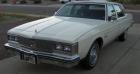
Hangin' out...
Joined: Dec 2008
Posts: 608
From: Scottsdale, AZ
So the regulator in my 86 Cutlass decided to quit regulating and instead spit out all it could. Max I saw was 18.9V and rising, battery acid was boiling within minutes. Local parts store tested it as bad.
Everything I have read so far points to the regulator inside the alternator, a stock 78A 12si.
I thought about replacing the regulator itself for $20 - has anyone opened one of these up and are they easy to repair?
I replaced the brushes in my Ford's alt - it was pretty easy. Not sure if this one will be as easy.
My other only acceptable option is to buy a whole ACdelco reman unit from rockauto for 80 bucks. (I do not want a no-name reman unit with no pulley on it.)
Any comments before I crack it open?
Early last year the battery shorted internally at 6 years old. I replaced the battery, now the alt goes bad. I wonder if one failure caused another? If so which first??
Everything I have read so far points to the regulator inside the alternator, a stock 78A 12si.
I thought about replacing the regulator itself for $20 - has anyone opened one of these up and are they easy to repair?
I replaced the brushes in my Ford's alt - it was pretty easy. Not sure if this one will be as easy.
My other only acceptable option is to buy a whole ACdelco reman unit from rockauto for 80 bucks. (I do not want a no-name reman unit with no pulley on it.)
Any comments before I crack it open?
Early last year the battery shorted internally at 6 years old. I replaced the battery, now the alt goes bad. I wonder if one failure caused another? If so which first??
http://www.midwesternmedicalmachine....ild/index.html
My only advice is that you mark the 2 halves of the housing before you take it apart so you keep the same clock position. Not critical, but a good idea. The only other trick is that you will need a straightened paper clip to hold the brushes in when you are putting it back together. There is a hole on the back of the housing specifically for this purpose.
If you're just doing the regulator and diodes, you won't need to take the pulley off.
Good luck!

Registered User
Joined: Oct 2005
Posts: 7,304
From: NJ
True up to a point.... The one on my 92 Custom Cruiser required Torx sockets to remove bolts, pullers to get bearings off the rotor. All connections inside were soldered for brush holder, regulator, stator. There was a plastic shield that was difficult to remove and re-install properly. The GM service manual states " Do not attempt repair, replace as a unit only" Next time I will follow those instructions!
Old(s) Fart
Joined: Mar 2007
Posts: 50,768
From: Northern VA
True up to a point.... The one on my 92 Custom Cruiser required Torx sockets to remove bolts, pullers to get bearings off the rotor. All connections inside were soldered for brush holder, regulator, stator. There was a plastic shield that was difficult to remove and re-install properly. The GM service manual states " Do not attempt repair, replace as a unit only" Next time I will follow those instructions!
CS130:
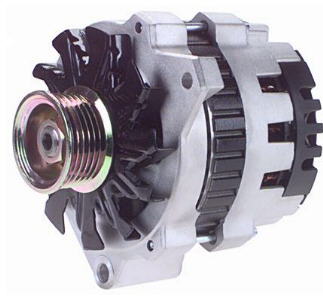
12-SI


Just the facts...
Joined: May 2008
Posts: 1,259
From: THE GREAT WIDE-OPEN
if you're going in, replace the brushes & springs, bearings, regulator, internal resistor(if equipped), and diode trio. test the rectifier to make sure it didn't get damaged during the "full output test". clean the slip rings up with 400 grit paper or emery cloth by turning the rotor in a drill press(or similar). you don't want your slip rings getting out of round. look for discolored windings on the stator(which indicates over-heating). make sure the rear bearing surface is "bearing smooth", polish if needed. keep track of the 2 or 3 spacers that come off the front half of the rotor shaft after you remove the front nut, lockwasher, and pulley. i recommend that you have the rear and, if needed, the front bearing pressed out and new ones pressed in. sometimes the front falls out, most times not. sometimes the new one can be pushed in by hand, sometimes not. beating the bearings in is not good practice. there are many other tricks to these alternators too. apply the recommended amount of the proper grease inside the rear bearing cup and a very thin layer to the rear rotor shaft, to lube the seal on the rear bearing, before you reassemble the unit. don't forget to remove whatever you have(paperclip, toothpick, etc.) holding the brushes before installing the unit back on the vehicle.
i've seen the later acdelco remans, they were all scary. one had so little grease in the rear bearing cup, the shaft inside the bearing cup had rusted heavily. another had a rotor that became an open circuit when spun. the third one had white lithium grease in the rear bearing cup, a leaking front bearing, and a bent rotor shaft. 3 bad alternators out of 3 inspected. and these were right out of the acdelco box, off the shelf.
bill
i've seen the later acdelco remans, they were all scary. one had so little grease in the rear bearing cup, the shaft inside the bearing cup had rusted heavily. another had a rotor that became an open circuit when spun. the third one had white lithium grease in the rear bearing cup, a leaking front bearing, and a bent rotor shaft. 3 bad alternators out of 3 inspected. and these were right out of the acdelco box, off the shelf.
bill
Last edited by BILL DEMMER; Dec 21, 2010 at 08:09 PM.
Thread Starter
Registered User
Joined: Feb 2008
Posts: 11,798
From: Plano, TX
Some good info, guys - thanks...
The rebuild link gave me some good confidence.
Car only has 66k miles on it, so I will pass on the bearings for now. I will see how much brush I have left - should be quite a bit.
I will check the stator, rectifier, and diodes, and will order what I need from rockauto. Shouldn't be too hard a job. Maybe I can get that car our for a cruise next week.
Bill - those remans ARE scary. Looks like I do not want to take chances there.
Why can't replacement parts be as good as the originals? Geez... Another way to make your reliable car unreliable.........
The rebuild link gave me some good confidence.
Car only has 66k miles on it, so I will pass on the bearings for now. I will see how much brush I have left - should be quite a bit.
I will check the stator, rectifier, and diodes, and will order what I need from rockauto. Shouldn't be too hard a job. Maybe I can get that car our for a cruise next week.
Bill - those remans ARE scary. Looks like I do not want to take chances there.
Why can't replacement parts be as good as the originals? Geez... Another way to make your reliable car unreliable.........

stellar
Joined: Feb 2009
Posts: 1,362
From: Pittsburgh Pa.
I'm sure you can handle it. Bill D has good advise. Be sure to take a good look at the stator like bill said and pay close attention to the area where the stator lead connects to the eye terminal that goes over the rectifier posts. They have a tendency to burn at the crimp in the eyelet.
Thread Starter
Registered User
Joined: Feb 2008
Posts: 11,798
From: Plano, TX
So today was my post surgical visit - doc crams cameras up my nose. He says I am a very fast healer, and was doing better than expected.
Therefore he said "See you again in 3 weeks, no restrictions."
Woo hoo - back to the garage!
So back to this alternator issue...
I concluded that my voltage regulator went out, now to fix it.
I picked up a Borg Warner "alternator repair kit" from the local Oreilly's with my new gift card, along with a couple oil filters for future use.
The repair kit (including regulator) was #AK101 and cost a whole $16. It was made specifically for the 78A alternator that all the 86 307s got.
The regulator itself (R291) was $21 - go figure.
So Getting it off the car was straightforward - disconnect battery, pull connections to alt, remove bolts from alt, remove belt, pry the thing off, etc...

It's off!
The "Made in USA" stamp was welcoming, for sure! How often is that seen now days?
Next unscrew the four case screws and pull the two halves apart CAREFULLY.
The brushes will pop out and their springs may be launched into the unknown. I opened mine up inside of a box to catch the springs. Here it is cracked open...

Once the thing was apart, I removed the 3 nuts at the bottom inside (on rectifier) and removed the stator coil (the edge coils).
Next I loosened the 3 screws on the brush holder and regulator. Afterwards, the brush assy / resistor / diode trio was lifted out, and set it on a large socket so the screws stayed in place.
NOTE the screw and insulator postions!

Under that big mess was the elusive voltage regulator - the bad part in my unit:

Now that the case was more empty I cleaned away the majority of the brush carbon crud that had accumulated in the greasy sections.
Next, i opened up my little box o' parts, to see what I got...

Aside from the needed regulator, there is:
A front bearing with a "China" warning sign stamped on it...
A set of 2 brushes
FOUR springs, in case you launch a new set trying to get it back together...
A diode trio
And a pin to hold the brushes in during reassy.
Since my alternator was a low mile unit with no other bad parts, I opted to change only the regulator and save the rest of the parts for later (hope i never need them though...)
Therefore he said "See you again in 3 weeks, no restrictions."
Woo hoo - back to the garage!
So back to this alternator issue...
I concluded that my voltage regulator went out, now to fix it.
I picked up a Borg Warner "alternator repair kit" from the local Oreilly's with my new gift card, along with a couple oil filters for future use.
The repair kit (including regulator) was #AK101 and cost a whole $16. It was made specifically for the 78A alternator that all the 86 307s got.
The regulator itself (R291) was $21 - go figure.
So Getting it off the car was straightforward - disconnect battery, pull connections to alt, remove bolts from alt, remove belt, pry the thing off, etc...
It's off!
The "Made in USA" stamp was welcoming, for sure!
How often is that seen now days?Next unscrew the four case screws and pull the two halves apart CAREFULLY.
The brushes will pop out and their springs may be launched into the unknown. I opened mine up inside of a box to catch the springs. Here it is cracked open...
Once the thing was apart, I removed the 3 nuts at the bottom inside (on rectifier) and removed the stator coil (the edge coils).
Next I loosened the 3 screws on the brush holder and regulator. Afterwards, the brush assy / resistor / diode trio was lifted out, and set it on a large socket so the screws stayed in place.
NOTE the screw and insulator postions!
Under that big mess was the elusive voltage regulator - the bad part in my unit:
Now that the case was more empty I cleaned away the majority of the brush carbon crud that had accumulated in the greasy sections.
Next, i opened up my little box o' parts, to see what I got...
Aside from the needed regulator, there is:
A front bearing with a "China" warning sign stamped on it...
A set of 2 brushes
FOUR springs, in case you launch a new set trying to get it back together...
A diode trio
And a pin to hold the brushes in during reassy.
Since my alternator was a low mile unit with no other bad parts, I opted to change only the regulator and save the rest of the parts for later (hope i never need them though...)
Thread Starter
Registered User
Joined: Feb 2008
Posts: 11,798
From: Plano, TX

So now that the thing was apart, i checked the diode trio, rectifier, stator, and rotor with my ohmmeter, per the below service manual page.

After an inspection of all parts, I put fresh grease in the rear bearing, and cleaned up the rotor slip rings some.
Reassy is now pretty much the reverse of disassy.
I put some thermal grease around the holes of the regulator and placed it over the holes. Then the brush holder, resistor, and diode trio went on and its screws snugged down.
The stator coil was installed and the 3 nuts securing it to the rectifier were snugged down.
The brushes were coaxed into their holders and a toothpick was used to hold them in as shown. Once the alt is together, the toothpick would be pulled away from the outside.

The two halves were now ready to be mated up using the lines i drew on the case.

Four case screws were reinstalled (from the back side!) and the toothpick was quickly pulled away, allowing the brushes to contact the rotor. The rotor spinned easily and smoothly - a good sign...
Alt was then reinstalled on the car, electrical connection made, and the case marks removed with alcohol.

Battery was reconnected last, curse that stupid horn connected to the alarm, that blows once 5 seconds after the battery is connected!!

I hooked a precision voltmeter to the battery and took some readings...
12.67V, no load, engine off.
12.55V ignition on, engine off
10.77V during cranking.
14.7V at 1200RPM, no load – right in the middle of the safe zone on the factory voltmeter.
14.34V at 1200RPM, headlights / high beams on, A/C on high.
Last two tests done at 2000RPM, similar readings
Tests pass - let's cruise!!


Thread Starter
Registered User
Joined: Feb 2008
Posts: 11,798
From: Plano, TX
Just an update...
After 300 miles, it is still working fine. After a long drive, Vout was at 14.1 with lights on - totally normal.
Now the radio developed a strange problem and I got a flat tire. Either this car is possessed or she's POed with me that she is neglected...
After 300 miles, it is still working fine. After a long drive, Vout was at 14.1 with lights on - totally normal.
Now the radio developed a strange problem and I got a flat tire. Either this car is possessed or she's POed with me that she is neglected...

Registered User
Joined: Feb 2009
Posts: 2,257

There is a vendor on e-Bay (Triodiode) that has complete kits for alternators and starters.
My last Delco rebuilt starter had the worst worn parts in it. The armature looked like it had 2 million starts.
I now rebuild all my own stuff.
I even have the correct Delco grease for them as well. Scored a 1 pound tub on e-Bay for $1.99.....
My last Delco rebuilt starter had the worst worn parts in it. The armature looked like it had 2 million starts.
I now rebuild all my own stuff.
I even have the correct Delco grease for them as well. Scored a 1 pound tub on e-Bay for $1.99.....

Just an Olds Guy
Joined: Jul 2008
Posts: 24,528
From: Edmonton, AB. And "I am Can 'eh' jun - eh"
Master Rob,
I just saw this thread whilst looking for info on another one. Nice work Dark Lord, but I have a question. Why didn't you clean the carbon tracking on the commutator before re-assembly?
I just saw this thread whilst looking for info on another one. Nice work Dark Lord, but I have a question. Why didn't you clean the carbon tracking on the commutator before re-assembly?
Thread Starter
Registered User
Joined: Feb 2008
Posts: 11,798
From: Plano, TX
Allan, what you see is not a lot of carbon - it is a polished copper color with just a little bit of ground in carbon. I cleaned off what would come off easily. Since this car had only 65k miles, the brushes were still fine and were reused. I did not want to risk messing up anything else so I did not want to sand on the commutator. Since this car gets only 250 miles a year, the brushes might outlast me.
Just an Olds Guy
Joined: Jul 2008
Posts: 24,528
From: Edmonton, AB. And "I am Can 'eh' jun - eh"
Ok. BTW, I was in Houston on Feb 8,9. You were right - it's not a very nice place to visit. The airport security wasn't all that bad though. Cool little tramway on the bottom level. Holy Toledo IAH is a big place.


Thread
Thread Starter
Forum
Replies
Last Post
danlonchar
Big Blocks
5
Oct 2, 2010 12:34 PM


