


Manual-to-Power Brake Conversion Project

Thread Starter
Registered User
Joined: Apr 2007
Posts: 42
From: Toronto, Canada
Manual-to-Power Brake Conversion Project
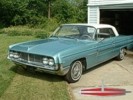
Has anybody out there ever installed a power brake booster on a manual brake car? My '62 Dynamic has manual brakes with drums all around which actually work pretty well but I'm concerned about emergency/panic braking.
I have an NOS power booster that's proper for this car, along with the master cylinder (already attached) and the vacuum reservoir tank. I'm currently looking for a proper (in-line) vacuum check valve but they're not easy to find. I'm also wondering whether or not I need to swap the manual brake pedal assembly with a power brake version for that model year. The two assemblies appear different. For example, they use different brake light switches, and the manual pedal assembly is built heavier for obvious reasons. Question is: Are the holes in the same place?
Any advice is very much appreciated. Thanks!
I have an NOS power booster that's proper for this car, along with the master cylinder (already attached) and the vacuum reservoir tank. I'm currently looking for a proper (in-line) vacuum check valve but they're not easy to find. I'm also wondering whether or not I need to swap the manual brake pedal assembly with a power brake version for that model year. The two assemblies appear different. For example, they use different brake light switches, and the manual pedal assembly is built heavier for obvious reasons. Question is: Are the holes in the same place?
Any advice is very much appreciated. Thanks!

Registered User
Joined: Apr 2007
Posts: 279
From: CNJ
Well... Years ago my dad changed his 60 Plymouth savoy from manual to power brakes. I know on THAT car, the pedal arm and the master cylinder piston were different between the manual and power brakes. I'm not sure about your car, but it may be the same.
Hope this helps.
Hope this helps.

Registered User
Joined: May 2007
Posts: 4
From: Cincinnati
What you're concerned about is called pedal ratio. Pedals designed for power systems generally have less mechanical advantage built into their brake pedal, so if you use it on a boosted system, you may have a very sensitive brake pedal. Where is your master located? The reason I ask is that I'm just wrapping up a master-cylinder upgrade on our '58 and learned quite a bit in the process. What I didn't learn was how long Olds had the master in the location that mine is (was). It was located directly below the steering, as opposed to up high on the firewall like more modern cars or under the floor like most earlier cars. I converted mine from the stock single-channel power master to a later (1967 Olds 88) dual-channel manual master. I did my upgrade for a couple reasons.
1. The stock power brake setup on the '58s (Treadle-Vac) is NOTORIOUS for failing, even when rebuilt. They stopped using the Treadle-Vac in '59 for that reason.
2. I wanted a dual master so that if I blow-out a line, I only lose the front brakes OR the back brakes as opposed to BOTH. The government made dual-channel masters a requirement in 1967 and there are issues in using disc masters on drum setups, hence I chose a 1968 88 master. The fact that I got one rebuilt shipped to my door for $29 didn't hurt either.
3. I wanted some vaccuum back as my car has vaccuum wipers and I've got a tri-power J2 setup for it, which will further reduce the vaccuum, so I decided to try out the manual brakes.
What I did learn was that my pedal came out with three bolts as an assembly with the master removed and I was able to move it over an inch and down an inch to get away from the steering.
1. The stock power brake setup on the '58s (Treadle-Vac) is NOTORIOUS for failing, even when rebuilt. They stopped using the Treadle-Vac in '59 for that reason.
2. I wanted a dual master so that if I blow-out a line, I only lose the front brakes OR the back brakes as opposed to BOTH. The government made dual-channel masters a requirement in 1967 and there are issues in using disc masters on drum setups, hence I chose a 1968 88 master. The fact that I got one rebuilt shipped to my door for $29 didn't hurt either.
3. I wanted some vaccuum back as my car has vaccuum wipers and I've got a tri-power J2 setup for it, which will further reduce the vaccuum, so I decided to try out the manual brakes.
What I did learn was that my pedal came out with three bolts as an assembly with the master removed and I was able to move it over an inch and down an inch to get away from the steering.
Thread Starter
Registered User
Joined: Apr 2007
Posts: 42
From: Toronto, Canada
Thanks for you input, tim. The master cylinder is located high up on the firewall in the usual location found in most modern cars. I agree with your assessment about the manual brake pedal having a mechanical advantage, so brake sensitivity would be a concern. I'll probably stick with the stock single-channel system for now. It works well and the car stops very straight in a 'test panic stop'. Although that my change if I decide to go front disc brakes.
Registered User
Joined: May 2007
Posts: 4
From: Cincinnati
Thanks


Junior Member
Joined: Oct 2004
Posts: 2,212
From: Southern CA
If that's what you choose to call it, yes.
People come to this site looking for accurate information about Oldsmobiles, and any inaccurate information should be corrected as soon as possible.
Yes, I have been aware of that for a year or two. Now anyone who reads this thread, will also be aware of the correct application of the term.
Your post is an example of why they continue to be misinformed. Your reaction to mine, shows why too few people step up when they should.
Exactly why the masses continue to be misinformed. I suggest you use a generic modifier, such as “an intake that takes three carbs”, or “3 two barrel carbs”, if only, to maintain your credibility on an Olds site.
Only to correct your own mistake. Which is, as it should be.
Norm
People come to this site looking for accurate information about Oldsmobiles, and any inaccurate information should be corrected as soon as possible.
........ Tri-power is also the name that most people who aren't privy to the nuances of '57-8 Olds' call an intake that takes three carbs ........
Your post is an example of why they continue to be misinformed. Your reaction to mine, shows why too few people step up when they should.
........ Rather than having to make a second post explaining what a J2 intake/carbs was, I called it tri-power .........
........ Now I had to make a second post.
Norm

Thread
Thread Starter
Forum
Replies
Last Post
455Olds
Brakes/Hydraulic Systems
11
Dec 8, 2013 08:16 PM
1970442w30post
Brakes/Hydraulic Systems
5
Jan 20, 2011 05:06 PM


